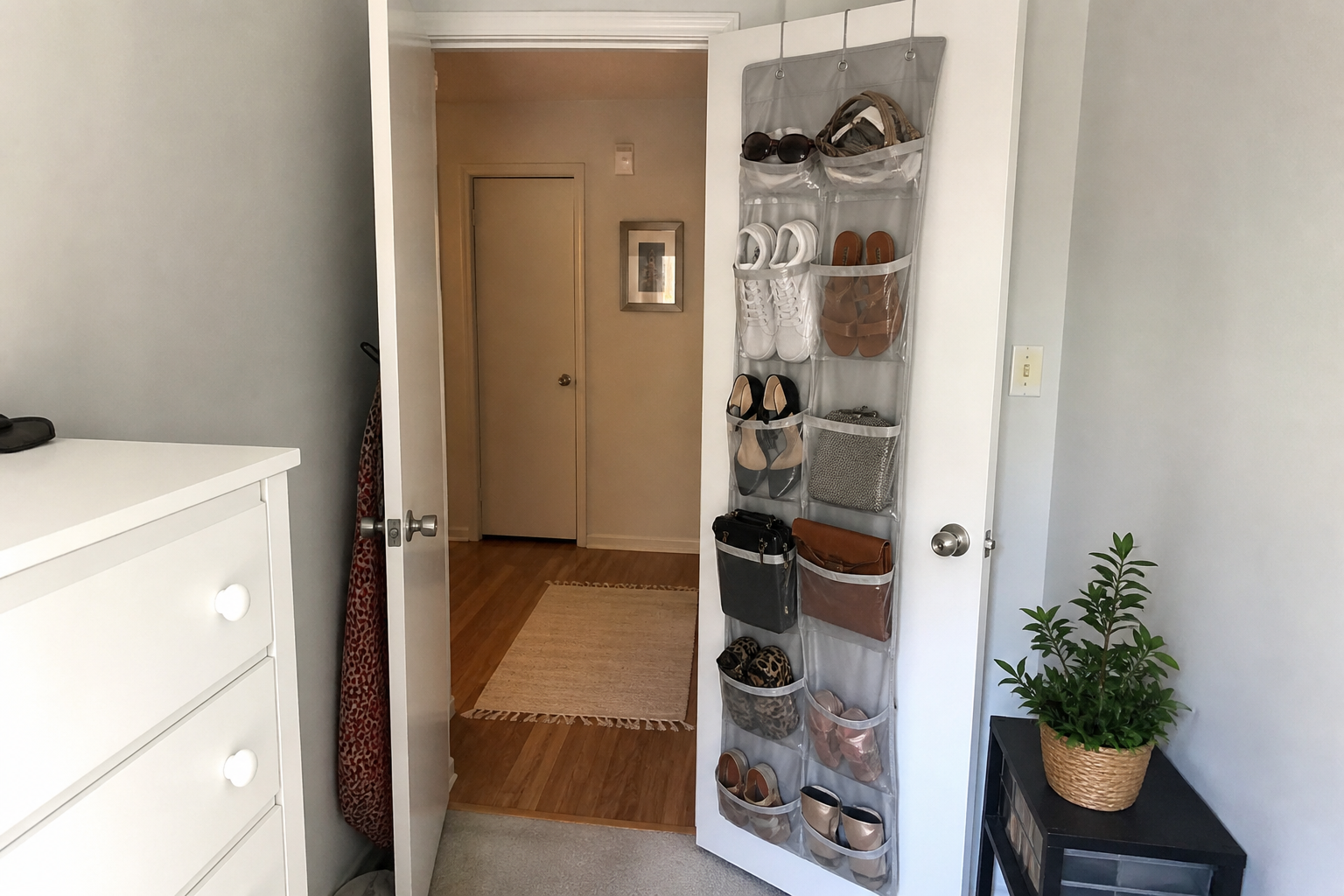
A 3.75 inch maximum organizer depth and 15 pound total weight cap are the two non-negotiable rules that will keep you from avoidable move-out fees when you install over-the-door storage in a rental. Most people pick the deepest, highest-capacity organizer they can find, but that choice often leads to wall scuffs, warped hollow core doors, or blocked walkways when the door swings fully open. This guide walks you through 5 straightforward steps to pick the right organizer size for your space, check fit for your specific door thickness, add low-cost protective buffers to avoid surface damage, and pick appropriate items to store without overloading your rack. You won’t need any special tools, and the whole process takes less than 15 minutes start to finish.
Depth Selection
Recommended Depth Ranges
Versatile Low-Risk General Use Range
Stick to 2 to 3.5 inches deep for any organizer you plan to move between rooms. This size holds small everyday items like skincare products, socks, keys, or dog leashes without sticking out far enough to bump into passersby when the door is fully open. Most people pick the deepest organizer they can find to maximize storage, but this often leads to blocked walkways or items getting knocked off the rack when people move past the open door.
Compatible Depths for Standard Interior Rental Doors
For rental properties, stick to a maximum depth of 3.75 inches. This avoids putting uneven, sustained pressure on the top of hollow core doors, which is a common cause of dents, warping, or even large holes forming in the lightweight door material over time. It also eliminates the risk of the organizer hitting the wall behind the door when you swing it fully open, which can leave scuff marks on walls you’ll be charged for when you move out.
Fit and Clearance Requirements
Door Thickness Compatibility
Nearly all off-the-shelf over-the-door organizers are designed to fit doors up to 1.97 inches thick. If your rental has newer, security-focused interior doors that measure 2 inches thick, standard brackets won’t fit, so you’ll need to look for organizers with adjustable hook widths. If your door is thinner than 1.38 inches, add a small buffer to the inside of the organizer hooks to stop it from wobbling when you open and close the door. Cut-up felt furniture pads or a single wrap of electrical tape work perfectly for this, and they won’t leave sticky residue on your door finish when you move out.
Weight Limit Guidelines
Organizer-Specific Capacity Ratings
Standard Model Weight Limits
Basic plastic over-door organizers are only built to hold a few kilograms, or roughly 5 to 10 pounds total. These work best for light items like face masks, hair accessories, or empty tote bags. You’ll find the exact capacity printed on product packaging or the included user manual, so always check that before you load it up.
Heavy-Duty Model Weight Limits
Steel, stainless steel, or aluminum alloy organizers have far higher weight ratings, usually between 11 and 22 pounds, with some built for even more. These hold up well for heavier items like small cleaning supplies, folded socks, or dog leashes and key sets. They come with reinforced hooks that distribute weight more evenly than thin plastic hooks, so they’re less likely to shift when you open or close the door.
Door Type-Specific Safe Load Limits
Hollow Core Door Load Limits
Nearly all rental interior doors (bedroom, bathroom, closet) are hollow core, with a thin wood veneer over a lightweight cardboard honeycomb interior. Even if your organizer is rated for 20+ pounds, cap the total weight you hang on a hollow core door at 15 pounds maximum. Excess weight will warp the top edge of the door, dent the veneer, or even punch through the hollow interior, leading to move-out fees you can’t avoid.
Risks of Exceeding Weight Limits
The first and most common issue is sagging or tearing of the organizer itself, which can spill stored items and leave scuffs on your door or frame. Overloaded hooks can also dig into the top of your door jamb, leaving permanent marks that your landlord will charge you to repair. In worst-case scenarios, the entire organizer can pull free and fall, leading to broken personal items or minor injury. Don’t forget to factor in the weight of the organizer itself (usually 2 to 5 pounds empty) when calculating your total load, not just the weight of the items you’re storing.
Renter-Focused Product Selection
Key Prioritized Features
No-Drill Hole-Free Installation Design
Skip any organizer that requires screws, permanent adhesive strips, or sharp mounting edges that dig into door or jamb finish. Most renter-safe over-the-door designs use a smooth metal hook that rests over the top of your door, but even these can cause wear over time if you don’t add a buffer. Cut small pieces of felt furniture pad to stick to the back of each hook where it touches the front and back of your door and jamb to stop scuffs, dents, and paint chipping that could cost you part of your security deposit.
Mounting Hardware Matched to Door Dimensions
Measure the gap between the top of your door and the frame before you buy. If the hook is thicker than that gap, your door won’t close all the way, no matter how well you install it. Most standard interior doors have a 1/8 to 1/4 inch gap at the top, so look for organizers with hook thickness under 3/16 of an inch if you have a tight fit. You also want to check that the hook width matches your door thickness: standard hollow core interior doors are 1 3/8 inches thick, so avoid hooks made for 1 3/4 inch exterior doors that will slide around and scratch.
Appropriate Durability and Load Capacity
Don’t skimp on material if you plan to store heavy items. Plastic organizers usually only hold a few kilograms of weight, so they’re only good for very light items. Steel or aluminum alloy models can hold 5 to 10 kg, which works for shoe bags, cleaning supplies, or leashes and pet gear. Don’t overload your organizer even if it’s rated for heavier weight — too much strain on the hooks can warp the top of a hollow core door over time. Choose your organizer depth based on what you plan to store, and the space between your open door and the nearest wall. A 3-inch depth works for most small items and won’t block walkways in tight hallways or small bathrooms, while 5 to 7 inch depths work for bulkier items like shoe pairs or folded linens in bedrooms with more clearance.
- Under 2 kg: hair tools, cosmetics, greeting cards, small office supplies
- 2 to 7 kg: folded linens, shoe pairs, pet leashes and waste bag dispensers
- 7 to 10 kg: cleaning spray bottles, pantry staples, stacked paperback books
Rental Property Damage Prevention
Ready-to-Use Protective Products
Look for over door organizers with pre-attached rubber or silicone padding on the top hook edges. These eliminate metal-on-paint or metal-on-wood friction that causes scuffs and chips, no extra work required. Skip any models with exposed steel hook edges entirely, even if they are priced lower. Many also include small plastic shims you can slide between the hook and the top of the door to fix the common issue of the door not latching fully after installation.
Low-Cost DIY Installation Hacks
You don’t need to buy specialty protective pads if you already have furniture felt pads at home. Cut small squares to fit the underside and back of each over door organizer hook, then press firmly to adhere. The felt cushions contact points between the hook and your door jamb, and stops the hook from sliding side to side when you hang or remove items. If the organizer still wiggles, add a small piece of removable poster tack to the back of the frame where it touches the door to hold it in place without leaving sticky residue.
General Preventive Best Practices
Stick to these simple rules to avoid permanent damage over time:
- Stay within your organizer’s listed weight limit, and avoid loading the ends of the hook rack first — uneven weight distribution pulls the hooks harder against one side of the jamb, causing dents.
- Check contact points between the organizer and your door/jamb once every 3 months to catch scuffing or slipping early before it turns into permanent damage.
- Never hang dripping wet items like soaked towels directly on over door hooks, since prolonged moisture can warp hollow core doors or cause paint to bubble under the organizer frame.
Common Suitable Items for Behind-Door Storage
If you have a basic plastic over-door rack, it only holds a few kilograms, so skip loading it with full liquid detergent bottles or stacks of hardcover books. Even heavy-duty steel models only support 5 to 10 kg total, so spread weight evenly across hooks to avoid straining one side and warping the hook fit. Always double check that items are slimmer than your organizer’s stated depth, so they don’t stick out far enough to stop the door from latching properly. Suitable, low-risk items that work for most standard over-door racks include:
- Folded linens like hand towels, washcloths, or pillowcases
- Lightweight toiletry bags, hair tools, or skincare products for bathroom doors
- Cleaning cloths, half-full spray bottles, or rubber gloves for pantry or laundry room doors
- Hats, scarves, or lightweight accessory collections for bedroom closet doors Don’t store sharp, heavy, or easily breakable items here. If the rack shifts when you open or close the door, those can fall and cause damage, or scratch your door finish. If you’re worried about hook marks on the top of your door jamb, cut small pieces of felt furniture pads to stick under each hook edge before hanging the organizer.
FAQ
What’s the difference between 3-inch and 4-inch deep over-the-door organizers for rental use?
For rentals, 3-inch deep models are the safest all-around pick: they fit most small everyday items, won’t hit the wall when the door swings fully open, and won’t put uneven pressure on hollow core doors. A 4-inch organizer exceeds the 3.75-inch maximum recommended depth for rentals, so you’ll risk wall scuffs, door warping, and move-out damage fees.
How long does it take to install a renter-safe over-the-door organizer without damaging my door?
Most installs take 5 to 10 minutes total, no tools required. You’ll just need to measure your door gap and thickness first, add felt pads to the hook contact points if the organizer doesn’t have pre-attached padding, then hang it on the top of the door.
Can I still use a standard over-the-door organizer if my rental’s interior door is 2 inches thick, not the standard 1.38 inches?
Standard off-the-shelf organizers only fit doors up to 1.97 inches thick, so they won’t work for your 2-inch door out of the box. Look for models with adjustable hook widths instead—these are widely available in this year and fit thicker security-focused rental doors without modification.
Can I hang damp swimwear or workout gear on my over-the-door organizer without damaging my rental door?
You can hang only slightly damp, well-wrung items, never dripping wet pieces. Prolonged contact with standing moisture will warp hollow core rental doors or cause paint to bubble under the organizer frame, leading to deductions from your security deposit when you move out.
About the author
QuickSpace Living is an independent home-organization blog. Our contributors organize their own small homes and rentals and write practical, tested guides on storage, decluttering, and household routines. This is general home-organization guidance, not professional advice.