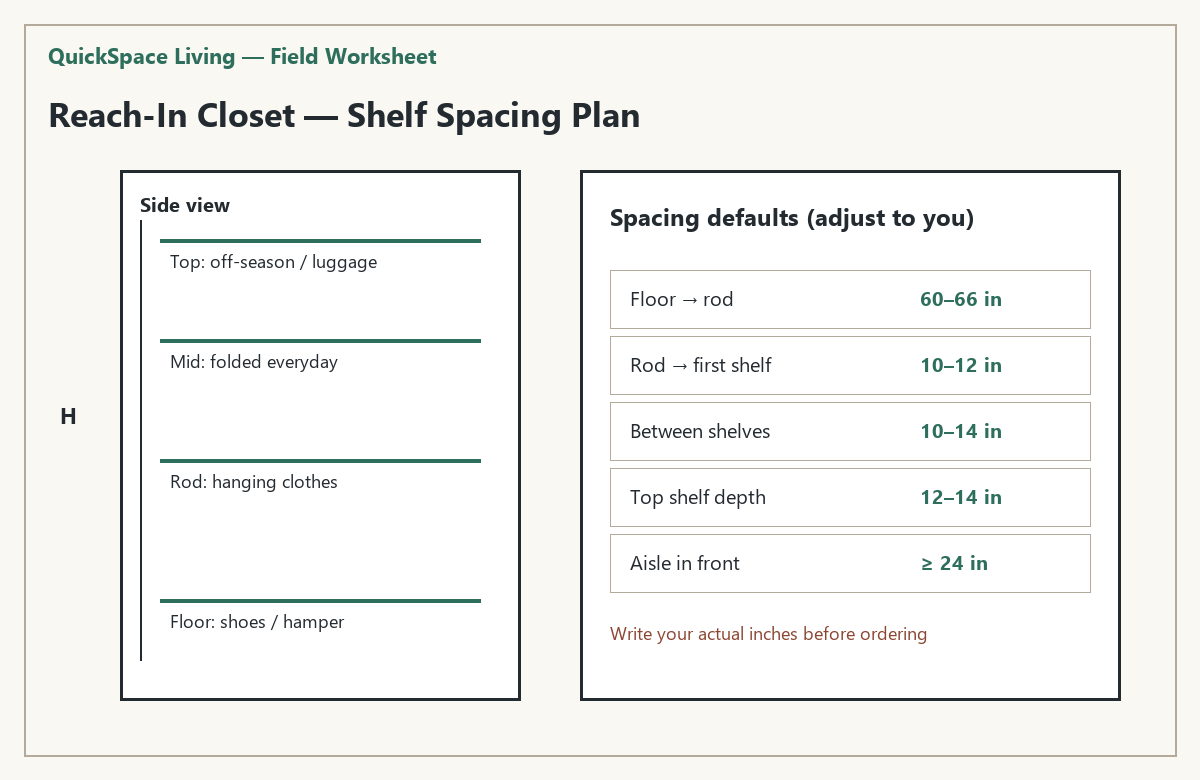
Closet organizers fail when shelf spacing is copied from a catalog photo instead of your hang length and fold height. This plan is for a standard reach-in closet. Adjust the inches to your tallest hanging item and deepest basket.
Start with what you actually hang
Pull five items you wear weekly: a shirt, pants, a dress or long coat if you own one, a hoodie, and a jacket. Measure hang length from the rod hook to the hem. The longest weekly item sets your rod height more honestly than a generic “66 inches from the floor” rule.
Default spacing to test on the wall
- Floor to rod: often 60–66 inches, adjusted to your longest weekly hang
- Rod to first shelf: 10–12 inches so hangers do not scrape folded stacks
- Between shelves: 10–14 inches depending on sweater thickness
- Keep at least 24 inches clear in front of the closet for dressing
Mark heights with painter tape and live with the marks for two days before buying a cube set. If you keep bumping a mark with a hanger, move it.
What belongs where
Floor: shoes you wear this week and one hamper. Rod: current-season hanging clothes only. Mid shelves: weekly folded items. Top: off-season and luggage. The top shelf is not a junk attic; if you cannot name what is up there, it should leave the closet.
Buying rule
Do not buy a cube set until shelf heights are taped and tested. Compare product exterior depth to your closet depth minus one inch so doors still close. Soft bins work better than rigid cubes when the closet is slightly out of square—common in older rentals.
Maintenance
Seasonal swap twice a year. When you bring winter coats in, an equal volume of summer hangings should leave the rod. If the rod bows, you are overloading; edit before buying a second rod kit.
How to know the system is working
Give any new setup two full weeks before you buy another product. Track three signals only: can you put things away in under a minute, does the walkway stay clear, and does the surface return to empty at least once a week. If two of those fail, change the rule or the footprint—do not add another bin yet.
When something breaks the system, write one sentence about why. “Shoes overflow because guests leave pairs” is a different fix than “we own too many daily shoes.” Specific notes beat vague frustration and keep this site’s advice useful for your actual apartment.
How to know the system is working
Give any new setup two full weeks before you buy another product. Track three signals only: can you put things away in under a minute, does the walkway stay clear, and does the surface return to empty at least once a week. If two of those fail, change the rule or the footprint—do not add another bin yet.
When something breaks the system, write one sentence about why. “Shoes overflow because guests leave pairs” is a different fix than “we own too many daily shoes.” Specific notes beat vague frustration and keep this site’s advice useful for your actual apartment.
How to know the system is working
Give any new setup two full weeks before you buy another product. Track three signals only: can you put things away in under a minute, does the walkway stay clear, and does the surface return to empty at least once a week. If two of those fail, change the rule or the footprint—do not add another bin yet.
When something breaks the system, write one sentence about why. “Shoes overflow because guests leave pairs” is a different fix than “we own too many daily shoes.” Specific notes beat vague frustration and keep this site’s advice useful for your actual apartment.
Fold height reality check
Fold a stack of five sweatshirts the way you actually fold at home, then measure the stack height. That number matters more than the shelf pitch printed on a box store diagram. If your natural fold is 12 inches tall and the shelf gap is 10, you will constantly restack—or abandon the shelf. Give folded zones the inches your hands already use.
Keep one “active shelf” at eye level for the next seven days of outfits. Everything else can be slightly less convenient. Convenience for daily clothes prevents chair piles more effectively than maximizing every cubic inch.
Quick recap
Measure first, keep walkways clear, maintain on a short weekly timer, and refuse extra products until the current footprint works for two weeks. That sequence is the difference between a real system and a shopping spree that looks organized for one afternoon.
Important note:
This is practical home-organization guidance for everyday apartments and houses. It is educational content, not a product warranty, contractor advice, or a guarantee that every floor plan will fit the same setup.