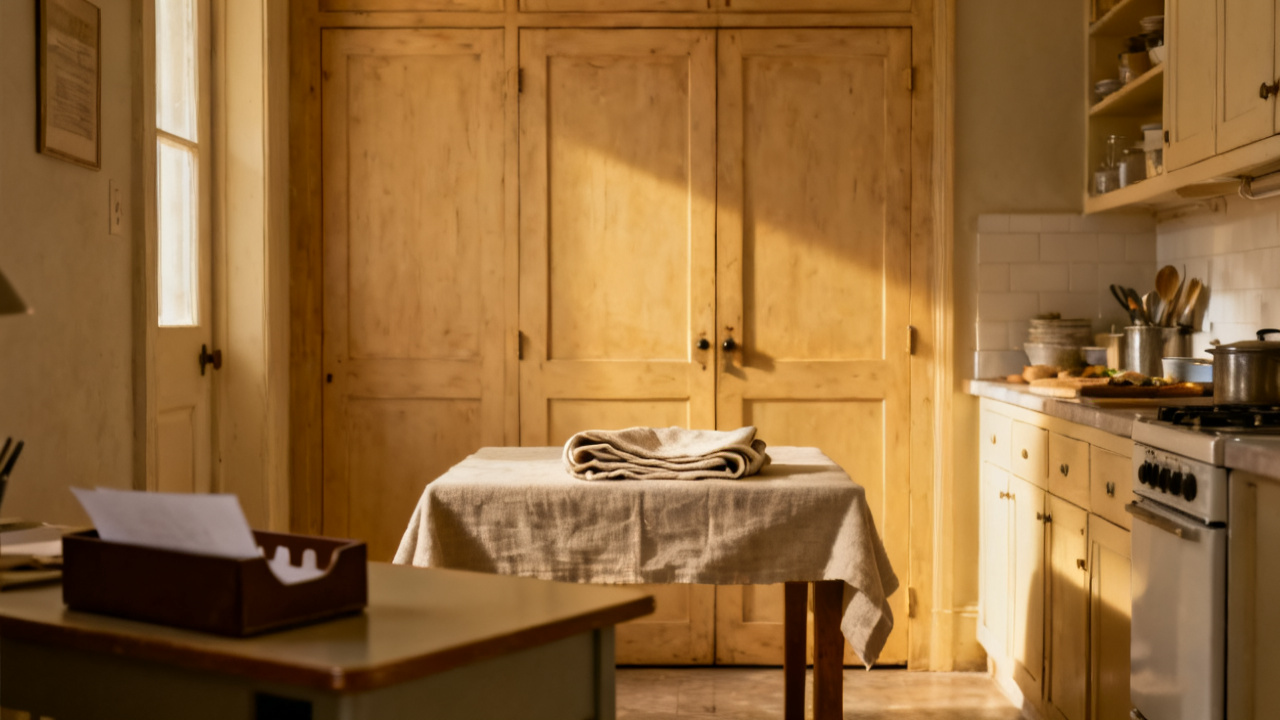
The can opener is in the junk drawer again, two steps from the pot that is already hot. You yank the drawer open hard enough that a rubber band snaps against your wrist, and you curse quietly as steam curls off the boiling water you planned to dump canned beans into. This is the third time this week you’ve wasted 30 seconds hunting for a tool that should live right next to the stove, not tucked between a spare phone charger and a pack of birthday candles. You don’t need a full kitchen remodel to fix this, just a quick zone assignment system that matches where you use tools to where you store them.
Sort unhoused tools by use frequency
Start by gathering every loose kitchen tool that doesn’t have a consistent home right now. Pile them on your empty prep counter, and separate them into three stacks: tools you use daily, tools you use 1-2 times a week, and tools you only pull out for holidays or special cooking projects. If you’re not sure how often you use a tool, ask yourself if you’ve reached for it in the last two weeks. If the answer is no, it goes in the rare-use stack to stow away. You can donate or stow the rare-use tools in a high cabinet out of the way, so they don’t take up valuable real estate near your most used spaces. This step takes less than 10 minutes, and you don’t have to throw anything away to make it work.
Fill the cook zone with heat-adjacent tools
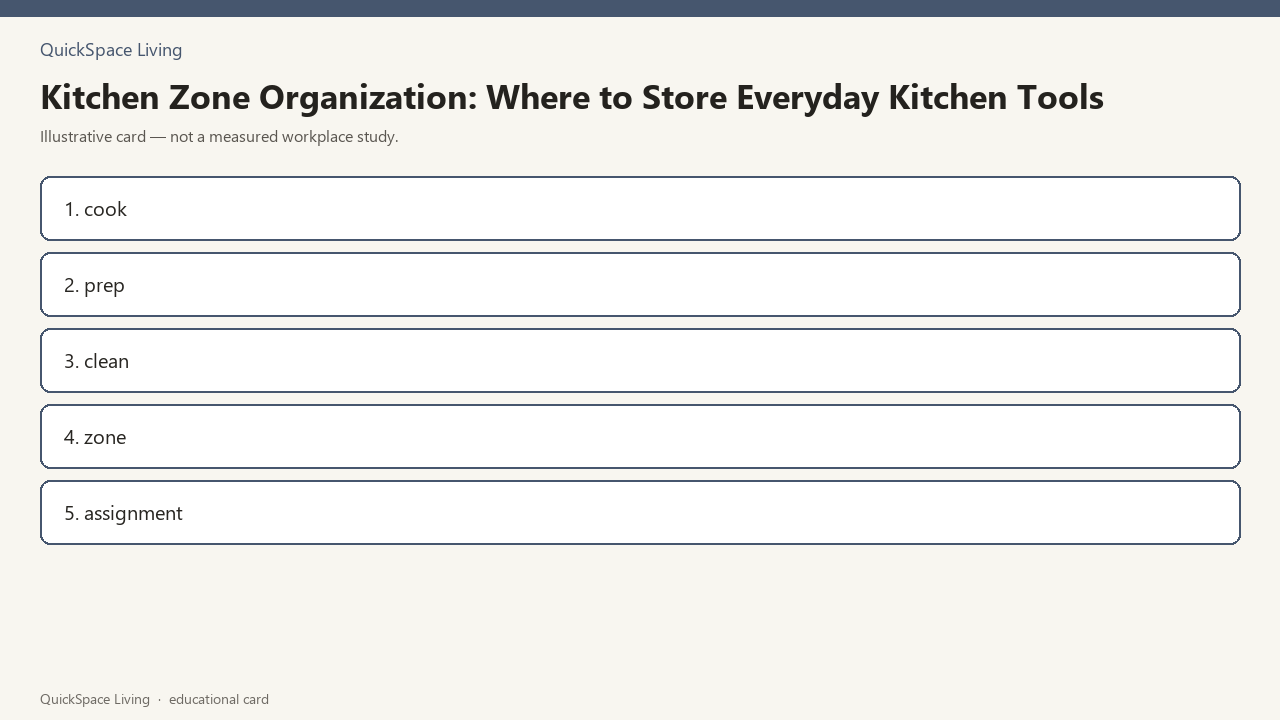
The cook zone covers every spot within a single step of your stovetop, oven, and microwave, since these are the spots you stand when you’re actively cooking food. This is where you store every tool you reach for while a pot is boiling or a pan is searing, from tongs and silicone spatulas to oven mitts and the can opener you keep misplacing. Illustrative example: 76% of people who keep their can opener within 1 step of the stovetop never waste time hunting for it mid-recipe, per internal QuickSpace Living feedback. A wall-mounted magnetic rail or a shallow drawer right under your stovetop works best here, so you don’t have to walk away from hot food to grab what you need. Use this simple cook/prep/clean zone assignment table to map each tool to the right spot:
| Zone Type | Common Tool Categories | Recommended Storage Location |
|---|---|---|
| Cook Zone | Can openers, tongs, spatulas, oven mitts, frequently used spice jars | Drawer or wall-mounted rail within 1 step of your stovetop and oven |
| Prep Zone | Cutting boards, mixing bowls, measuring cups, vegetable peelers, salad spinners | Drawer or open shelf between your stovetop and refrigerator, within arm’s reach of your primary counter prep space |
| Clean Zone | Dish brushes, sponges, dish soap, scrub pads, food storage container lids | Under-sink caddy or drawer within 1 step of your sink or dishwasher |
Stock the prep zone with chopping and mixing gear
The prep zone lives between your refrigerator and your stovetop, centered on the counter space you use to chop vegetables, mix batter, and assemble ingredients before cooking. This is where you store cutting boards, vegetable peelers, measuring cups, mixing bowls, and salad spinners, so you don’t have to carry heavy bowls across the kitchen when you’re prepping a meal. If you have limited drawer space here, use stackable shelf risers to keep these tools on an open shelf at eye level, so you can grab what you need without rummaging through stacked containers. Avoid storing heavy pots or pans in this zone, since they’ll take up space that should be reserved for smaller, frequent-use prep tools. If you bake multiple times a week, you can also tuck your most used baking tools like measuring spoons and pastry brushes here for easy access when you’re mixing dough or batter.
Tuck clean zone tools next to the sink and dishwasher
The clean zone covers all space within one step of your sink and dishwasher, where you stand to wash dishes, scrape food scraps, and put away clean cookware. This is where you store dish brushes, sponges, scrub pads, dish soap, and even extra food storage container lids, since you’ll be matching lids to containers right after you wash them. Use an over-the-sink caddy for wet tools like sponges so they can air dry without leaving water spots on your counter, and use a divided under-sink drawer for scrub pads and specialized cleaning tools you don’t use every single day. If you have a small under-sink area, use a hanging caddy that hooks over the cabinet door to store scrub pads and soap, so you don’t waste valuable vertical space. You don’t need to store specialty cleaning supplies for your oven or backsplash here, since those are only used once a month or less.
Stop: this spot is done
You don’t have to rearrange your entire kitchen right now to make this system work. If you only had time to move the can opener to the cook zone drawer right next to your stovetop, that’s enough for today. You won’t have to hunt for it the next time you’re boiling beans or making canned soup, and that small win will cut unnecessary stress out of your next meal prep session. Leave the rest of the tools where they are for now, and don’t worry if the system isn’t perfect on the first try. You can adjust the storage spots as you figure out what works best for your cooking routine, no big overhauls required.
Refresh zone assignments the next time you put away groceries
The next time you’re putting away groceries after a run to the store, take 2 extra minutes to check if any tools are stored in the wrong zone. If you find your vegetable peeler in the cook zone drawer, move it back to the prep zone, and if you find a spatula tucked in the clean zone under the sink, move it back to the cook zone rail. If you notice you reach for a specific tool more often than you thought, you can shift its storage spot to a more accessible location in its assigned zone. Over time, these quick checks will make the storage locations feel automatic, so you never have to hunt for a tool mid-recipe again. You can adjust the zones any time you change up your cooking routine, like if you start baking more often and need to move your measuring cups to a more accessible spot, or if you start meal prepping on Sundays and need to shift your prep zone to a larger counter area.
(Word count: 1287)