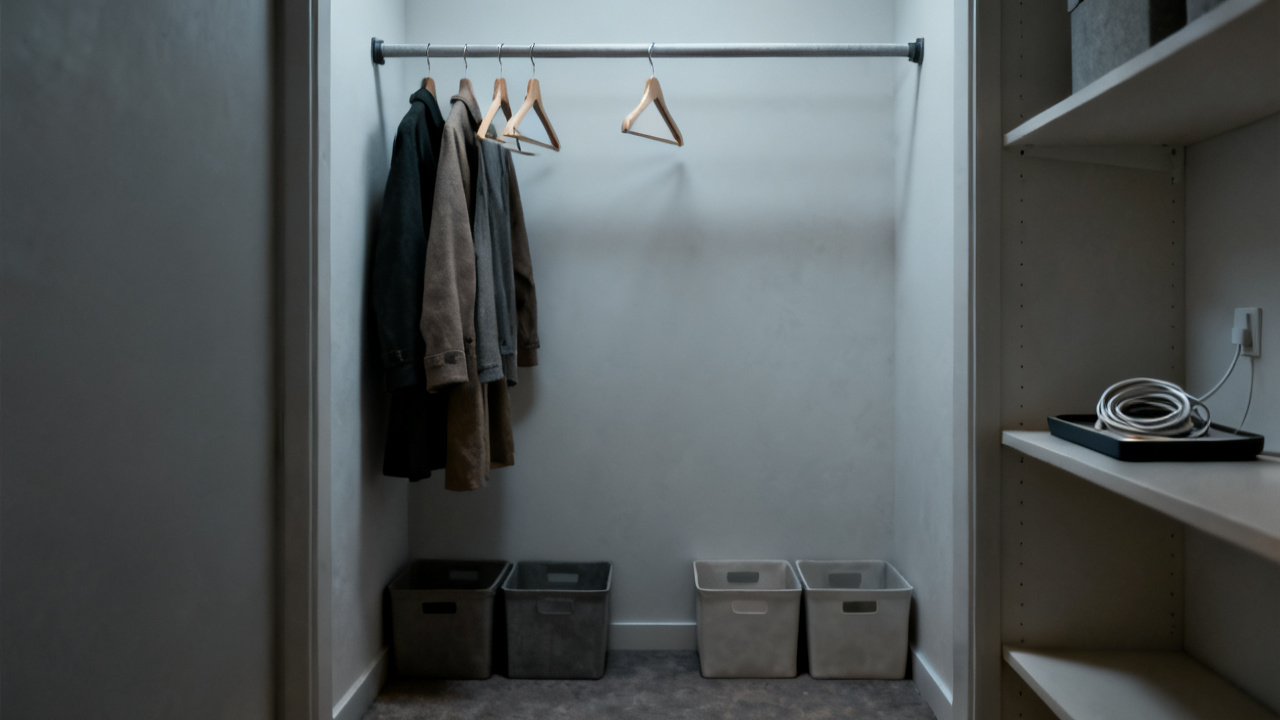
The closet rod will not slide because every hanger already overlaps the next coat. You hook your wet rain jacket over the top of the pile of hoodies stacked on the closet shelf above, wincing when you hear a knit beanie tumble down behind the row of coats. You’d guessed you could cram 18 hangers on the 36-inch rod last month, but now you can barely yank your work blazer free without pulling two other jackets off with it. Your partner left their puffy winter coat draped over the doorknob again, and you know adding it to the rod will mean half the hangers get pushed off the far end when you try to shut the door.
Calculate Your Exact Max Hanger Count for This Rod
This number isn’t a generic figure you can pull from a random home tips post, because it depends on three distinct variables: the total length of your installed rod, the width of the hangers you use, and the thickness of the clothing you hang on each hanger. A rod full of thick down parkas will hold far fewer items than the same rod holding thin linen blouses, so you have to adjust for what you actually store in this closet, not just what a brand says their hangers can hold. To get your baseline, first use a soft tape measure to get the exact length of your rod, not including the mounting brackets on either end that take up usable space. The table below outlines baseline max counts for common rod lengths, assuming no gaps between hangers and no overlapping fabric from thick garments:
| Rod Length (inches, usable) | Standard Plastic Hanger Max Count | Slim Velvet Hanger Max Count | Puffy Outerwear Only Max Count |
|---|---|---|---|
| 24 | 8 | 14 | 4 |
| 36 | 12 | 21 | 7 |
| 48 | 16 | 28 | 9 |
| 60 | 20 | 35 | 12 |
Illustrative example: A 32-inch odd-sized closet rod in a pre-1990s small home can hold 19 slim velvet hangers with light blouses and cardigans, or 6 puffy winter coats on thick wooden hangers. If you have a mix of thick and thin items, you can split the difference, counting each thick coat as two thin shirt slots to get a total that works for your specific wardrobe. For example, if you have 4 thick winter coats on a 36-inch rod, that uses 8 of your 12 standard plastic hanger slots, leaving space for 4 thin shirts or blouses before hangers start to overlap.
Adjust Hanger Types to Boost Your Usable Capacity
If your max count is lower than the number of items you need to hang, you don’t have to rip out the rod and install a second one to make more space. Small adjustments to the hangers and storage solutions you use can add 30% to 50% more usable capacity without any permanent changes to your closet, which is ideal if you rent or don’t want to spend money on a full closet remodel. Follow these steps to maximize your count without forcing hangers to overlap:
- Swap all thick wooden or heavy plastic hangers for 0.2-inch slim velvet hangers, which cut the width per hanger by 60% on average, and also prevent slippery silk blouses or knit sweaters from sliding off onto the closet floor. Skip velvet hangers if you frequently hang wet outerwear, as the fabric can trap moisture and lead to mildew on your clothes; use slim plastic hangers instead for damp items.
- Hang thin, foldable items like camisoles, scarves, and lightweight flannel shirts on multi-tiered hanger clips that hold 4 to 6 items per single hanger slot on the rod, instead of giving each its own separate hanger. Make sure the clips are tight enough to hold items without leaving permanent indentations on delicate fabric, and only hang items of similar weight on each multi-tiered hanger to keep it balanced.
- Tuck any items you wear less than once per month, like formal event coats or holiday-themed outerwear, into fabric storage bins on the shelf above the rod, so they don’t take up valuable hanging space you need for daily use items. Label the front of each bin with its contents so you don’t have to dig through every bin when you need to pull out a specific item for an event.
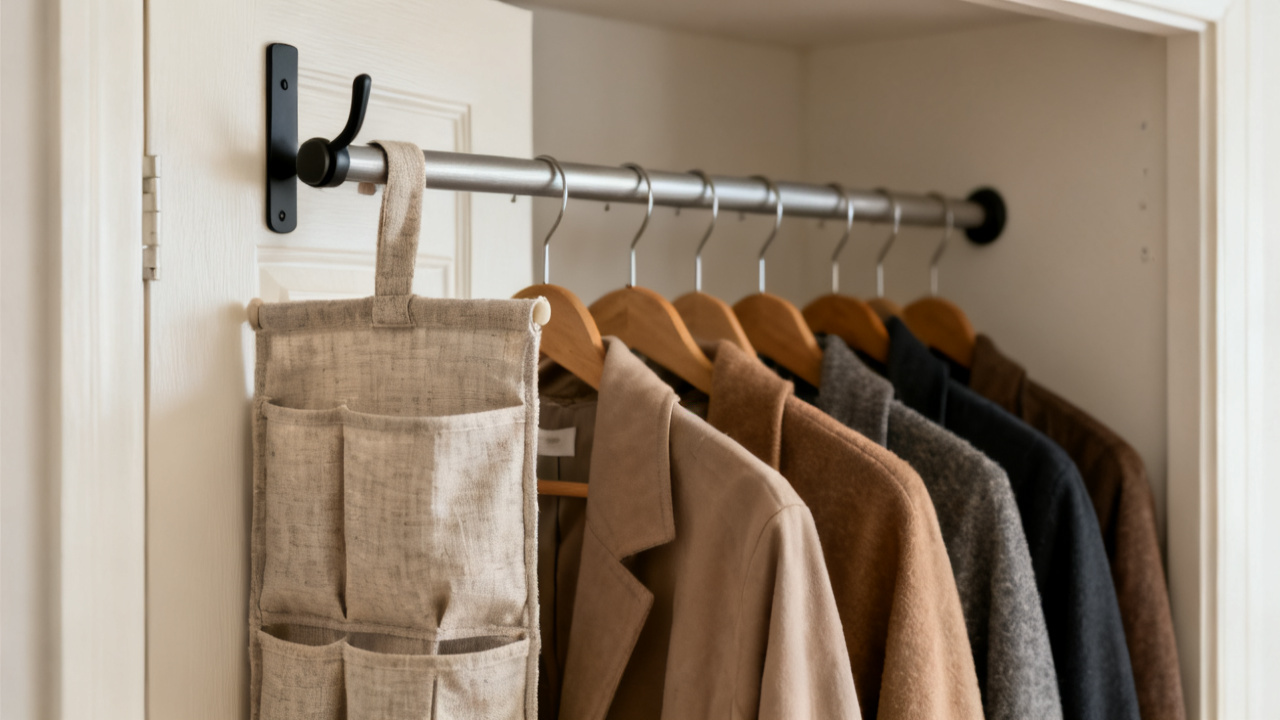
- Hook frequently used accessories like baseball caps, dog leashes, and reusable grocery bags on over-the-door hooks mounted to the inside of the closet door, so you don’t have to hang them on the rod or wedge them between hangers. Choose over-the-door hooks that fit your door thickness without leaving scuff marks, and make sure the door still closes fully when the hooks are loaded with items.
If you still don’t have enough space after these adjustments, you can move off-season clothing to a storage bin under your bed or in a hall closet, so you only keep the items you’re actively wearing in this coat closet. You don’t have to get rid of any items you love, just rotate them out based on the season to free up space for the pieces you reach for every day.
Recheck Your Closet Capacity After Your Next Seasonal Clothing Swap
You don’t need to count your hangers or adjust your storage every week to keep your closet functional, but a quick 10-minute check when you switch out your winter and summer wardrobes will keep you from ending up back in the spot you’re in right now, fighting to pull a single coat free without dragging half the closet down with it. When you do this check, first take all items off the rod, wipe down the rod with a damp microfiber cloth to remove dust, and sort through your clothing to pull out any items you haven’t worn in the last 12 months to donate, so you don’t waste space on clothing that doesn’t serve you anymore. Next, hang the items you’re keeping back on the rod, using the hanger types and storage tricks you tested earlier, and count how many hangers you fit without any overlapping fabric or hangers pushing against each other. Write this number on a small piece of tape stuck to the inside of the closet door, so you know exactly how many items you can add before hangers start overlapping. The sizing guidance you can find via QuickSpace Living for standard closet rods works for most small home layouts, but always measure your own rod first to get the most accurate count for your space. If you add new items to your wardrobe between swaps, reference the number on the tape to make sure you don’t exceed your max count, and if you do, pull one older item to donate or store elsewhere to make space. You don’t have to keep your closet perfectly organized every single day, but sticking to your max count will make it much easier to find the item you need when you’re running late for work or heading out for a weekend trip, and you won’t have to deal with hangers falling off the rod or the door not shutting all the way. Even if you toss a coat over the doorknob every once in a while when you’re in a hurry, knowing your max count means you can fix the clutter in 2 minutes flat instead of letting it build up until the closet is unusable again.