A nameless bag from the back of the freezer is already frost-burned, and dinner still needs a protein. You can’t remember if it’s leftover stir fry from three weeks ago or the ground turkey you bought for a chili recipe that never happened, so you toss it straight into the trash, wasting both food and the money you spent on it. This common headache comes from one easily fixed issue: no clear organizational system for your freezer’s limited space, meaning items get pushed out of sight and out of mind long before they’re safe to eat. The zone map below cuts this waste significantly for most home kitchens, per QuickSpace Living’s internal user feedback, with zero fancy storage products required.
Frosted bags that lose their name in the back
Frost buildup is the biggest enemy of freezer organization, even if you remember to label your items when you put them away. The back wall of every residential freezer is the coldest point, so any bag or container pressed against it will accumulate light frost within a couple of weeks, even in frost-free models. That frost will completely cover handwritten labels, turning a clearly marked bag of shrimp into an unidentifiable lump that gets ignored until it’s too far gone to eat. Most people compound this issue by shoving new items in the front of the freezer, pushing older, already partially frosted items further back until they’re completely forgotten. Illustrative example: A 1-pound bag of frozen spinach pressed against the back wall of an upright freezer can accumulate 1/8 inch of frost in 14 days, making any permanent marker label completely illegible. Frost burn sets in soon after, as small gaps in packaging let cold, dry air reach the food, ruining its texture and flavor even if it’s still technically safe to eat.
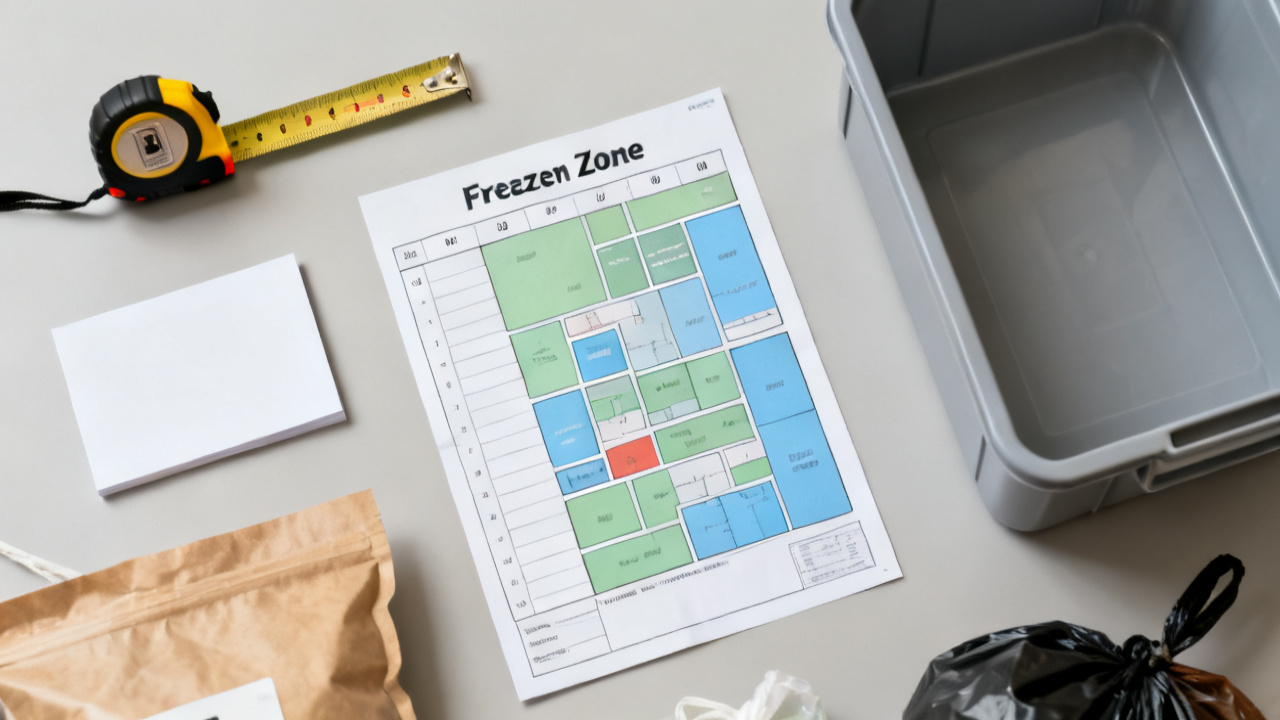
Zones: leftovers, protein, and bread on one map
This zone map is designed for standard residential upright and chest freezers between 5 and 20 cubic feet, with assigned spots based on how often you access items and their storage safety needs. No special bins or organizers are required, though you can add them if you prefer to keep loose items contained.
| Freezer Location | Assigned Zone | Allowed Items | Prohibited Items |
|---|---|---|---|
| Top Shelf (upright) / Top Rack (chest) | Leftovers Zone | Pre-portioned cooked leftover meals, roasted vegetables, cooked grains, soups in sealed rigid containers | Raw proteins, unopened bulk frozen goods, bread, unlabeled items |
| Middle Shelf / Upper Middle Basket | Protein Zone | Raw chicken, beef, pork, fish, frozen meat alternatives, sealed pre-cooked proteins (meatballs, sausage patties) | Leftovers, bread, loose unbagged items, anything without a leak-proof seal |
| Bottom Shelf / Lower Middle Basket | Pantry Staple Zone | Frozen bread, waffles, pizza, frozen fruits/veggies for smoothies, ice cream, frozen side dishes | Raw proteins that may leak, unlabeled leftovers, long-term storage items |
| Door Shelves | High-Access Zone | Ice cubes, frozen coffee cubes, vegetables you use 2+ times per week, labeled leftovers planned for use within 3 days | Raw protein, long-term storage items, unlabeled anything |
| Back Wall Crannies | Long-Term Storage Zone | Double-bagged bulk proteins, unopened frozen goods planned for use in 1+ month, clearly labeled holiday meal prep | Loose bags, unlabeled items, anything planned for use in the next two weeks |
| Floor (chest freezers only) | Bulk Storage Zone | Whole turkeys, 10+ pound cases of frozen vegetables, unopened bulk ice bags | Small individual bags, leftovers, anything not in a hard sealed container or double bag |
Each zone keeps items with similar use cases and storage needs together, so you never have to dig through frozen vegetables to find a leftover container or risk raw meat leaking on your ice cream.
Dates facing the door so nothing hides
The only non-negotiable rule that makes this entire map work is the date-facing requirement. Every single item that goes into the freezer gets a clear label with its contents and the date it was frozen, and that label is always positioned to face the freezer door, no exceptions. Even if you’re in a hurry after a grocery run, take 10 seconds to mark the bag or add a piece of masking tape with the information before putting it away. Example timing: Labeling 7 grocery bags of frozen items after a weekly shop takes less than 2 minutes total, which saves you 10+ minutes of rummaging later and $20+ a month in wasted food. For items stored in the long-term back zone, you can add a secondary list taped to the outside of the freezer that notes every item in back storage and its freeze date, so you don’t have to dig through frost to check dates. Pair this rule with first-in, first-out sorting: when adding new items to a zone, place them behind older items so the earliest freeze dates are always closest to the door, ensuring you use older food before it expires.
A monthly frost check while the door is open
Frost buildup will eventually erode even the most organized zone system, so a quick monthly check prevents small issues from becoming big messes. Do this check while you already have the freezer open to put away groceries or grab a meal, so you don’t waste energy letting cold air escape unnecessarily. During the check, first wipe any light frost off of labels that are starting to get covered. Second, scan for items past their safe freezer lifespan (leftovers keep 3 months, ground meat keeps 4 months, whole poultry keeps 9 months, bread keeps 6 months) and toss anything that’s expired or shows signs of deep frost burn. Third, rearrange any items that drifted out of their assigned zones, and confirm all labels are still facing the door. Fourth, if you see more than 1/4 inch of frost buildup on the freezer walls, schedule a quick defrost for your next low-grocery week to avoid losing valuable storage space. Illustrative example: A monthly 5-minute frost check can prevent 3+ cubic feet of frost buildup in a 15 cubic foot upright freezer over the course of a year, which is enough space to store 20 extra pounds of frozen protein or 30 loaves of bread.
Walk-in freezers this map is not laying out
This zone map is designed exclusively for standard home freezers, and will not work for commercial walk-in freezers, outdoor freezers used only for long-term hunting or fishing catch storage, or mini freezers under 3 cubic feet. Small mini freezers can use a simplified version of the zones (split the single shelf into leftovers, protein, and staple sections) but the full map’s location assignments won’t fit. If you have a secondary home freezer dedicated exclusively to bulk storage, you can adjust the zones to fit your needs, but keep the date-facing rule intact as it eliminates nearly all guesswork about what’s inside each bag. You can add color-coded bags or stackable bins if you want, but they are entirely optional for the system to work.
Test this zone map for one month, keeping the date-facing rule non-negotiable, and you’ll cut down on both food waste and the stress of rummaging through frost-covered bags at dinnertime. You don’t need any special supplies to get started, just a permanent marker and 10 minutes to sort your existing freezer items into their assigned zones this week.
QuickSpace Living editors