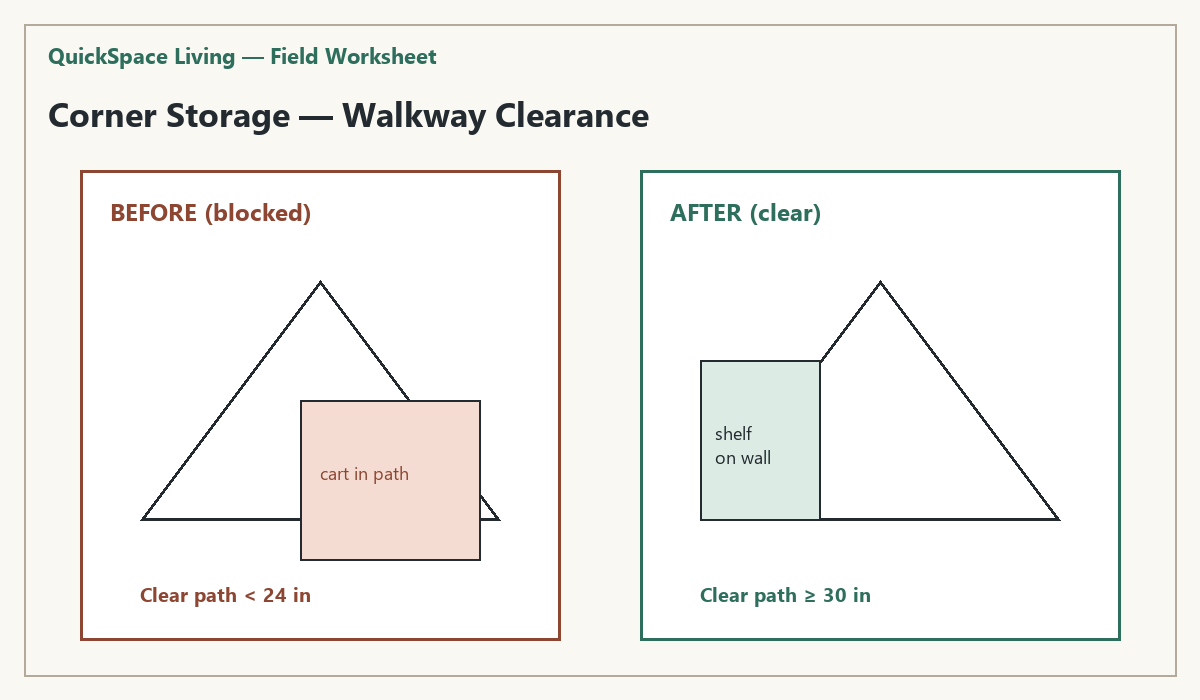
Corners look empty, so people park a cart there. Then every trip through the room becomes a hip check. Corner storage is only useful when the walkway still works.
Clearance rule
After the storage is placed, you still need about 30 inches of clear path. If you cannot walk past without turning sideways, the unit is wrong for that corner. Measure path width with a tape at the narrowest point between the new unit and the opposite furniture.
Prefer wall to floor when you can
A narrow wall shelf often beats a deep rolling cart. Carts are for supplies you move room to room; shelves are for supplies that stay. In rentals, use damage-free shelf systems or tall freestanding etageres that sit fully inside the corner without jutting into the lane.
Tape test before buying
Outline the furniture footprint with tape for 24 hours. Live with the blocked path. You will feel the mistake early, before return shipping becomes annoying. If the tape triangle already annoys you, a prettier cart will not help.
What corners are good for
Light vertical storage, a single plant + one slim shelf, or a corner desk with a hidden cable tray. What corners are bad for: wide laundry piles, open donation bags, and “temporary” boxes that stay for months.
Re-check clearance after seasonal decor goes up. Holiday trees and coat racks often steal the same corner you measured in summer.
How to know the system is working
Give any new setup two full weeks before you buy another product. Track three signals only: can you put things away in under a minute, does the walkway stay clear, and does the surface return to empty at least once a week. If two of those fail, change the rule or the footprint—do not add another bin yet.
When something breaks the system, write one sentence about why. “Shoes overflow because guests leave pairs” is a different fix than “we own too many daily shoes.” Specific notes beat vague frustration and keep this site’s advice useful for your actual apartment.
How to know the system is working
Give any new setup two full weeks before you buy another product. Track three signals only: can you put things away in under a minute, does the walkway stay clear, and does the surface return to empty at least once a week. If two of those fail, change the rule or the footprint—do not add another bin yet.
When something breaks the system, write one sentence about why. “Shoes overflow because guests leave pairs” is a different fix than “we own too many daily shoes.” Specific notes beat vague frustration and keep this site’s advice useful for your actual apartment.
How to know the system is working
Give any new setup two full weeks before you buy another product. Track three signals only: can you put things away in under a minute, does the walkway stay clear, and does the surface return to empty at least once a week. If two of those fail, change the rule or the footprint—do not add another bin yet.
When something breaks the system, write one sentence about why. “Shoes overflow because guests leave pairs” is a different fix than “we own too many daily shoes.” Specific notes beat vague frustration and keep this site’s advice useful for your actual apartment.
Lighting and visibility
Dark corners hide clutter. A small plug-in puck light or a lamp you already own makes people put things back more consistently because the corner no longer feels like a void. Visibility supports maintenance more than another closed cabinet door.
Avoid parking chargers and extension cords across the corner path. Storage that creates a trip line is a safety problem, not an organization win.
Quick recap
Measure first, keep walkways clear, maintain on a short weekly timer, and refuse extra products until the current footprint works for two weeks. That sequence is the difference between a real system and a shopping spree that looks organized for one afternoon.
Final check
Walk the room once after setup. If anything crosses a walking line, shorten it or move it. If you feel the urge to buy one more organizer immediately, wait two weeks and reassess with a photo.
Keep it boring on purpose
The systems on this site are intentionally plain: a tape measure, a weekly timer, and a walkway rule. Plain systems survive busy weeks better than decorative setups that need constant restyling. If a step feels optional, keep it anyway for fourteen days before you delete it—most clutter returns when the maintenance step is the first thing cut.
Important note:
This is practical home-organization guidance for everyday apartments and houses. It is educational content, not a product warranty, contractor advice, or a guarantee that every floor plan will fit the same setup.