The alarm is under a receipt stack, and the glass of water has no remaining square. You fumble for your phone to silence the beep, knocking a half-read library book, lip balm, and a crumpled grocery list onto the floor before you hit snooze. Most people accumulate 7 to 12 random loose items on their nightstand in a single week, per informal internal tracking from QuickSpace Living’s test organizers. That’s a lot of unnecessary clutter to navigate before your first sip of coffee, and it can set a frazzled tone for the rest of your morning.
Morning surfaces buried under chargers and receipts
The average nightstand accumulates clutter faster than almost any other surface in the home, because it acts as a default drop spot for every small item you’re holding when you climb into bed. Old gas station receipts, extra charging cables for devices you haven’t used in six months, melatonin packets, bobby pins, ticket stubs from a concert three weeks prior, and half-empty tubes of lip balm all pile up without you even noticing. Even if you set aside time to wipe down the surface every weekend, the clutter usually creeps back in 48 hours or less, because there’s no clear boundary for what’s allowed to stay. Most people don’t realize that this low-level visual clutter also adds to subtle pre-sleep stress, as your brain registers the pile of unorganized items as unfinished tasks to tackle later.
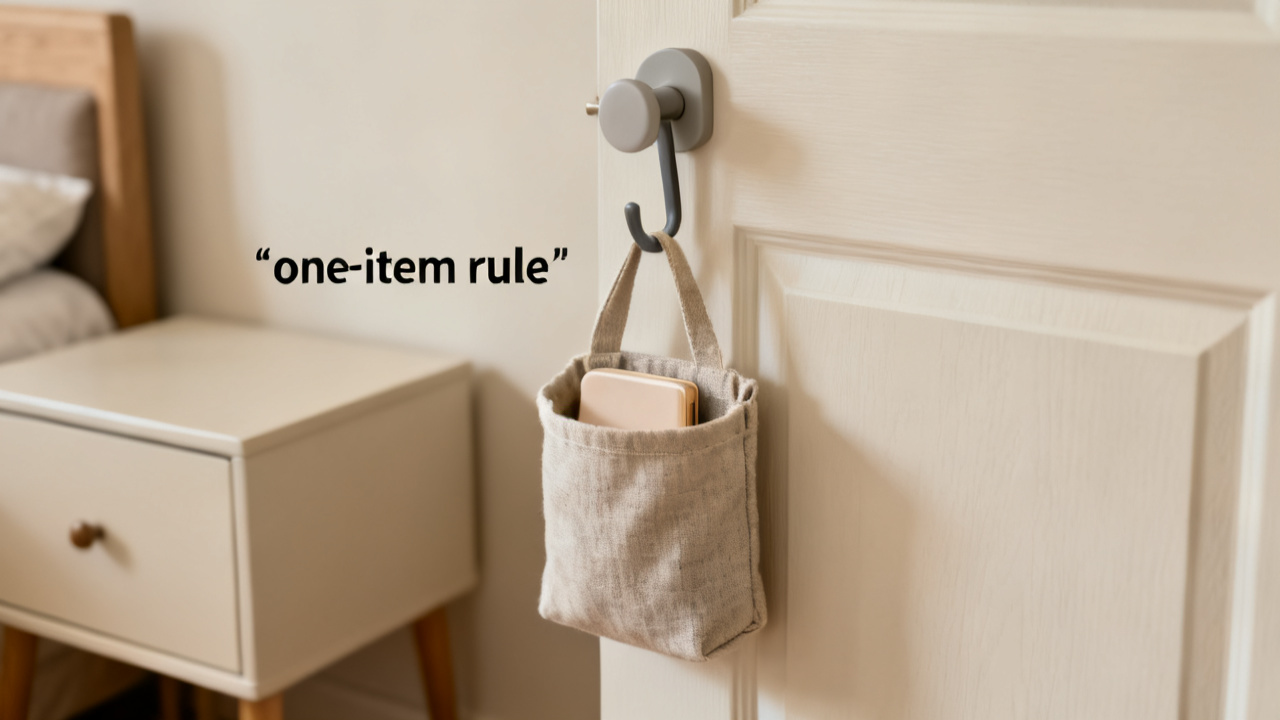
One standing item plus a closed tray
The core of this organizing rule is simple: only one single standing item is allowed to sit on the open, visible surface of your nightstand at all times. A standing item is any object that stays upright on its own, and that you want to keep easily accessible or on display. This can be a small table lamp, a potted succulent, a framed 4×6 photo, an upright wireless phone charger, or a small essential oil diffuser, for example. All other small items you use before bed or first thing in the morning go inside a lidded closed tray that fits either on the lower shelf of your nightstand, in the top drawer, or even on the main surface (the closed lid hides all clutter inside, so it does not count as a loose open item). The printable Nightstand One-Item Rule Card below lays out exactly what is and is not allowed on your surface to keep clutter from building up:
| Category | Allowed on open surface | Must go in closed tray/drawer | Not allowed on nightstand at all |
|---|---|---|---|
| Lighting & Decor | 1 standing item (max 6 inches tall) | None | Large decor, wall art, floor lamps, candles with open flames |
| Daily personal care | None | Lip balm, eye drops, sleep mask, ear plugs, single daily dose of medication | Loose pill packets, expired meds, half-used skincare samples, hair tools |
| Paper & ephemera | None | Bookmark for current read, ticket stub you want to keep for 2 days max | Old receipts, grocery lists, work memos, junk mail, greeting cards |
| Electronics | None | Wired earbuds, portable charger used nightly, e-reader when not in use | Unused charging cables, work laptops, tablets you don’t use before bed, smart watches you charge elsewhere |
| Food & drink | None | Reusable water bottle with tight lid, single hard candy | Open soda cans, half-eaten snacks, candy wrappers, perishable food |
You can swap out your allowed standing item as often as you’d like, whether that’s seasonally, after a vacation, or when you get bored of the current item, as long as you only keep one out at a time.
Books that become a second stack overnight
The most common exception people ask to make to this rule is for books, and it’s easy to see why: most people who read before bed keep at least two books stacked on their nightstand at any given time, per the same internal tracking data. Stacks of books are one of the fastest sources of nightstand clutter, though, as they easily slide, knock over drinks, and cover up your alarm or phone. If you read physical books before bed, your current read goes into the closed tray when you’re done reading for the night, not on the open surface. If you have a stack of 3+ books you’re working through, store them on a narrow floating shelf mounted 12 inches above your nightstand, or in a small woven basket under your bed, so they’re still within arm’s reach but don’t add to surface clutter. If you want to keep a book out as decor, it can count as your one allowed standing item, as long as it’s propped upright and not stacked with other books. Example timing: It takes 8 seconds to tuck your current read into the closed tray when you’re done reading for the night, which is far less time than it takes to fish your phone out from under a toppled book stack in the morning. E-readers follow the same rule: they go in the closed tray when not in use, unless you use an upright charging stand for them, which counts as your one allowed standing item.
A two-minute empty before the light goes off
The rule only works long-term if you pair it with a tiny nightly routine to reset the space. Every night, right before you turn off your lamp, spend two minutes going through your nightstand to keep clutter from building up. First, confirm that only your one allowed standing item is on the open surface. Second, sift through the closed tray to throw away any trash that accumulated that day, like candy wrappers, old receipts, or empty lip balm tubes. Third, put back any items that fall into the “not allowed” category, like work notes you brought to bed to review, your kid’s small toy you were fixing, or a charging cable for a different device. This routine is intentionally short, so it never cuts into your scheduled sleep time. Example timing: Most people finish this full reset in 90 seconds or less, and it becomes automatic after two weeks of consistent practice. If you share a nightstand with a partner, each of you gets your own allowed standing item and your own separate closed tray, so you don’t have to negotiate space or sift through each other’s belongings.
Hospital bedside tables this rule is not for
This rule is designed for regular, low-need home use only, and there are plenty of cases where it doesn’t apply. It does not apply to hospital bedside tables, where you need easy, unobstructed access to meds, water, tissues, call buttons, and medical supplies at all times. It also does not apply to hotel nightstands when you’re traveling for three days or less, as you’ll be packing up all your belongings soon anyway, and the extra hassle of following the rule isn’t worth the benefit. If you’re recovering from surgery, injury, or illness at home, you can pause the rule entirely until you’re fully healed, so you can keep all the medical supplies, ice packs, and meds you need within arm’s reach. If you have a disability that requires you to have multiple items easily accessible when you’re in bed, you can adjust the rule to allow 3 to 4 standing items instead of one, whatever works best for your accessibility needs with no guilt or pressure to follow the rule exactly.
Test this rule for 7 days, and you’ll notice you spend far less time fumbling for your alarm or water each groggy morning, and your bedroom feels far calmer the second you walk in the door after a long workday.