Dinner needs cumin, and the alphabet row still has it two jars behind a spice you never touch. You end up digging past a half-used jar of green cardamom you bought for one holiday cookie recipe three years ago, spilling a pinch of powdered cloves onto the counter in the process. By the time you fish out the cumin, your sautéed onions are slightly charred at the edges, and you’ve lost the smooth flow of your recipe. Most people default to alphabetical spice organization because it feels logical on paper, but it rarely lines up with how you actually cook week to week, prioritizing arbitrary letter order over the frequency you reach for each jar.
Alphabet rows that hide the cumin you use tonight
Alphabetical spice sorting works on the assumption that you use every spice in your collection with roughly equal frequency, a standard that applies to almost no home cooks. For most people, 8 to 12 core spices make up 90% of their cooking use: think cumin, paprika, garlic powder, oregano, cinnamon, and the other staples you reach for multiple times a week. The remaining 15 to 30 jars are for niche recipes, holiday cooking, or experiments you tried once and never revisited. When sorted A-Z, your go-to cumin gets wedged between coriander you only use for homemade hummus once a quarter and cardamom you haven’t touched since 2021, forcing you to sift through irrelevant jars every time you make tacos, chili, or roasted veggies. Even if you label every jar clearly, the alphabetical system wastes 10 to 15 seconds per recipe grab, which adds up over months of weeknight cooking, and creates small, avoidable moments of frustration when you’re already short on time.
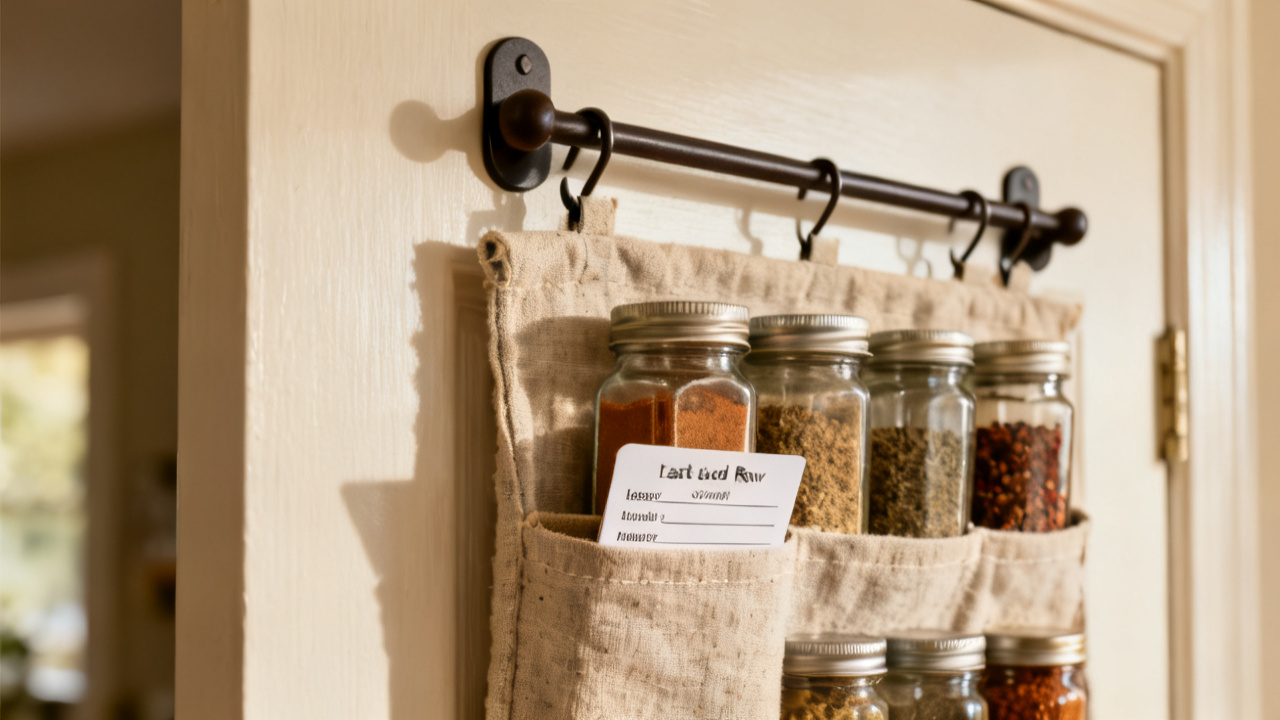
A last-used front row and a deep backup row
This system cuts out that sifting entirely by splitting your spice shelf into two distinct zones, no fancy labels or specialty storage containers required. The front row is reserved exclusively for spices you have used in the last 30 days, with a hard cap of 10 spots to avoid overcrowding that defeats the purpose of easy access. The deep backup row holds all other spices, sorted loosely by use case (baking spices, global cuisine spices, etc.) if you prefer, with no strict alphabetical rule required. To track the order and avoid letting rarely used spices creep into the front row, use the free last-used spice row card below, designed to tape to the inside of your cabinet door for quick reference. QuickSpace Living sized this card to fit standard 3-inch wide cabinet gaps without blocking shelf mounts or hardware.
| Last-Used Spice Row Card (tape to cabinet inner door) | |||
|---|---|---|---|
| Front Row Spot | Spice Name | Date Last Used | Replace Threshold |
| 1 | Cumin | 10/12/24 | 1/4 full |
| 2 | Smoked paprika | 10/11/24 | 1/4 full |
| 3 | Garlic powder | 10/12/24 | 1/3 full |
| 4 | Oregano | 10/10/24 | 1/4 full |
| 5 | Chili powder | 10/09/24 | 1/4 full |
| 6 | Turmeric | 10/08/24 | 1/4 full |
| 7 | Cinnamon | 10/07/24 | 1/3 full |
| 8 | Empty | N/A | N/A |
| 9 | Empty | N/A | N/A |
| 10 | Empty | N/A | N/A |
Update the date last used every time you pull a spice from the front row, and if you reach for a spice from the backup row, add it to the first empty front spot, or replace the front row spice with the oldest last-used date if all 10 spots are full. The backup row can be stored in a deep shelf, a lower cabinet, or even a labeled bin if you don’t have extra upper shelf space, as you’ll only access it a few times a month at most.
Duplicates bought because the jar was invisible
One of the biggest hidden costs of alphabetical spice sorting is accidental duplicate purchases, which happen when you can’t easily see the jars you already own. If your go-to paprika is buried at the back of the A-Z row, you might not notice it’s down to a quarter full until you’re mid-recipe, forcing you to run to the grocery store mid-cook or skip the ingredient entirely. If you see paprika on sale during a routine grocery run, you might grab a new jar without checking your shelf, only to find two unopened jars already hiding in the back when you do a deep clean a few months later. Illustrative example: A home cook recently shared that they found four duplicate jars of cumin in their spice cabinet after switching to the last-used system, all bought because they couldn’t see the existing jars buried behind less frequently used spices. Most dried spices only stay fresh for 2 to 3 years, so these duplicates often go stale before you can use them, wasting money and cluttering up your shelf space. The last-used system eliminates this issue entirely, because all your frequently used spices are front and center, so you can see their fill levels at a glance when you’re building your grocery list, no digging required.
A cooking-night reset of the front row
This system is entirely self-sustaining, requiring no weekly 30-minute organizing sessions or quarterly deep cleans to stay functional. The only maintenance required is a quick post-cooking reset, which takes just a few seconds after you finish cleaning up your kitchen. After you put away all your cooking tools, take 10 to 15 seconds to update the last-used dates on your card for any spices you used that night, and move any spices you pulled from the backup row into the front row as needed. Example timing: 30 seconds total per reset, or less than 3 minutes of organizing time per month for someone who cooks 5 nights a week. If your cooking habits shift, the system shifts with you automatically: if you start baking sourdough every weekend, your cinnamon, nutmeg, and yeast will move into the front row as you use them, pushing any spices you haven’t touched in a month back to the backup row. There’s no need to pre-plan which spices belong in the front row, as the reset process naturally prioritizes what you actually cook, rather than what you think you should cook.
Restaurant spice walls this row cannot copy
It’s easy to look at Instagram photos of restaurant spice walls, with hundreds of matching jars sorted by color or alphabet lining the entire wall, and think that’s the peak of organized cooking. But those walls are designed for commercial kitchens, where 5 to 10 line cooks use the same spice collection every shift, and need a universal sorting system that works for everyone, regardless of personal cooking habits. Those restaurants also use a far wider range of spices every single day than the average home cook, so nearly every jar in their wall is accessed multiple times per shift. For home cooks, replicating that wall leads to unnecessary visual clutter, wasted counter or shelf space, and the same sifting issue as the alphabetical cabinet row, since most of the jars you display will be for recipes you rarely make. You don’t need to display all your spices to have an organized system; keeping niche spices in the backup row cuts down on visual noise, making your kitchen feel calmer and less overwhelming when you’re cooking after a long day.
Tonight before you start prepping your meal, pull the 5 spices you reach for most often to the front of your spice shelf, fill out the first 5 spots on the last-used spice row card, and note how much faster you can grab what you need mid-recipe without fumbling through the rest of your collection.
Written by the QuickSpace Living editors.