Today’s envelopes are already on yesterday’s pile, which is how a counter turns into a second inbox. Most people set mail down intending to deal with it “when they have a minute,” but that minute rarely comes before the next stack of letters, flyers, and catalogs shows up the following afternoon. Over time, that stack hides bills, personal letters, and urgent notices under junk you will never use, creating unnecessary stress and the risk of costly missed deadlines.
Counters that become a week of unopened envelopes
Kitchen counters, entryway consoles, dining table edges, and even the top of the toilet tank are common default drop zones for unopened mail. It starts with one or two envelopes set down after a long workday, then grows to a stack tall enough to hide your keys, your kid’s homework, or your favorite coffee mug. A week’s worth of unopened mail isn’t just unsightly—it increases the risk of missing a bill due date, losing a wedding invitation, or accidentally tossing something important when you finally grab the whole stack to throw it away during a rushed cleaning spree. Many people avoid opening mail because they worry about encountering bad news, like a high medical bill or a past-due notice, but leaving envelopes sealed only amplifies that low-level background stress, as you constantly wonder what might be hiding in the pile. This pattern is so common that many households report having 3 or more weeks of unopened mail tucked away in random spots around their home, even if they consider themselves otherwise organized.
Rip, recycle, or file before dinner
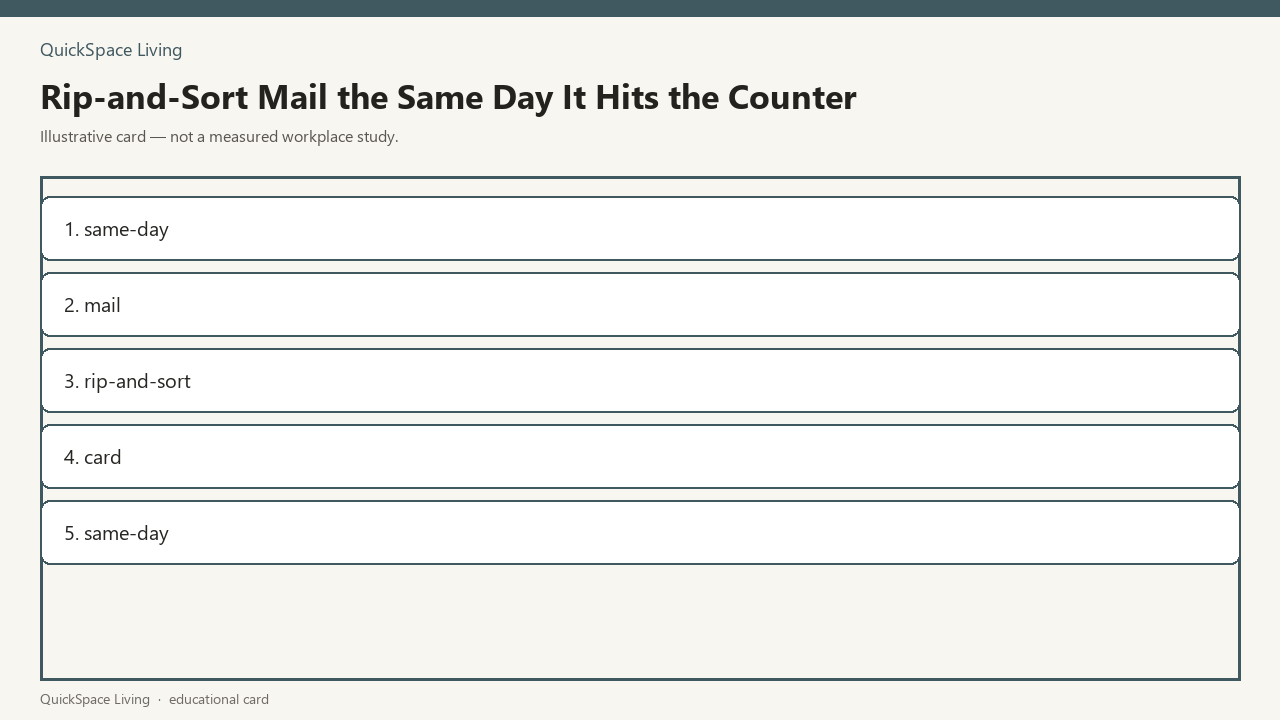
This is the core rule of the same-day system, with zero exceptions for “I’ll get to it later.” As soon as you bring mail inside, you complete three simple actions: rip open every sealed piece, sort it into one of three categories, and dispose of or store each category immediately. The only supplies you need are a recycling bin, a shredder for documents with sensitive personal information, a single dedicated action tray for items that require follow-up, and a basic filing system for records you need to keep long-term. To make the process even easier, you can use the same-day mail rip-and-sort pocket card, a printable checklist you can keep by your drop zone to avoid decision fatigue:
| Same-Day Mail Rip-and-Sort Pocket Card |
|---|
| ✅ Grab all incoming mail immediately after bringing it inside |
| ✅ Open every sealed envelope in one single batch |
| ✅ Sort into 3 exclusive piles: • Recycle/shred: Junk mail, unwanted solicitations, duplicate notices, expired coupons • Action: Bills, RSVP requests, forms requiring a signature or response, gift cards • File: Tax documents, insurance statements, legal paperwork, personal letters to keep, warranty information |
| ✅ Drop recycle/shred pile in its designated bin right after sorting |
| ✅ Place action pile in your single dedicated action tray (no loose stacking on counters) |
| ✅ Tuck file pile into your filing system within 10 minutes of sorting |
This pocket card, designed by QuickSpace Living, fits in a standard index card sleeve so you can tape it to your counter edge or inside your entryway cabinet for easy reference. Example timing: This whole process takes 3 to 7 minutes for a standard daily mail delivery, no extra time required if you do it while you wait for your dinner water to boil or your frozen pizza to heat up. The key is to not let any sealed envelopes leave your sorting spot until they are opened and categorized, so you never end up with a random pile of unopened mail floating around your home.
Catalogs that wait “for later” and never leave
Catalogs are one of the biggest culprits of lingering mail clutter, because they feel more useful than generic junk flyers. Many people flip through a page or two of a home decor, clothing, or hobby catalog, set it down saying they’ll go back to it to order something or save an idea, but 9 times out of 10 it sits there for months until it’s completely outdated and irrelevant. In the rip-and-sort system, catalogs get 30 seconds of your time immediately, no exceptions. Flip through the pages fast, and if you see a product, recipe, or decor idea you actually want to save, take a quick photo of the page with your phone, then drop the whole catalog in the recycling bin immediately. If you don’t see anything worth snapping a photo of, it goes straight in the bin without a second thought. You can also cut down on future catalog clutter by unsubscribing from mailing lists for catalogs you never open, a process that usually takes less than 2 minutes per catalog using free online unsubscribe tools.
A five-minute pass the same afternoon
There will be days where you can’t sort mail immediately when you bring it inside—you might have a kid with a last-minute homework emergency, be running late to a dinner reservation, or walk in the door to a broken appliance that needs urgent attention. On those days, you have a hard deadline to complete a five-minute sorting pass before the end of the afternoon, before you sit down for dinner or start your evening relaxation routine. Illustrative example: If you get home at 5pm and have to rush your kid to soccer practice, set a reminder on your phone to do the sort at 7:30pm when you get back, before you make popcorn for your evening show. This is non-negotiable, because pushing sorting to the next day is how a one-day stack turns into a one-week stack, and then a one-month stack. Even if you’re tired after a long day, five minutes is shorter than the time you spend scrolling through social media while waiting for your coffee to brew the next morning, so it’s not a significant drain on your energy. If you have roommates or family members, you can split the work: one person opens all the envelopes, another sorts them into the three categories, cutting the time down even further.
Legal notices this sort cannot interpret
This rip-and-sort system is designed for standard, routine household mail, and it is not a replacement for professional guidance for complex legal or official documents. If you open a piece of mail that is a lawsuit notice, a tax audit notification, a lease termination, a workers’ compensation claim, or any other official document you don’t fully understand, set it aside in the action section of your tray and reach out to a qualified professional (lawyer, accountant, property manager, or government representative) within 2 business days to get guidance on next steps. This sorting system simply ensures you don’t miss these important documents under a pile of junk mail, so you have enough time to get the support you need to address them appropriately. If you receive mail addressed to a previous resident, mark it “return to sender” and drop it in a public mailbox immediately, no need to hold onto it or try to track down the recipient yourself. For mail addressed to another member of your household, simply place it in their designated spot in your action tray, so they can handle their own mail as soon as they have a minute.
Tape your printed rip-and-sort card next to your main mail drop zone tonight, and sort any remaining unopened mail from the past week before you finish your next meal. You’ll wake up tomorrow to a clear counter and zero low-level stress about hidden bills or lost notices waiting under a stack of junk.
QuickSpace Living editors