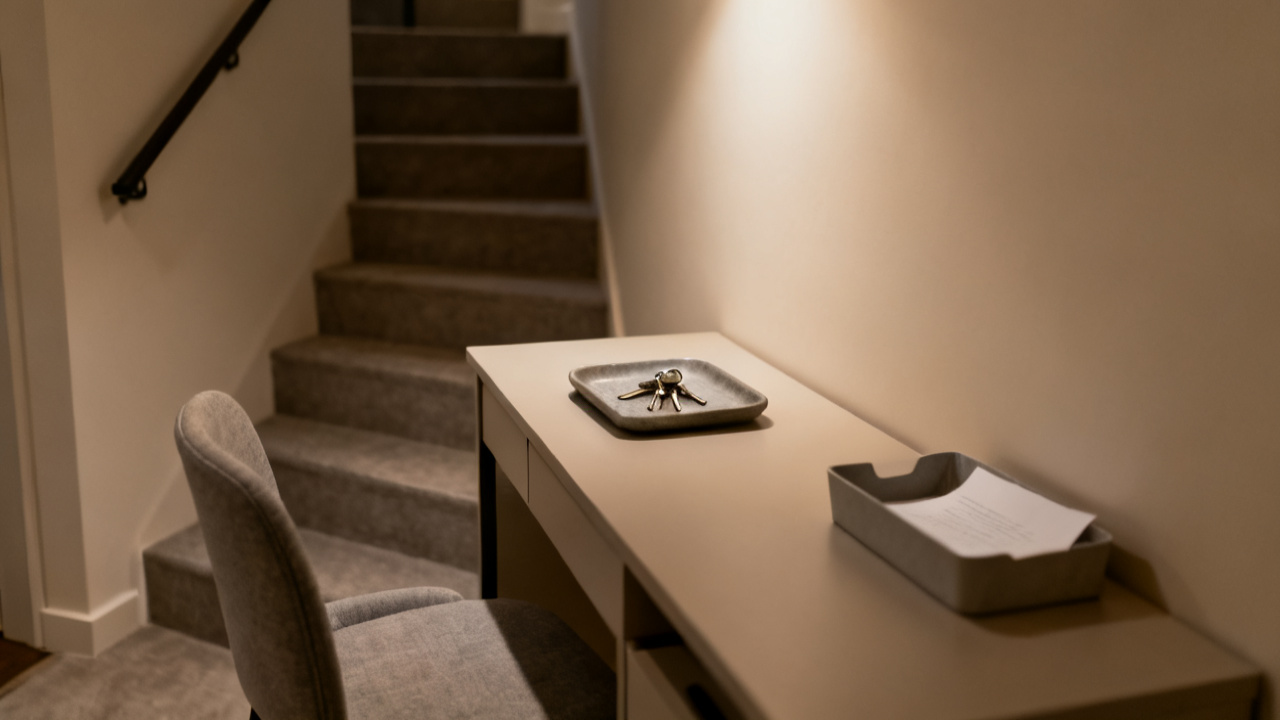
The alarm is under a receipt stack, and the glass of water has no remaining square. You squint at the glow peeking out from under a crumpled takeout bag, fumbling to silence the beep before it wakes your partner on the other side of the bed. The cold ring of the water glass slips under your fingers as you reach, spilling a drop onto a paperback you’d meant to finish three weeks prior. You huff, already behind on your morning routine before your feet even hit the floor.
Map your two eligible nightstand storage spots
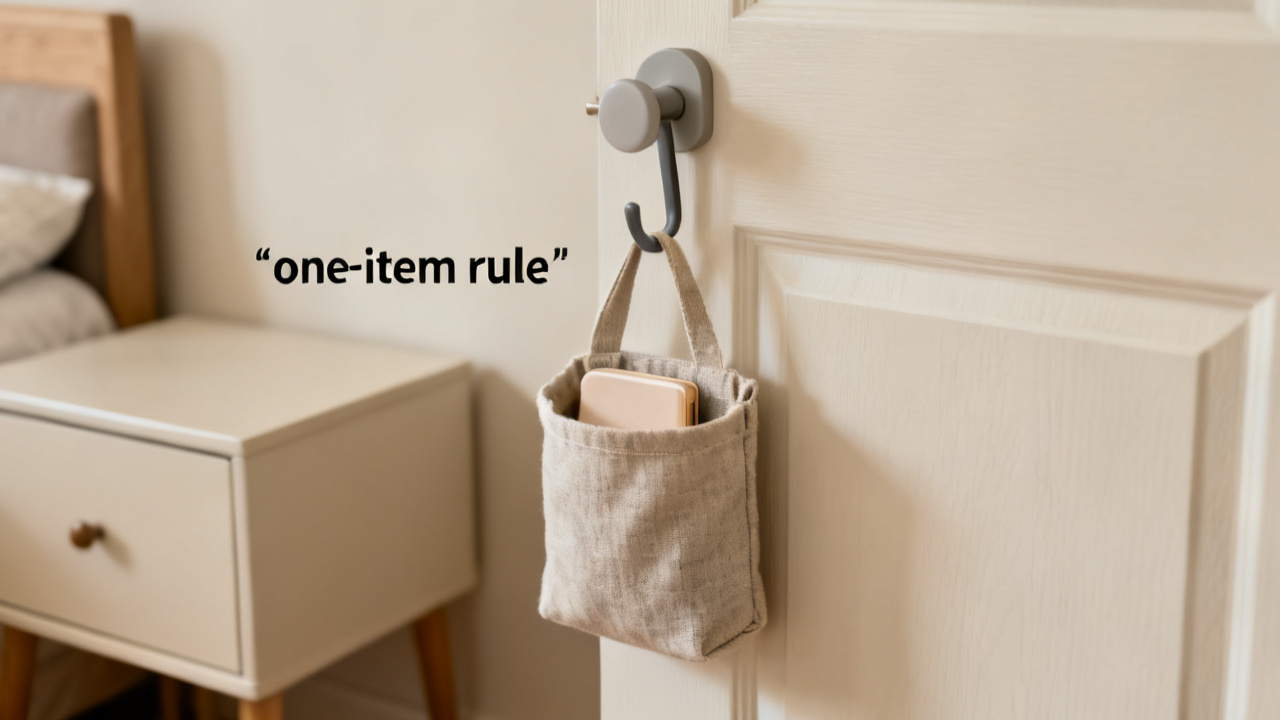
Most nightstand clutter builds up because you only think of the flat top surface as available storage, even when that space is reserved for the two non-negotiable items you need first thing in the morning: your alarm and your water glass. The two spots you’ll use for the one-item rule are deliberately placed to be reachable without taking up that critical morning surface, and you don’t need to drill holes or buy new organizers to use them. The first spot is the narrow, unused wall ledge 6 inches directly above your nightstand top, the same spot you’ve previously ignored because you thought it was only for decorative candles you never light. The second spot is the lidded fabric bin you already keep tucked under the nightstand’s lower edge, currently holding half a dozen old charging cables and a single sock you haven’t gotten around to matching to its pair. This two-spot system is adapted from a framework shared by QuickSpace Living for small bedroom storage that doesn’t require new furniture. Illustrative example: If you use a 12-inch wide nightstand, these two spots add 18 total inches of hidden or elevated storage without taking up any of the 72 square inches of open surface you rely on for morning essentials. You’ll only ever keep one item in either of these spots at a time, so you never run the risk of them overflowing onto the nightstand top, even on weeks when you’re busy and tempted to let clutter build up.
Select the spot that matches your current daily item
The one item you’re allowed to keep in these spots (outside of your alarm and water glass) can be any small, personal item you want close by when you’re going to sleep or waking up, from lip balm to a concert ticket you don’t want to forget. To avoid overthinking the choice at the end of a long day, use this simple guide to pick which spot works best for your item that day:
| Item category | Best spot | Rationale |
|---|---|---|
| Small, frequently referenced items (lip balm, sleep mask, current chapter bookmark) | Upper wall ledge | Easy to grab when you’re settling in for the night, no risk of getting knocked off if you shift the water glass |
| Larger, temporary items (half-read paperback, hand lotion tube, allergy medication blister pack) | Under-nightstand lidded bin | Stays out of sight, won’t accumulate dust or get splashed by spilled water |
| Items you need to remember for the next morning (event ticket, work access badge, grocery list scribble) | Upper wall ledge | Visible when you first open your eyes, no digging required to find it before you leave the house |
You can adjust these guidelines if you have a one-off item that fits better in the opposite spot—for example, if your allergy medication makes you drowsy and you want to hide it out of sight so you don’t accidentally take it in the morning, you can tuck it in the bin instead of the ledge. The goal is to eliminate decision fatigue, not create rigid rules that feel hard to follow. If you have more than one item you want to keep near your bed, set all but one aside to put away in your dresser later, so you don’t bend the rule until it stops working.
Place your item and add a visible, short reminder note
Once you’ve picked the right spot for your item, set it down gently, making sure it doesn’t overhang onto the nightstand top or block the view of your alarm clock. Next, grab whatever scrap of paper you have handy—even a corner of the receipt you pulled out from under your alarm this morning works—to write a short, 1 to 3 word note related to the item. If your item is a paperback you’re trying to finish, write “2 chapters” to remind yourself to read a little before bed instead of scrolling on your phone. If your item is a work access badge you need to bring to an early meeting, write “7:30 AM meeting” so you don’t leave it behind when you rush out the door. If you don’t need a reminder related to the item itself, write a small checkmark to confirm you followed the one-item rule that night, so you’re less likely to add extra clutter later. Stick the note directly on the item, or on the lid of the under-nightstand bin if you tucked the item inside, so you see it as soon as you reach for your alarm the next morning. You don’t need to save the notes; you can toss them once you’ve addressed the reminder or picked a new item for the next night.
Run this quick reset before you brush your teeth each Sunday
The one-item rule works best if you do a quick 90-second reset once a week to clear out any old items or notes that have built up in the two spots. Pick Sunday night, right before you head to the bathroom to brush your teeth, to run through this reset so you start the week with a completely clear nightstand surface. First, pull any item out of both spots and discard any old sticky notes attached to them. Next, put away any items you no longer need near your bed: drop the old receipt in the trash, tuck the finished paperback on your bookshelf, put the single sock in your laundry basket to match later. Finally, pick your one item for the first night of the week, place it in the appropriate spot, and add your note if you need one. This weekly check-in prevents the two spots from turning into forgotten catch-alls that accumulate random clutter over time, and it only takes long enough for your coffee maker to brew a single cup of coffee if you were to run it at the same time. You might find over time that you want to swap out the two spots for others that fit your bedroom layout better, like a hanging fabric pocket on the side of your bed frame or a small floating shelf next to your pillow, as long as they don’t take up space on your nightstand top. You’ll notice after the first week that you no longer fumble for your alarm under piles of paper, and your water glass always has a clear, dry spot to sit, so your mornings feel calmer and less rushed before you even get out of bed. You won’t have to redo the entire system from scratch unless you rearrange your bedroom, and you can adjust the allowed item type whenever your routine changes, whether you’re training for a race and need to keep your sweatband handy or you’re planning a trip and want to keep your passport within easy reach the night before you leave.