The landing bag is from three weeks ago, which is why recycling starts to smell like a second trash can. Most households stack 2-3 forgotten bags behind the front door or under the kitchen sink before they remember to drop them off, even when curbside pickup is available. This system cuts through that backlog by tying your recycling bag choice directly to a set weekly routine, no fancy sorting bins required. QuickSpace Living has shared this framework with casual home organizer communities to cut recycling backlog without adding extra weekly work.
Recycling bags that live in the landing for a month
Most people don’t set out to let recycling pile up for weeks. The issue starts when you buy an oversized bag marketed as “heavy duty for 2 weeks of recycling” that never feels full enough to justify the trip to the curb or drop site. You tell yourself you’ll wait until it’s stuffed to avoid wasting a bag, then forget about it entirely as it sits behind your front door, under a coat rack, or in the back corner of your garage. Example timing: A 30-gallon recycling bag left in a 65-degree entryway will develop visible mold on leftover food residue on takeout containers in 12 days, even if 90% of its contents are dry paper and plastic. Soggy cardboard from rain or snow tracked in on shoes makes the problem worse, attracting fruit flies and leaving sticky residue on your floor that requires extra cleaning. Many people also avoid moving half-full bags because they feel guilty for “wasting” a bag, even if the bag is already causing mess or odor issues in the home.
One bag size and one leave-the-house day
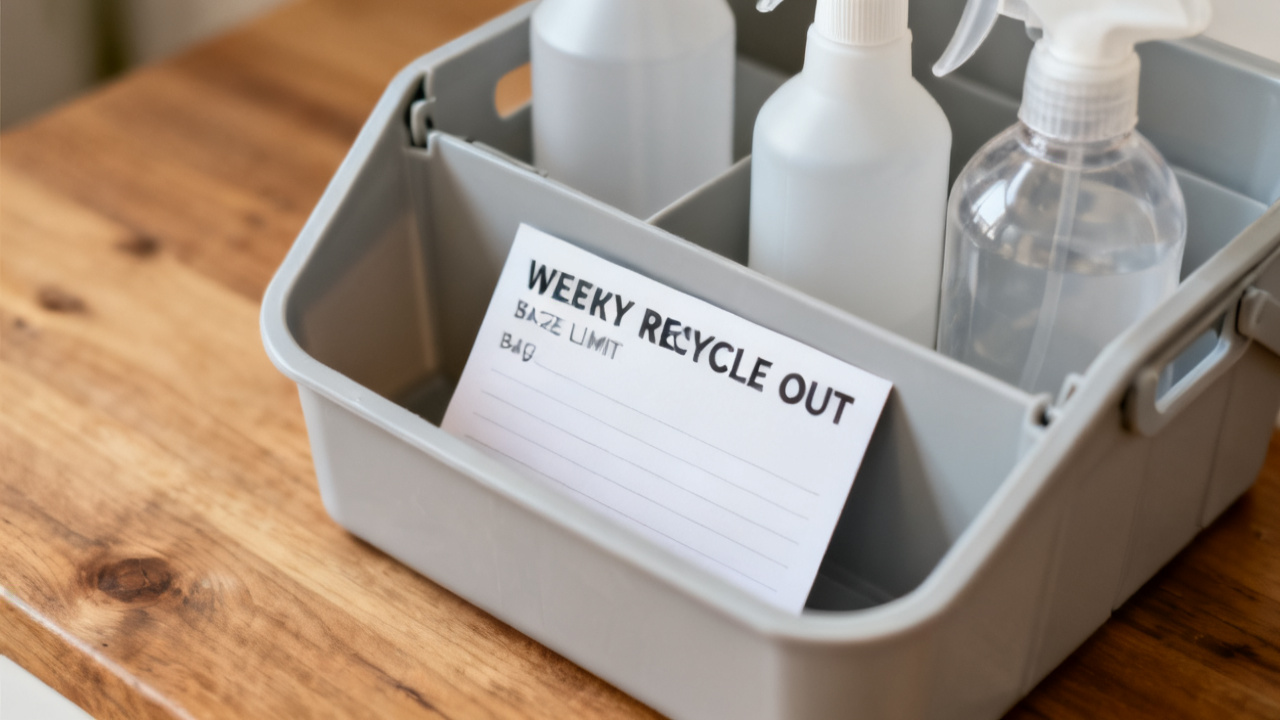
The core fix for forgotten recycling bags is eliminating the “wait until it’s full” rule entirely, and instead matching your bag size to a fixed weekly schedule that never changes, regardless of how full the bag is. The printable weekly recycling-out card below standardizes this for every household size, so you don’t have to guess what size bag to buy or when to take it out.
Weekly Recycling-Out Card (print and tape to your fridge)
| Household Size | Maximum Allowed Recycling Bag Size | Fixed Weekly Dropoff/Pickup Day (fill in) | Quick Size Check |
|---|---|---|---|
| 1 person | 10-gallon kitchen trash bag | ___________ | Fits half a standard grocery bag of flattened cardboard |
| 2-3 people | 13-gallon tall kitchen trash bag | ___________ | Fits 1 full standard grocery bag of flattened cardboard |
| 4-5 people | 20-gallon heavy-duty trash bag | ___________ | Fits 2 full standard grocery bags of flattened cardboard |
| 6+ people | Two 13-gallon tall kitchen bags | ___________ | No single bag weighs more than 10 lbs for easy carrying |
Pick your fixed day based on your existing routine, not your recycling volume. For most people, this will be the night before curbside pickup, or a weekend morning when you already run errands like grocery shopping or dropping kids at activities. Once you set the day, write it on the card and tape the card to the front of your fridge or the inside of your under-sink cabinet where you store recycling bags. If you live with roommates or family, have everyone sign off on the day so no one forgets to take the bag out when the time comes. You don’t need to buy specialty recycling bags, either: standard kitchen trash bags work perfectly, as long as they match the size listed on the card for your household.
Overflow that starts a second secret bag
The most common breakdown of this system happens when you have an unusually high volume of recycling in a single week, like after a birthday party, holiday gathering, or furniture delivery. Most people fill their allocated bag a few days early, grab a second bag, stash it under the sink or in a closet, and then completely forget about it once the scheduled weekly dropoff passes. These “secret bags” are the leading cause of multi-week recycling backlogs, as they get hidden behind cleaning supplies or winter coats for months. To avoid this, follow one non-negotiable rule: you are never allowed to store a second recycling bag in your home for more than 24 hours. If you fill your main bag early, first try to flatten all cardboard, plastic bottles, and food containers to free up extra space. Illustrative example: A 2-person household buys a new small appliance that comes in a 2-foot cardboard box, which fills their 13-gallon bag 3 days before their scheduled Sunday dropoff. They flatten the box, tear it into smaller sections, and fit it into the existing bag with room left for their regular 3 days of paper and plastic waste. If you still have overflow after flattening all items, take the excess directly to a local drop site the same day, or if that’s not possible, add it to the next week’s bag — don’t start a second one that will get forgotten. If you have overflow more than twice a month, you can move up one bag size tier on your card, but don’t size up more than that, or you’ll go back to waiting for a bag to fill up for weeks.
A weekly carry that matches pickup or the drop site
The size limits on the recycling-out card are intentionally designed to make your weekly recycling carry as easy as possible, so you don’t put it off because the bag is too heavy or bulky to move. For households with curbside pickup, your carry routine is as simple as moving the bag from your kitchen collection spot to the curb the night before your scheduled pickup day. No extra trips, no heavy lifting required. For households that have to drop recycling off at a local center, tie your recycling run directly to an errand you already run on your scheduled day, so you don’t have to make a special trip. For example, if your scheduled day is Sunday and you go to the grocery store every Sunday morning, stop at the drop site on your way to the store, so you don’t have to go out of your way. Example timing: A 4-person household drops off their 20-gallon bag on their way to weekly youth soccer practice, a stop that adds 90 seconds total to their existing errand route. If you collect aluminum cans or glass bottles for deposit refunds, keep a small mesh bag next to your main recycling bin, and take that bag with you on the same weekly run, so it doesn’t pile up separately on your counter or in your garage. The goal is to make the carry so low-effort that you never have a reason to put it off.
City sorting rules this card cannot replace
This weekly recycling-out card is designed to fix scheduling and bag size issues, but it does not replace your local municipal recycling sorting rules. Every city has different restrictions on what can be added to curbside or drop-off recycling, and ignoring these rules can lead to your bag being rejected, left on the curb, or even fined in some areas. Common forbidden items include greasy pizza boxes, plastic film, styrofoam, broken glass, and food-soiled paper products. Add a 1-sentence note to the bottom of your printed recycling card with your city’s 2-3 most common forbidden items, so you don’t accidentally contaminate your bag. If your city requires clear recycling bags instead of opaque ones, you can still use the size limits on the card — just buy clear bags in the size that matches your household, instead of standard trash bags. If your city requires sorting into separate bins for paper, plastic, and glass, you can use the same size limits for each bin, and take all bins out on the same scheduled day. Don’t skip checking your local rules, because a rejected bag will end up sitting in your landing for another week, breaking your routine and leading to the same backlog you’re trying to avoid.
Before you go to bed tonight, pull up your local waste management website to confirm your regular pickup day, fill out your printed recycling card, and toss any half-full recycling bags that have been sitting in your home for more than 7 days. You’ll eliminate lingering odors and cut one annoying, easy-to-forget chore off your monthly to-do list before the week even starts.