The closet rod will not slide because every hanger already overlaps the next coat. Most people fill a single coat rod until they can’t jam another hanger on, which ruins access to everyday outerwear and makes grabbing a coat on the way out the door a frustrating, time-wasting chore. A small amount of upfront counting and planning lets you avoid this mess entirely, with a clear rule for how many hangers belong on the rod at any given time. QuickSpace Living’s max-count card template takes the guesswork out of this process, no special tools or expensive organizing products required.
Hangers that overlap until nothing slides
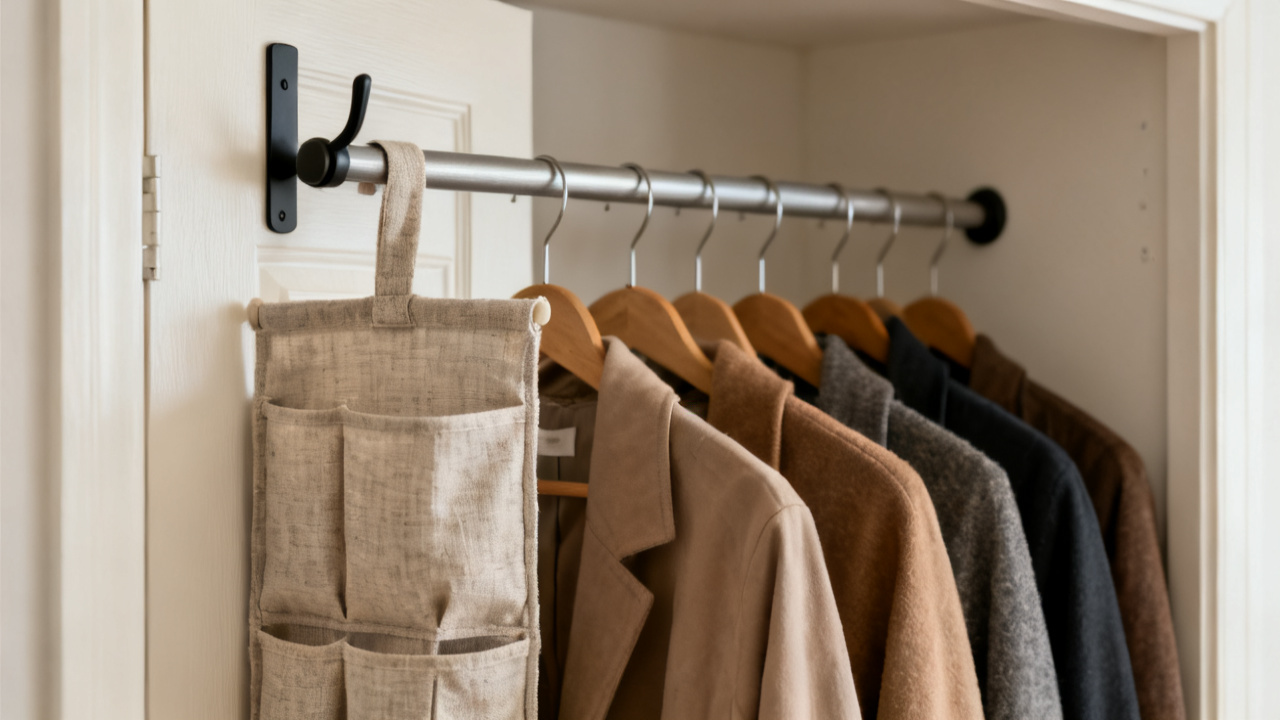
Even if you prioritize slim, space-saving hanger styles, all hangers have a base width that will create overlap once you exceed a certain number of items on the rod. Overlap starts far earlier than the point where you can’t fit another hanger at all: it begins when the top edge of one coat touches the adjacent hanger’s hook, making it impossible to slide a hanger smoothly from one end of the rod to the other. For heavy items like puffer coats, wool peacoats, and winter parkas, this threshold hits much faster than for light windbreakers, denim jackets, and rain shells, so your max count will shift slightly depending on the weight of the items you store most often. Illustrative example: A 48-inch standard coat rod fitted with 20 wooden hangers holding heavy winter puffer coats will overlap completely, with zero room to slide any hanger left or right, while the same rod can hold 26 slim velvet hangers holding light spring jackets before overlap sets in. If you mix heavy and light coats, you’ll want to test your max count with the exact mix of items you use most often to get an accurate number.
A max count written on the rod end
The easiest way to stick to your no-overlap rule is to document your max count in a spot you can see every time you open the closet door, so you never have to guess if you have room for a new coat or a newly laundered outerwear piece. The max-count card below takes two minutes to fill out, and can be taped directly to the flat end of your closet rod, inside the door jamb, or on the inside of the closet door for easy reference.
| One-Rod Coat Closet Max-Count Card | Fill this out once, tape to the end of your closet rod |
|---|---|
| Rod length (inches) | [Your measurement here] |
| Hanger type (wood, velvet, plastic) | [Your hanger type here] |
| Max everyday count (no overlap) | [Count after testing 1 inch of space per hanger minimum] |
| Guest buffer count (optional) | [Max 20% of everyday count, for temporary use only] |
| Last count check date | [Date you verified counts] |
To fill out the card, first measure your rod from end to end, not including the mounting brackets that hold it to the wall. Next, note the type of hanger you use for most of your coats—consistent hanger types make your count far more accurate, so swap out mismatched hangers if you can before testing. To get your max everyday count, add hangers one by one, each holding a coat you wear regularly, until you see the first sign of overlap between adjacent items. Subtract one hanger from that number to get your official max, which ensures you always have at least a half inch of space between each hanger for smooth sliding. The guest buffer count is an optional extra 20% of your everyday count, reserved only for short-term visitor coats, not permanent storage. Mark the date you fill out the card, and recheck your count every 6 months to account for any new coats you’ve added or hanger swaps you’ve made.
Guest coats that blow the count in one evening
The most common reason people exceed their max count is unexpected (or expected) guest coats during gatherings, from small dinner parties to large holiday get-togethers. A handful of extra coats can push you past your overlap threshold in seconds, leaving your everyday coats stuck under a pile of guest outerwear that may sit on your rod for days or weeks if you don’t have a plan for it. The guest buffer count on your max card is designed for exactly this scenario, but it’s only intended for use for 48 hours or less. Example timing: If you host a game night on Friday night, set a 10-minute reminder for Sunday afternoon to collect all guest coats, return them to their owners if they’re still at your house, or move unclaimed coats to a labeled bin by your front door for easy pickup later. If you regularly host gatherings with more than 8 guests, the guest buffer likely won’t be enough to hold all outerwear, so keep a cheap portable over-the-door hook set or a folding rolling coat rack in a nearby closet for temporary use during events, so you never have to overload your main coat rod.
Off-season coats that belong in the swap bin
The second biggest cause of accidental overlap is storing off-season coats on your main rod year-round. If you live in a climate with distinct seasons, you likely only wear 60% of your outerwear at any given time, so storing heavy winter parkas on your rod in July or thin linen blazers on your rod in January wastes valuable space and pushes you over your max count unnecessarily. Any coat you won’t wear for the next 3 months belongs in a labeled off-season swap bin, not on your main rod. These bins can be stored on a high shelf in the same coat closet, under your bed, in a basement storage area, or in a spare bedroom closet, as long as you can access them easily when the seasons shift. Illustrative example: If you live in the Upper Midwest, you’ll swap out your rod contents twice a year, moving heavy parkas, wool scarves, and snow pants to the swap bin in late May, and light windbreakers, rain jackets, and denim jackets to the bin in mid-October. If you buy a new coat mid-season, remove one old or rarely worn coat from the rod and add it to the swap bin or donate it to stay under your max count.
Coat-check systems this rod cannot mimic
It’s important to set realistic expectations for what a single home coat rod can handle, because it’s not built to work like a commercial coat-check system at a restaurant, event venue, or museum. Commercial coat checks use wide, double or triple rods, extra-wide spacing, and dedicated staff to sort and retrieve coats, so they can hold 2 to 3 times as many items as a standard home rod, even for short periods. Don’t try to cram 50 hangers on your 48-inch home rod just because you saw a venue do it—their system is built for temporary, high-volume use where sliding access isn’t a priority for regular users. You also shouldn’t try to store non-coat items on your main coat rod, like backpacks, purses, tote bags, laundry baskets, or holiday decor, as these take up far more space than standard hangers and will push you past your overlap threshold almost immediately. If you need extra storage for these items, add wall hooks inside the closet or a small shelf on the floor instead of using rod space.
Spend 10 minutes this weekend measuring your rod, testing your max hanger count, filling out your max-count card, and removing any off-season or long-stay guest coats that are currently pushing you over the limit. You’ll notice immediately how much faster and less frustrating it is to grab your coat on the way out the door, with no overlapping hangers to fight through or extra items to move out of the way.