The juice pitcher hides a leftover box, and nobody remembers which night it was cooked. You prod the plastic with your finger, squinting at the smudge of faded marinara that leaked down one side, and have no clue if it’s still safe to eat. The last thing you want is to serve something that gives your whole household a stomachache, or toss a perfectly good meal just because you lost track of when you made it. You already taped a plain, water-resistant sheet to the inside of your fridge’s upper door last week, and today’s the day you start using it consistently to eliminate that guesswork.
Fridge Door Inventory Log Layout
This layout was tested by QuickSpace Living to work for households of 1 to 6 people, no fancy supplies required. Sized to fit between the condiment shelves, it never blocks access to your mustard, salad dressing, or jarred pickles. The fields are simple, designed to answer every question you have when you stare at a random leftover container at 6pm on a busy weeknight, with no extra fluff to slow you down. The mandatory eat-by column sits prominently right after the storage date, so you never miss it when you add new items. A sample of a filled-out log looks like this:
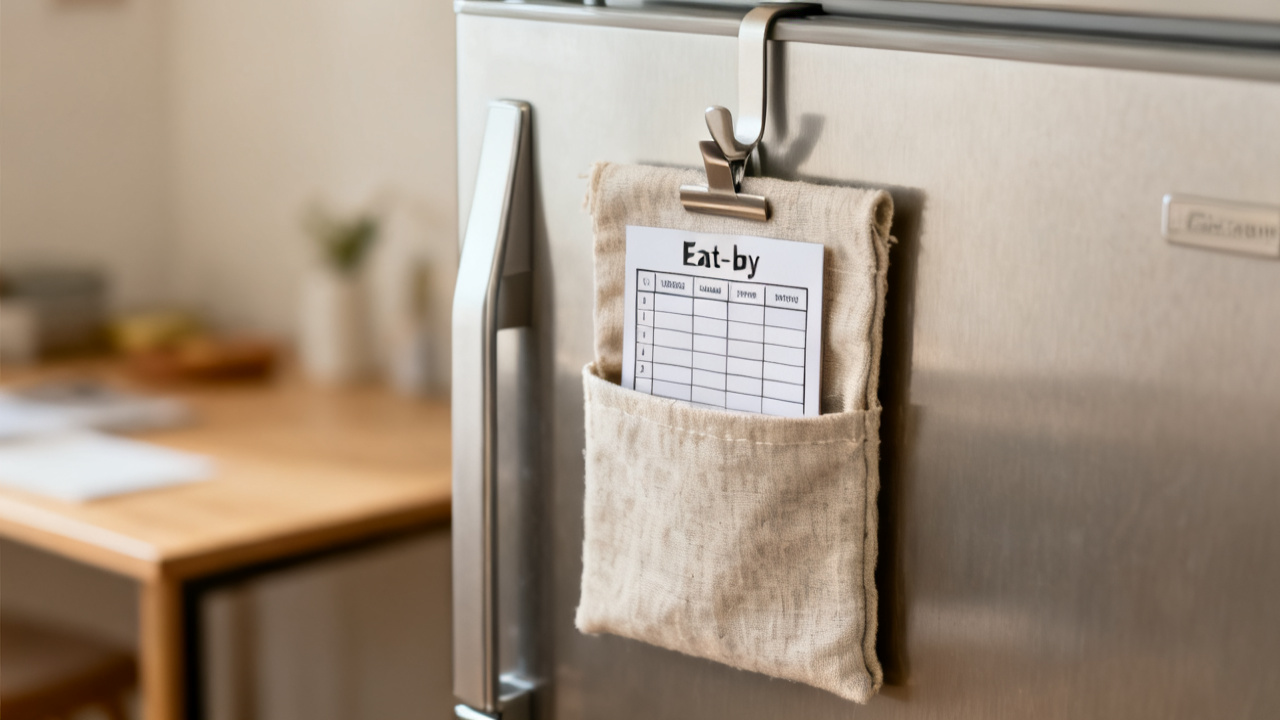
| Item Name | Date Stored | Eat-By Date | Assigned To |
|---|---|---|---|
| Roasted vegetable lasagna | Oct 12 | Oct 15 | Mia |
| Chicken tortilla soup | Oct 13 | Oct 17 | Jesse |
| Mashed sweet potato | Oct 14 | Oct 16 | Household |
You can add or remove columns to fit your household’s needs, but keep the eat-by column in its prominent position to make sure you fill it out for every entry. Illustrative example: You save an average of $78 per month on groceries you would have otherwise tossed because you forgot you had pre-made leftovers on hand, and you cut down on 12 minutes of dinner prep each week when you can quickly scan the log and pick a ready-to-heat option instead of starting from scratch.
Eat-By Date Placement Rules
You don’t have to look up official food safety guidelines every time you add an item, just stick to the simple rules you agreed on with your household ahead of time. For cooked meats and soups, set the eat-by date 4 days after storage. For cooked veggies, grain dishes, and casseroles, set the eat-by date 3 days after storage. For raw pre-cut fruits and veggies, set the eat-by date 2 days after storage. Write the date in bold, right next to the stored date, so it’s the first thing you see when you glance at the log. You also write the same eat-by date on the lid of the leftover container with a wet-erase marker, so you can cross-reference if you’re holding the container and not standing right in front of the log. Never fudge the eat-by date to make an item last longer than it should—if you’re not sure you’ll eat it before that date, pop it in the freezer and add a separate freezer inventory line to the bottom of the sheet.
Quick Add Steps for New Leftovers
These steps take less than 30 seconds per item, so they don’t add any meaningful time to your post-dinner cleanup routine. Follow them every time you put leftovers away to keep the log fully accurate:
- Portion the leftover into shallow, airtight containers immediately after you finish eating, while the dishes are still on the table, so you don’t leave food sitting out on the counter for longer than two hours.
- Jot the item name, storage date, and pre-calculated eat-by date on the log before you put the container in the fridge, so you don’t forget to add it later when you get caught up in cleaning the kitchen.
- Mark the same eat-by date on the lid of the container with a wet-erase marker, so anyone pulling the container out without checking the log still knows when it needs to be eaten by.
- Place the container in a consistent leftover spot on your fridge’s middle shelf, so it never gets lost behind a juice pitcher or a jar of pickles again.
If someone else in the house puts leftovers away, remind them to follow the same steps, so the log stays reliable for everyone who uses the fridge.
Spot Check Routine for Stale Entries
When you grab a snack or make your coffee in the morning, you take 10 seconds to scan the log for any items that hit their eat-by date that day. If you see one, you can either move it to the front of the leftover shelf to remind everyone to eat it for lunch, or toss it if it’s already gone bad. Cross off items as you eat them or toss them, so the log never gets cluttered with entries for food that’s no longer in the fridge. Once every few days, you can cross out any fully crossed-off rows to make space for new entries, so the sheet stays easy to read. If you notice an entry that’s been on the log for more than a day past its eat-by date, check the leftover shelf immediately—odds are it got pushed to the back, and you can toss it before it starts to smell or grow mold.
This Spot Is Done
You’ve added all the existing leftovers in your fridge to the log, marked each with its correct eat-by date, and moved every container to the dedicated leftover shelf so none get lost behind other items. You crossed off the mystery lasagna you found hidden behind the juice pitcher, tossed it since you couldn’t confirm its age, and wiped down the spot it was sitting on to get rid of the sticky marinara residue. You tested the wet-erase marker on a spare corner of the sheet to make sure it wipes off easily when you need to clear old entries, and you left the marker in the small basket on top of the fridge so everyone can reach it when they need to add new items. You don’t have to do anything else with the log today, and you can move on to the next task on your list without worrying about hidden leftover surprises lurking in the back of your fridge.
Next Weekly Inventory Update
The next time you touch this log is next Sunday evening, right after you finish your weekly grocery run and before you put all your new groceries away. You’ll spend 5 minutes scanning the log for any leftover items that are past their eat-by date, toss them, cross them off the log, and wipe down the sheet if it has any smudges or food splatters on it. You’ll add any pre-prepped meal components you made for the week to the log, mark their eat-by dates, and rearrange the leftover shelf to make space for any new leftovers you’ll make during the coming week. You can also take a quick photo of the log on your phone before you leave the house for grocery runs, so you know exactly what leftovers you have on hand and don’t accidentally buy ingredients you don’t need. If you have guests over or make a large batch meal during the week, you can add those items to the log as you go, but the full weekly check-in only needs to happen that one time each week to keep the system running smoothly.