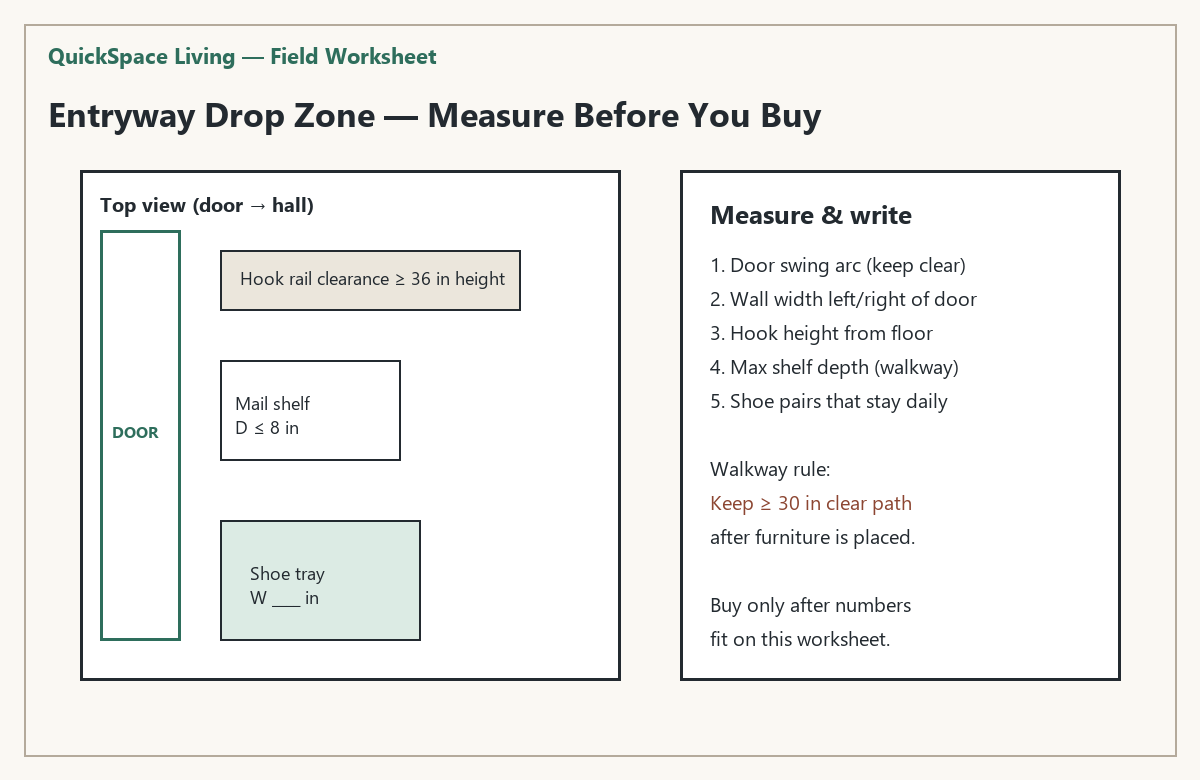
Most entryway clutter is not a personality problem. It is a sizing problem. Families buy a bench that eats the door swing, then wonder why shoes still land in the walkway. This guide is a measure-first drop zone for apartments without a mudroom. You leave with numbers on paper before you spend money.
Why drop zones fail in rentals
Rental entries are usually a short hallway shared with the kitchen or living room. There is no coat closet, or the closet is already full. People compensate with furniture that is too deep. The door hits the bench. Bags slide to the floor. Mail becomes a permanent pile because there is no “done” tray.
A working drop zone has three jobs only: land daily shoes, hang what leaves the house tomorrow, and process mail the same day. Anything else belongs in a bedroom or storage bin.
Step 1 — Trace the door swing
Open the door fully. Mark the arc with painter tape on the floor. Nothing taller than a flat mat belongs inside that arc. If your building door is self-closing and heavy, leave an extra two inches beyond the tape line so knuckles and grocery bags do not scrape the wall.
Step 2 — Write five numbers before shopping
- Wall width left of the door
- Wall width right of the door
- Hook height from finished floor
- Max shelf depth that still leaves a 30-inch clear path
- Daily shoe pairs that must live here (not every pair you own)
Write the numbers on the worksheet image above or on a phone note titled “entry measures.” If a product page does not list depth, skip it. Guessing depth is how walkways die.
Step 3 — Build the smallest useful zone
Hooks for bags and keys, a shallow mail shelf (depth 8 inches or less), and a shoe tray sized to daily pairs only. Overflow shoes belong in the bedroom closet, not the entry. If you need seating to put on shoes, choose a slim stool you can tuck aside, not a storage bench that permanently steals 16 inches of path.
For keys, one hook per adult is enough. A dish of keys becomes a junk dish within a week. For mail, the shelf should empty to zero every evening; bills move to a command center or pay app, flyers go straight to recycling.
Renter-friendly mounting options
Prefer over-door hooks, tension rails, or damage-free adhesive hooks rated for your bag weight. Test adhesive hooks on a hidden spot first; some rental paints release easily. If you cannot mount anything, a freestanding slim rail that sits outside the door swing still beats a deep console table.
Weekly maintenance that keeps it honest
Every Sunday, empty the mail shelf to zero and return guest shoes to owners. If the tray is overflowing, the rule failed—reduce daily pairs, do not buy a second tray yet. Photograph the entry once a month. If the photo looks busier than last month, remove one object category before adding organizers.
Common mistakes to avoid
- Buying a “mudroom set” designed for a house foyer
- Storing off-season boots in the entry year-round
- Using decorative bowls that collect receipts forever
- Placing a plant or art where bags need to hang
When the five measurements are on paper and the walkway still clears 30 inches after setup, you are done shopping. More products will not fix a path that is already too narrow.
How to know the system is working
Give any new setup two full weeks before you buy another product. Track three signals only: can you put things away in under a minute, does the walkway stay clear, and does the surface return to empty at least once a week. If two of those fail, change the rule or the footprint—do not add another bin yet.
When something breaks the system, write one sentence about why. “Shoes overflow because guests leave pairs” is a different fix than “we own too many daily shoes.” Specific notes beat vague frustration and keep this site’s advice useful for your actual apartment.
Household buy-in
Show everyone the five measurements and the 30-inch path rule once. When someone wants a bigger bench, point to the tape line—not to a preference argument. Shared constraints keep the entry from resetting to chaos every month.
Quick recap
Measure first, keep walkways clear, maintain on a short weekly timer, and refuse extra products until the current footprint works for two weeks. That sequence is the difference between a real system and a shopping spree that looks organized for one afternoon.
Important note:
This is practical home-organization guidance for everyday apartments and houses. It is educational content, not a product warranty, contractor advice, or a guarantee that every floor plan will fit the same setup.