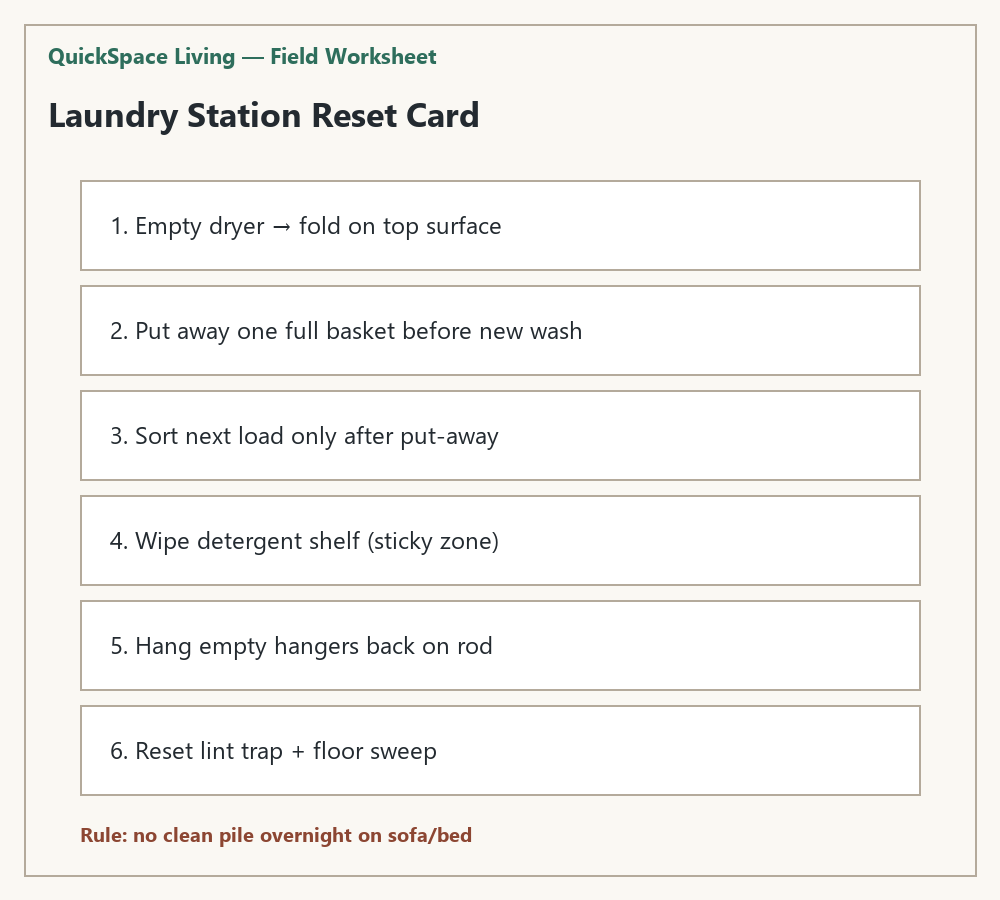
In small homes, laundry fails at put-away, not at washing. Clean clothes migrate to the sofa and stay there. This reset card keeps a hallway or closet laundry corner honest without needing a utility room.
Define the station footprint
Your station is only the machine tops, one fold surface, one dirty hamper, and one clean basket. If clean clothes leave that footprint unfinished, the system stopped—not the detergent brand.
Reset card (use in order)
- Empty dryer and fold on the machine top or a nearby board.
- Put away one full basket before starting a new wash.
- Sort the next load only after put-away.
- Wipe the sticky detergent shelf.
- Return empty hangers to the closet rod.
- Clean the lint trap and sweep the floor.
Hard rule
No clean pile overnight on the sofa or bed. If put-away takes longer than about 12 minutes, clothing volume is too high for the closet—edit hanging space before buying another hamper.
Narrow-hallway layout tips
Keep detergent on a shallow shelf so bottles do not stick into the walking path. Use a soft basket that collapses when empty. Avoid stacking folding chairs “for folding day”; they become permanent clutter. If the washer door swings into the hall, mark the swing with tape the same way you would for an entry door.
Weekly schedule that fits busy homes
Pick two short laundry blocks instead of one marathon. Example: wash/dry on Wednesday night, put away Thursday morning before work. Marathon laundry creates the sofa pile because energy runs out after the last spin cycle.
Photograph your laundry corner monthly. If products multiply, remove one backup bottle. Backups belong in a closet, not on the machine.
How to know the system is working
Give any new setup two full weeks before you buy another product. Track three signals only: can you put things away in under a minute, does the walkway stay clear, and does the surface return to empty at least once a week. If two of those fail, change the rule or the footprint—do not add another bin yet.
When something breaks the system, write one sentence about why. “Shoes overflow because guests leave pairs” is a different fix than “we own too many daily shoes.” Specific notes beat vague frustration and keep this site’s advice useful for your actual apartment.
How to know the system is working
Give any new setup two full weeks before you buy another product. Track three signals only: can you put things away in under a minute, does the walkway stay clear, and does the surface return to empty at least once a week. If two of those fail, change the rule or the footprint—do not add another bin yet.
When something breaks the system, write one sentence about why. “Shoes overflow because guests leave pairs” is a different fix than “we own too many daily shoes.” Specific notes beat vague frustration and keep this site’s advice useful for your actual apartment.
How to know the system is working
Give any new setup two full weeks before you buy another product. Track three signals only: can you put things away in under a minute, does the walkway stay clear, and does the surface return to empty at least once a week. If two of those fail, change the rule or the footprint—do not add another bin yet.
When something breaks the system, write one sentence about why. “Shoes overflow because guests leave pairs” is a different fix than “we own too many daily shoes.” Specific notes beat vague frustration and keep this site’s advice useful for your actual apartment.
Shared household agreements
If more than one person does laundry, agree who owns put-away for each load. “I washed it” is not the same as “it is away.” Write the reset card on a sticky note above the machines for two weeks until the habit sticks.
Keep stain tools in a tiny pouch on the shelf so treatments happen before clothes sit wet in a basket. Delayed stain treatment creates “problem piles” that block the whole station.
Quick recap
Measure first, keep walkways clear, maintain on a short weekly timer, and refuse extra products until the current footprint works for two weeks. That sequence is the difference between a real system and a shopping spree that looks organized for one afternoon.
Final check
Walk the room once after setup. If anything crosses a walking line, shorten it or move it. If you feel the urge to buy one more organizer immediately, wait two weeks and reassess with a photo.
Important note:
This is practical home-organization guidance for everyday apartments and houses. It is educational content, not a product warranty, contractor advice, or a guarantee that every floor plan will fit the same setup.