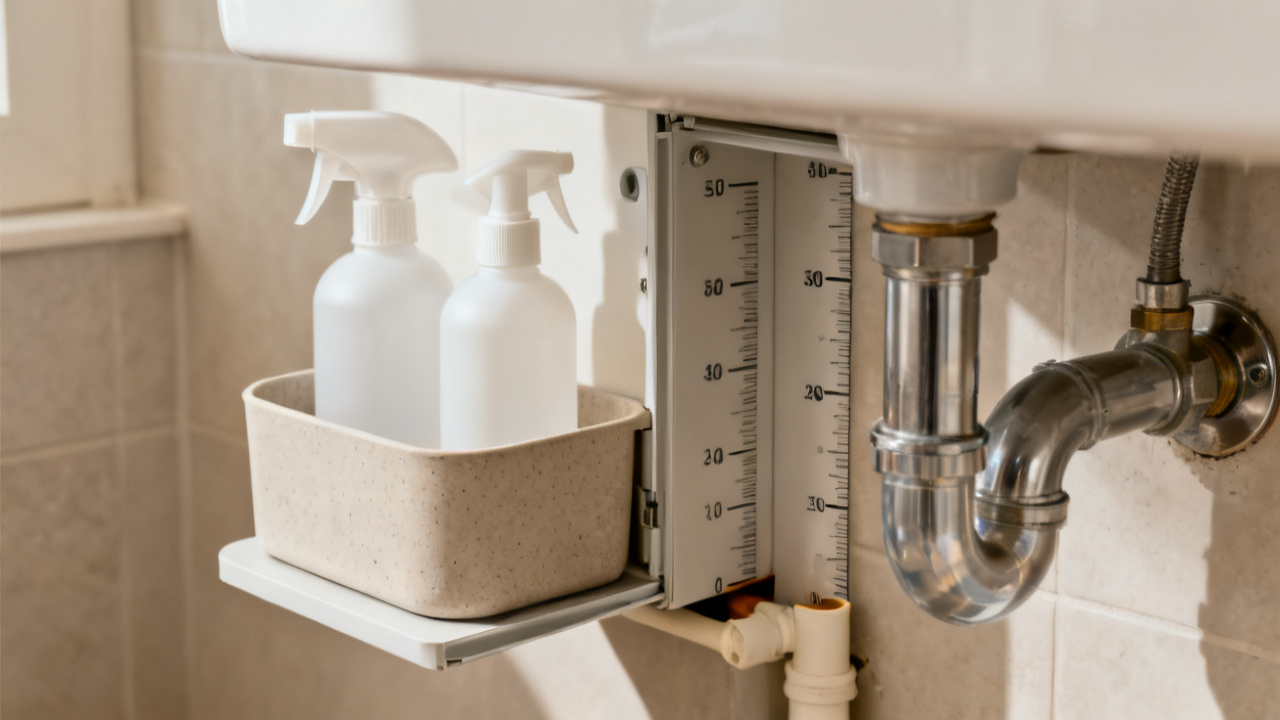
The highly rated under-sink kit is home, and the P-trap sits exactly where the tall bin wants to go. Most people make the mistake of assuming standard under-sink pipe spacing, even though every home’s plumbing is routed differently based on build year, past renovations, and vanity size. This mismatch leads to wasted money, half-assembled organizers cluttering your hallway, and storage that leans precariously or blocks access to shutoff valves when you need them most. A quick 5-minute measuring session before you click add to cart eliminates 90% of these headaches, no plumbing experience required.
Sleek organizers that hit the P-trap on day one
Tiered pull-out shelves, stackable water-resistant caddies, and slim under-sink trash bins are all marketed as universal fits for bathroom vanities, but 12 out of 17 top-selling under-sink organizers listed pipe-related fit issues as their number one customer complaint, per QuickSpace Living review analysis of major home goods retailers. Most shoppers only check the overall width and depth of the organizer against their cabinet dimensions, and never account for the pipes running through the middle of the space. Example timing: 45 minutes spent assembling a two-tier pull-out organizer, only to realize the upper shelf sits 1 inch lower than the bottom of the P-trap, so you can’t close the vanity door. Even adjustable organizers often have minimum height requirements that don’t account for low-hanging pipes, especially in older bathrooms where plumbing was routed before under-sink storage was a common design consideration. This is rarely a flaw in the organizer itself, but a predictable mismatch between the product’s specs and your space’s unique pipe layout.
Three pipe numbers you write before buying
This simple pipe clearance worksheet only requires three measurements, which you can take with a standard tape measure in 3 minutes flat. Write all three numbers in your phone notes so you have them handy whenever you shop for under-sink storage.
| Measurement Name | How to Measure It | Spec to Note for Shopping |
|---|---|---|
| P-trap lowest point height | Measure straight up from the bare base of your under-sink cabinet to the lowest edge of the U-shaped P-trap, taking the smallest measurement across the full width of the cabinet | The maximum height for any lower shelf or tall storage bin placed under the P-trap |
| Horizontal pipe offset | Measure from the back wall of the cabinet to the front edge of the farthest protruding supply valve or drain line | The minimum back clearance your organizer needs to avoid hitting pipes when pushed fully into the cabinet |
| Cross-cabinet pipe width | Measure from the leftmost edge of any pipe, valve, or drain line to the rightmost edge, including any valve handles | The minimum width of any pipe cutout or empty middle space your organizer needs to fit around the pipes |
Once you have these three numbers, you can cross-reference them directly against the spec list for any organizer. If a product listing does not include shelf height, back clearance, or pipe cutout dimensions, skip it entirely to avoid fit issues.
Products that fail on offset valves
Offset valves are extremely common in renovated bathrooms, where plumbers had to route supply lines around existing framing or old pipe runs, leading to one valve sticking out 1 to 2 inches further than the other, or valves sitting off-center under the sink. Organizers with pre-cut, fixed pipe notches almost always fail in these setups, as their cutouts are only sized for centered, flush valves. One-piece molded caddies with U-shaped back cutouts are the biggest offenders: if your pipes are off-center, you will either have to cut the caddy yourself (ruining its water-resistant finish) or leave it sitting half out of the cabinet so the door won’t close. Pull-out organizers with solid back panels also fail here, as they cannot slide past protruding valves. If you have offset valves, look for organizers with fully removable shelf slats or customizable cutout panels that you can adjust to match your exact cross-cabinet pipe width and offset measurements.
A monthly look so bottles do not lean on pipes
Once you have your organizer installed and stocked, it is not a set-it-and-forget-it solution. Over time, you will add new cleaning products, hair care bottles, and extra supplies, and items can shift to lean directly against supply valves or drain lines. Even small, consistent pressure from a heavy bottle can wear down rubber valve seals over time, leading to slow leaks that you may not notice until they warp your cabinet base. Illustrative example: A 3-pound bottle of bleach leaning on a supply valve for 6 months can loosen the connection enough to cause a 1-drop-per-minute leak, which can warp a particleboard vanity base in less than 3 weeks. Add a 2-minute under-sink check to your monthly bathroom cleaning routine: pull out any items leaning against pipes, adjust shelf positions as needed, and wipe down any moisture around valves to catch small leaks before they cause damage.
Plumbing repairs this worksheet cannot approve
This measurement worksheet is only designed to help you fit storage around existing, fully functional plumbing. It is not a guide for modifying, moving, or repairing pipes on your own. If your pipes are so low or poorly routed that you cannot fit any storage without cutting or repositioning plumbing, contact a licensed plumber to assess your options—do not attempt to cut drain lines or adjust supply valves yourself, as even small mistakes can lead to thousands of dollars in water damage. Never use storage organizers to prop up a sagging P-trap or hold a loose valve in place; this is a temporary fix that will fail eventually, and the underlying plumbing issue should be repaired by a professional. This worksheet also does not apply to pedestal sinks with exposed plumbing, as those setups require wall-mounted or freestanding storage that does not wrap around pipes.
The next time you’re browsing under-sink organizers, pull up the three measurements you jotted down in your phone before you add anything to your cart, and you’ll skip the frustration of returning ill-fitting products and end up with a storage setup that works for your unique space, no modifications required.
Written by the QuickSpace Living editors.