The pasta sauce is behind a wall of snacks, and dinner is already late. You know you bought three jars on sale last month, but you can only reach the half-eaten bag of gummy bears and a box of granola bars you picked up for a hike you never went on. By the time you dig out a jar of marinara, you notice two others expired three weeks ago, tossed straight into the trash along with $12 you wasted on bulk purchases that never made it to the table. This system of zoning your pantry around your actual weekly meal routine eliminates that waste entirely, no fancy storage bins required.
Pasta sauce buried behind snacks you never cook
Most households organize their pantries by food category: all canned goods stacked together, all snacks in a single bin, all baking supplies tucked in a far corner. While this looks neat on social media, it does not align with how you actually use your pantry on a daily basis. If you cook pasta three times a week, your pasta sauce should be the first thing you see when you reach for dinner supplies, not tucked behind snacks you only grab during weekend movie marathons. Illustrative example: A 2-person household that buys pantry staples on sale every 2 weeks typically throws out 4-5 expired non-perishable items a month, most of which were stored behind items they access multiple times a week. The core mistake here is prioritizing aesthetic category groupings over your actual daily habits, a gap that routine-based zoning fixes without forcing you to give up bulk shopping or snack storage entirely.
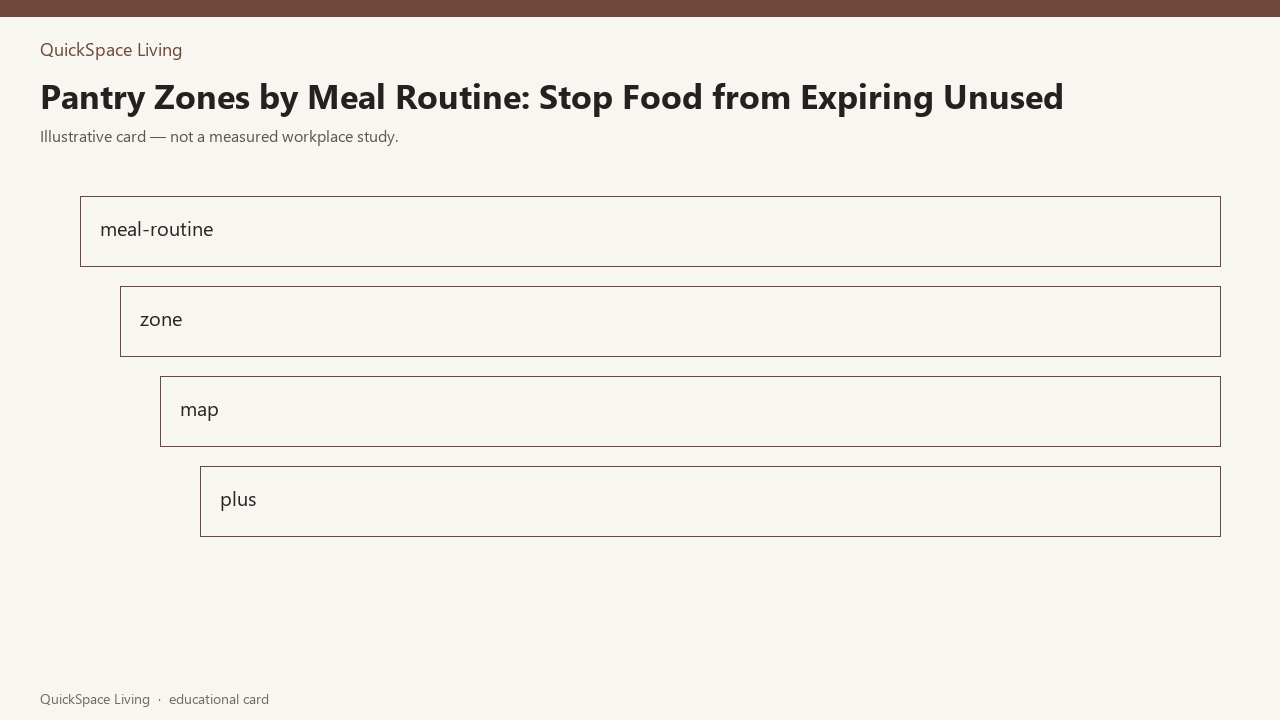
Breakfast, lunch-pack, and dinner zones on one map
This zoning system is built around your household’s regular meal schedule, with no generic category rules that don’t fit your habits. Below is the printable meal-routine zone map, followed by the weekly date-check card to tape inside your pantry door.
Meal-Routine Zone Map
| Zone Name | Pantry Placement | Allowed Items | Primary User |
|---|---|---|---|
| Breakfast Zone | Eye-level shelf, right side (adjust to left if you prep breakfast first when opening the pantry) | Oatmeal, coffee pods, pancake mix, syrup, granola, toaster pastries | All household members |
| Lunch-Pack Zone | Eye-level shelf, left side, lower section if kids pack their own lunches | Reusable snack bags, granola bars, fruit cups, tuna packets, crackers, nut butter packets | Kids + adult lunch packers |
| Dinner Staple Zone | Mid-level shelf, center | Pasta, rice, canned beans, pasta sauce, canned tomatoes, broth, seasoning mixes | Primary cook |
| Bulk Backup Zone | Upper shelves or back of lower shelves (out of regular line of sight) | Extra unopened jars of sauce, extra rice bags, bulk snack refills, holiday baking supplies | Household grocery shopper only |
| Occasional Treat Zone | Bottom shelf or upper back corner | Chips, candy, special occasion baking mixes, soda | All members, only when explicitly looking for treats |
Weekly Date-Check Card (tape to pantry door)
☐ Pull all items from the front 2 inches of the dinner staple zone, check expiration dates, move any items expiring in the next 2 weeks to the very front of the shelf
☐ Toss any expired items from the lunch-pack zone, note which ones no one ate to avoid repurchasing
☐ Count 1-2 high-use dinner staples (e.g., pasta sauce, rice) to add to your grocery list if you’re down to 1 remaining
☐ Move any bulk backup items that are now the only remaining unit to the active dinner/lunch zone
☐ Wipe down the front of all shelves to catch crumbs or spilled food that attracts pests
The only non-negotiable rule for the map is no cross-contaminating zones: do not tuck a bag of chips in the dinner staple zone, and do not store extra pasta sauce in the treat zone, as this is how items get lost and expire unused. QuickSpace Living tested this mapping system with renter households first to make sure it works for standard pantry sizes without custom upgrades.
Date checks that catch the forgotten jar
The weekly date check tied to the zone map is far more effective than twice-yearly pantry deep cleans, because it catches expiring items before they go bad, not after. Example timing: This weekly check takes 2-3 minutes total, no full pantry emptying required. The most commonly expired forgotten items are extra jars of sauce, canned fruit, and seasoning packets that get pushed to the back when you restock, so focusing only on the front of your active zones means you don’t waste time sorting through unopened bulk backup items that have 6+ months of shelf life left. If you find an item expiring in the next 10 days, you can add a corresponding meal to your weekly plan instead of tossing it later, or add a small sticky note to the jar to make sure you see it the next time you prep dinner.
Rental pantries that cannot take new shelves
This system is designed specifically for renters who cannot drill holes, add new shelves, or make permanent modifications to their kitchen space. No custom storage is required: you do not need acrylic bins, hanging racks, or specialized organizers to implement the zones. If you want to mark zone boundaries, you can use low-tack masking tape that peels off without leaving residue, or print small paper labels to tape to the inside of your pantry door instead of marking the shelves themselves. If you have a very small pantry with only 2 shelves, you can split the shelves horizontally instead of vertically: top shelf front = breakfast zone, top shelf back = bulk backup zone, bottom shelf front = lunch-pack + dinner staple zones, bottom shelf back = occasional treat zone. You can even use cut-up cereal boxes as free dividers if you want to keep items separated without buying new supplies.
Walk-in pantries this map is not designing
This basic zone map is built for standard reach-in pantries, cabinet pantries, and rolling pantry carts that are 24 inches deep or less. If you have a walk-in pantry larger than 4×4 feet, this map will not be sufficient, as you likely have extra space for small appliances, long-term emergency food storage, bulk paper goods, pet food, or other items that do not fit into the 5 core zones. You can adapt the core logic (group items by when you use them, not what food category they fall into) for a larger walk-in pantry, but you will need to add custom zones that fit your household’s unique usage patterns. This system also is not designed for commercial office pantries or shared household pantries with more than 6 people, as varied usage patterns across that many people make narrow zone boundaries unmanageable.
Start using the system this week by first jotting down which pantry items you grab for each meal over 3 days, rearranging your existing pantry into the 5 mapped zones in 15 minutes or less, and taping the weekly date-check card to the inside of your pantry door before your next grocery run.
QuickSpace Living editors