Last-minute company means digging past extra pillowcases to find one matching towel pair. Most of us hold onto linens we never use, from scratchy hotel freebies to faded hand-me-down sheets that don’t fit any bed in the house. This clutter doesn’t just slow you down when you need something fast—it wastes valuable storage space that could go to items you actually reach for every week. We’ll break down exactly how many linens you need, how to fold them for maximum space, and how to keep the system running long after you declutter.
Guest towels that hide the everyday set
Most people store their fancy guest towels on the most accessible, eye-level shelf of their linen closet, which forces their everyday used towels to live on hard-to-reach lower or higher shelves. This setup makes it harder to put away laundry, leads to messy piles when you dig for everyday items, and often means you forget just how many extra guest towels you’ve accumulated. For most households, you only need enough guest towels to cover the maximum number of people you host at one time, which is rarely more than 4 for casual gatherings. Any extra guest towels that are stained, faded, or more than 5 years old can be repurposed as cleaning rags, or donated if they’re in good shape. Storing guest linens on the highest shelf of the closet, away from your everyday items, eliminates the digging and makes it easy to grab what you need for daily use first. If you only host once or twice a year, you can even store guest linens in a bin under your guest bed instead of taking up valuable linen closet space for items you rarely use.
A per-person count before you fold anything
Before you spend time folding every linen in your closet, take 15 minutes to pull everything out and sort it by type, then cross-reference with the count table below to decide what to keep and what to donate. This count framework was developed by QuickSpace Living to work for both small apartment closets and large suburban home storage spaces, no custom shelving required. The counts account for a standard weekly laundry schedule, so you never run out of clean linens but don’t accumulate excess that collects dust.
| Linen Type | Per Household Member Count | Per Overnight Guest Count | Target Fold Height |
|---|---|---|---|
| Bath towel | 3 (1 in use, 1 in hamper, 1 clean) | 1 | 6 inches |
| Hand towel | 4 (2 in use, 1 in hamper, 1 clean) | 1 | 3 inches |
| Washcloth | 5 (2 in use, 2 in hamper, 1 clean) | 1 | 2 inches |
| Standard pillowcase | 2 (1 on pillow, 1 clean) | 1 | 2 inches |
| Fitted sheet (per bed) | 2 (1 on bed, 1 clean) | 1 per guest bed | 5 inches |
| Flat sheet (per bed) | 2 (1 on bed, 1 clean) | 1 per guest bed | 5 inches |
| Lightweight throw blanket | 1 per common area | 1 per 2 guests | 7 inches |
If you do laundry every other week instead of weekly, you can add 1 extra item per household member for each linen type, but avoid adding more than that, as extra items will only create unnecessary clutter. For seasonal linens like flannel sheets, keep 1 set per bed if you use them for 3+ months a year, and store them in under-bed bins when not in use to free up linen closet space. Discard any linens with permanent stains, holes, or frayed edges, as these will only take up space and never get used for guests or daily life.
Stacks that slump because the fold is too tall
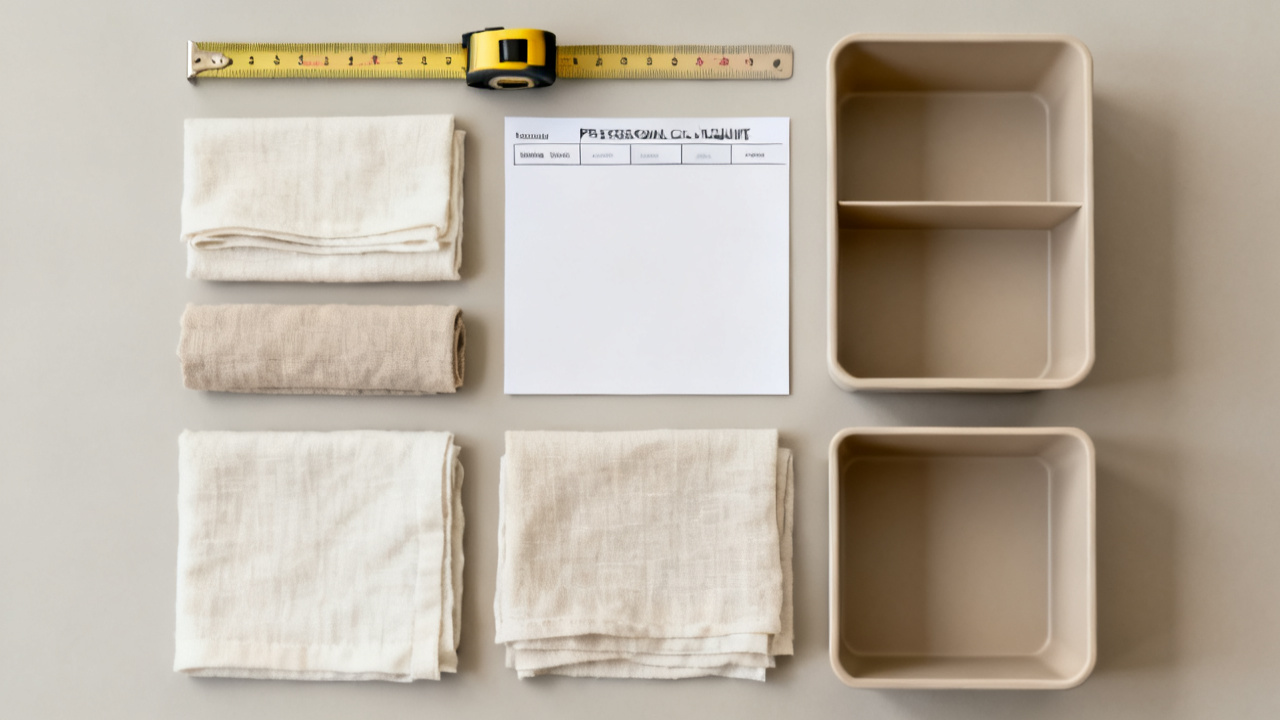
The most common reason linen stacks fall over or look messy is not bad folding skills—it’s folds that are too tall or inconsistent for your shelf dimensions. When you fold every item to match the target height in the table above, you eliminate overhang and create uniform stacks that stay neat even when you pull items from the middle. Illustrative example: If your linen closet shelf is 12 inches deep, folding each bath towel to a 6-inch height lets you stack two rows of towels back to back without items hanging over the edge and falling off when you pull one out. For sheet sets, fold the fitted sheet, flat sheet, and one pillowcase to the target 5-inch height, then tuck the entire bundle inside the second matching pillowcase to create a single, easy-to-grab package that eliminates the need to hunt for matching pieces when you change the sheets. For throw blankets, use a roll fold instead of a flat fold if you have shallow shelves, as rolls take up less vertical space and are less likely to slump than flat stacks of thick fabric. If you struggle to get consistent folds, you can use a piece of cardboard cut to the target fold height as a guide while you fold, to ensure every item is the same size.
Labels that keep the count after laundry day
Even the most perfectly organized linen closet will fall apart within a few weeks if there’s no system for putting away laundry correctly. Labels on the front edge of each shelf that list both the linen type and the maximum number allowed will help every member of the household follow the system, even if they didn’t help with the initial organization. You don’t need fancy custom labels to make this work: masking tape and a permanent marker, or printable sticker labels you have at home, work just as well. For example, a shelf label for a family of 3 would read “Bath Towels | Max 9” so whoever is putting away clean laundry knows if there are extra towels that need to be donated or repurposed instead of added to the stack. You can also tape a small copy of the count table to the back of the linen closet door for quick reference when you buy new linens or sort through old ones. If you have kids, add a small image of the linen type to the label to help younger family members put items away correctly without needing to read the text.
Hotel par levels this closet does not need
Many popular organizing guides recommend following hotel par levels, which usually mean keeping 3 to 4 times the number of linens you use daily, to account for constant turnover and commercial laundry schedules. But your home is not a hotel, and these levels are wildly overkill for 99% of households. Hotels need extra linens because guests check in and out daily, and laundry is often done off-site on a fixed schedule, but your home only needs enough linens to cover your regular use and occasional guests. Keeping hotel-level par counts means you’re storing linens you’ll only use once or twice a year, which takes up valuable space and collects dust that can worsen allergy symptoms for people in your household. Even if you host overnight guests once a month, you only need 1 extra set of sheets per guest bed and 1 towel per guest, not 4 extra sets that sit untouched for 11 months out of the year. If you have unexpected extra guests, you can always use clean, everyday towels and sheets for them, no need to keep separate fancy sets for rare occasions.
Next time you have 10 free minutes, pull all the linens out of your closet, cross-reference with the count table above, and donate any gently used unneeded items to a local animal shelter or homeless shelter before folding and restocking your shelves.