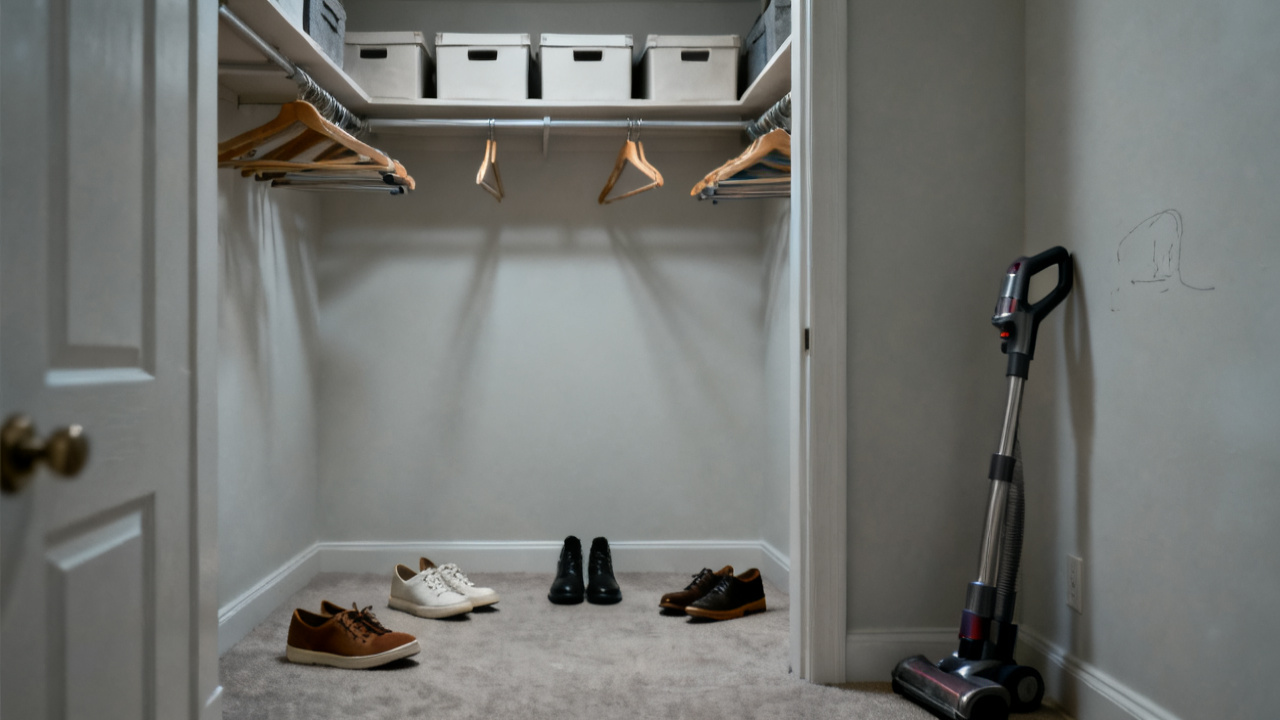
The narrow landing already has three pairs, and a fourth pair is about to become the new floor. You’re balancing the scuffed white sneakers you just kicked off on the edge of the wobbly half-shelf mounted above the baseboard, because you don’t want to track rainwater onto the pine floor you mopped yesterday. A coat hook juts out right above the shelf, so you can’t stack anything higher than ankle height without knocking your knit beanie off every time you grab it on the way out. You don’t have space for a bigger shelf or a freestanding shoe rack, so you’re ready to tweak your rotation so no shoes ever end up scattered on the floor again.
What Your Three-Pair Rotation Prioritizes
This system isn’t about picking your three most expensive or stylish pairs to display, it’s about matching the exact rhythm of your current weekly schedule, so no extra shoes hang around that you don’t use at least twice a week. Since the landing is only 18 inches wide between your front door and the staircase riser, any shoe that sits unused for more than 7 days takes up valuable space that could go to a pair you actually need when you’re rushing out the door for an early meeting or a last-minute errand. You don’t have to give away any of your other shoes, just store them in the lidded underbed bin in your guest room so they’re out of the way until you need them for a special event or a change in season. This approach aligns with the small-space framework you found on QuickSpace Living, which focuses on working with the exact space you have instead of buying bulky storage solutions you don’t need. The goal isn’t to limit your shoe collection, just to limit how many pairs take up prime real estate on your tiny landing, so you never trip over a stray loafer when you’re carrying an armful of groceries up the stairs.
How to Curate Your Current Three Pairs
Start by pulling all four pairs off the landing right now: the rubber rain boots you wore earlier this week to walk the dog, the leather work loafers you wear 4 days a week to the office, the soft slip-on sandals you grab for quick mailbox runs and patio hangs, and the new white sneakers you just brought home for weekend hikes. Sort them by how many times you reach for them in an average 7-day window, counting only intentional wears, not times you picked them up and put them back because they didn’t match your outfit. Any pair you reach for less than twice goes straight to the underbed bin for now, unless you have a specific event planned for them in the next 7 days. If two pairs serve the same use case, pick the one that takes up less vertical space: for example, low-top sneakers beat high-tops here, because they don’t bump the coat hook above the shelf when you’re grabbing your jacket. Illustrative example: If you wear loafers 5 days a week, sandals 3 days a week, and rain boots 2 days a week, those three make the cut, and the new sneakers go into storage until you plan to use them for an upcoming weekend hike the following week. You can pull them out a day or two before the hike, swap them with a pair you won’t use that weekend, and swap back once you’re done, so you never have a fourth pair taking up space long-term.
Core Rotation Rules For Your Narrow Landing
These simple rules keep your rotation consistent, so you don’t end up letting extra pairs pile up without noticing. You can adjust them as needed for special circumstances, but sticking to them most of the time keeps your landing clear of shoe clutter.
| Rule Number | Rule | Quick Check To Confirm It Works |
|---|---|---|
| 1 | No pair sits on the landing for more than 7 consecutive days | Pick up each pair on Sunday evening; if you don’t remember wearing it that week, swap it out for a pair you’ll use more often |
| 2 | All pairs fit entirely on the 10-inch deep shelf | Set each pair heel to toe on the shelf; if any toe or heel hangs over the edge, store that pair elsewhere to avoid tripping hazards |
| 3 | Only one seasonal pair is in the rotation at a time | If you have snow boots and rain boots in the rotation at the same time, move the less frequently used pair to storage to free up space |
You can add a small post-it note to the underside of the shelf with these rules if you want a quick reminder, but you’ll likely memorize them after your first couple of weekly checks. If you have a special event coming up, like a wedding where you need to keep dress heels on the landing for a day or two, you can swap out a less used pair temporarily instead of adding a fourth, so you don’t end up with shoes on the floor.
Tiny Storage Tweaks To Avoid Floor Clutter
You don’t need to buy any specialized organizers to make this rotation work, just a few small tweaks that use items you probably already have around your home. First, stick a 2-inch wide adhesive hook on the side of the shelf frame to hang a stiff shoe brush, so you can wipe mud or grass clippings off soles before you set them on the shelf, no messy streaks on the pine wood that you have to scrub later. Second, arrange each pair heel to toe instead of side by side, which cuts the horizontal space each pair takes up by almost 30% – that’s enough extra room to tuck a small tube of shoe conditioner in the gap between the two end pairs if you want to touch up scuffs on your loafers quickly before work. Third, if you have a pair that’s soaked through from rain or slush, set it on a 4×6 inch silicone mat on the very edge of the shelf for 24 hours to dry, instead of leaving it on the floor, and swap it back to the main shelf once it’s dry to avoid water damage to the wood. Fourth, tuck a small microfiber cloth in the gap between the shelf and the wall, so you can wipe up any water or dirt spills immediately before they seep into the floorboards. These tweaks take less than 5 minutes to set up, and they eliminate almost all the common reasons shoes end up on the landing floor.
When You Update Your Rotation Next Month
You’ll stand in this exact spot on the first Sunday of next month, holding whatever new pair you’ve picked up for the changing season, and go through the same curation process again. You won’t have to sort through a pile of 10 pairs scattered across the landing, because you’ve only kept three out the entire month, so you’ll know exactly which pairs you used regularly and which ones you can swap out without second guessing. If the weather has turned cold enough that you’re reaching for insulated boots more than your open-toed sandals, you’ll swap the sandals out for the boots, and tuck the sandals into your underbed bin until spring rolls around again. You’ll also check the shelf for any scuffs or water marks, wipe it down with the microfiber cloth you stashed behind it, and re-adjust the pairs to make sure none are hanging over the edge, so you don’t trip over a stray toe when you’re rushing out the door for work on Monday morning. If you find you’re regularly needing four pairs out for a couple of weeks, like during a period where you’re going to the gym after work every day, you can temporarily tuck the fourth pair in the narrow gap between the shelf and the staircase handrail, but you’ll swap it back out as soon as that routine ends, so you don’t end up with permanent clutter that turns into a tripping hazard. You’ll also take 30 seconds to make sure the adhesive hook holding your shoe brush is still secure, and replace the silicone mat if it’s gotten too stained with mud or salt from winter roads.