January still has three holiday bins in the only closet, and Monday coats have nowhere to hang. Half the string lights you bought on post-Christmas sale last year are still tangled on the top shelf, and the decorative elf box is propped against your shoe rack so you trip over it every time you grab sneakers. Most people don’t realize holiday decor clutter piles up not because you love decorating too much, but because you never set a firm storage limit before you bring new pieces home. QuickSpace Living’s organizing framework prioritizes everyday use over occasional storage, so this rule works for every size of home, from studio apartments to 4-bedroom houses.
January closets still holding last year’s third bin
If you’re like many households, you’ve probably accumulated far more decor than you realize over the years. Post-holiday clearance sales make it tempting to grab $2 tinsel, $5 wreaths, and $10 plush decor even if you don’t have a spot for them, and each year those small purchases add up to extra bins that crowd out everyday items. By mid-January, when the tree is recycled, the cookies are gone, and you’re back to your regular work and school routine, those extra bins become a constant nuisance: they block access to your winter coats, take up space for your kid’s sports gear, and make it impossible to find your rain boots when you need them. Most people write this clutter off as an inevitable part of celebrating the holidays, but it only happens because you never set a clear, non-negotiable limit for how much decor you can store.
One bin cap per holiday before anything new comes in
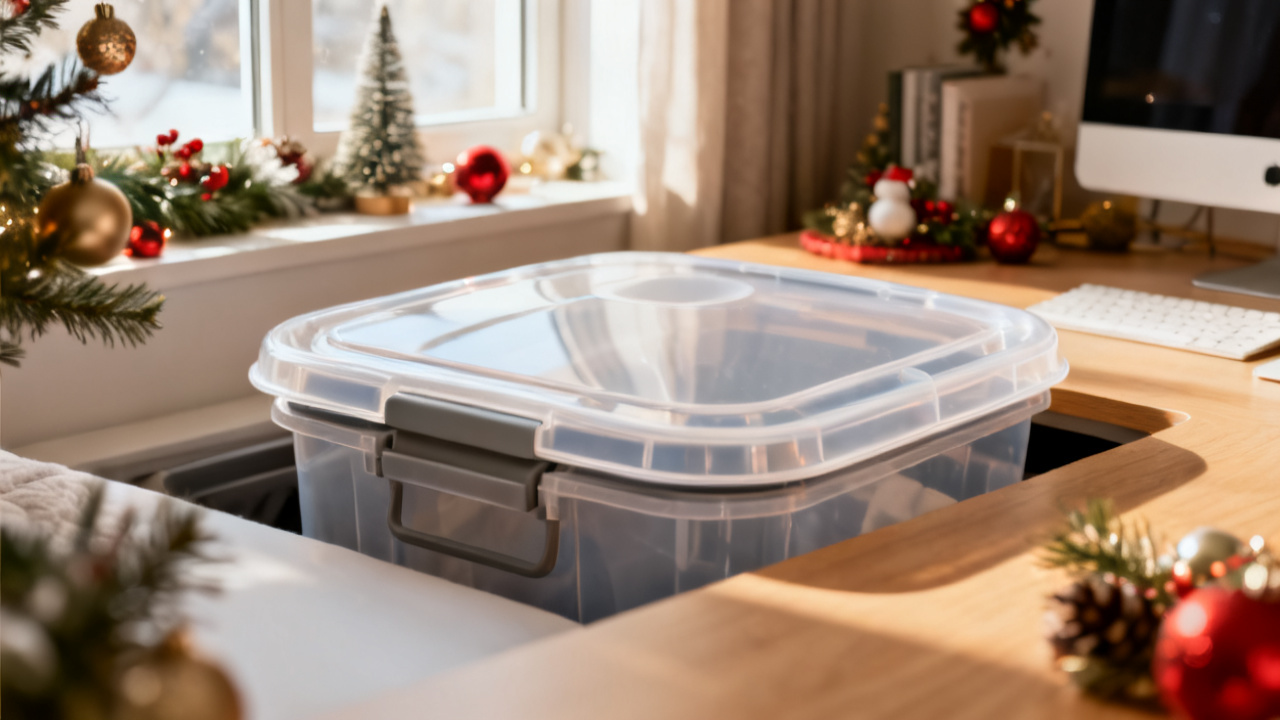
The core rule is simple: for every major holiday you celebrate (Christmas, Halloween, Easter, Diwali, Hanukkah, Fourth of July, or other cultural or personal holidays), you get exactly one standard 18-gallon lidded storage bin, no exceptions. No extra bins for “special pieces,” no stacking loose decor on top of the bin, no shoving extra items in the back of the closet separate from the bin. To make this rule easy to follow, use the printable one-bin cap card below, which you can fold and tape to the lid of each holiday bin to reference when shopping or packing up decor.
Holiday Decor One-Bin Cap Card (Print, fold, tape to your decor bin)
| Front of Card (Use when shopping for new decor) | Back of Card (Use during take-down) |
|---|---|
| ✅ I have space left in my assigned bin for this item | ✅ All soft decor is sealed in 2-gallon zip bags |
| ✅ I am willing to donate 1 existing decor item to make room if there’s no space | ✅ All fragile items are wrapped in reused tissue paper from gifts |
| ✅ This item matches my 3-year decor theme (no impulse buys) | ✅ No loose lights, tangled garland, or broken pieces are being stored |
| ✅ I did not buy this just because it was on clearance | ✅ Bin lid closes fully without forcing it shut |
| ✅ I will use this item at least 2 times this holiday season | ✅ Extra decor I don’t love is in a donate box by the door for drop-off within 24 hours |
The one-bin cap works because it forces intentionality, so you only keep decor you actually love and use, rather than hoarding items you bought on impulse or feel obligated to hold onto. If you share a home with family members who have their own favorite decor pieces, you can split the space in the bin, but you can’t add a second bin just because your kid wants to store their collection of holiday stuffed animals.
Soft items that overflow because they were not bagged
Most of the time, people assume their bin is too small for all their decor, but the issue is almost always poor packing, not too many items. Soft, porous items like knit stockings, fuzzy tree skirts, velvet table runners, plush throw pillows, and fabric garland take up 2 to 3 times more space when they’re stuffed loose into a bin, because air gets trapped between the fibers. Sealing each folded soft item in a heavy-duty 2-gallon zip-top bag and squeezing out all excess air before zipping compresses them to a fraction of their original size, while also protecting them from dust, moth damage, and moisture that can cause mildew over 11 months of storage.
Illustrative example: A standard 18-gallon lidded storage bin will fit just 2 loose knit stockings, 1 full-size tree skirt, and 2 holiday throw pillows if packed without bags. When each soft item is compressed in a zip-top bag, that same bin will fit 8 stockings, 2 tree skirts, 6 throw pillows, 3 table runners, and 2 fabric garlands, with room left over for smaller hard decor items like ornament boxes and candle holders. Label each bag with a permanent marker so you can find exactly what you’re looking for next year without unpacking the entire bin.
A take-down night that fills only the cap
The best time to enforce the one-bin cap is immediately after the holiday ends, while you still remember which decor pieces you actually used and loved that year. Don’t wait weeks to pack up, because you’ll be less likely to cull items you don’t need once the holiday magic wears off and you’re busy with other tasks.
Example timing: 30 minutes to take all decor down from walls, shelves, and your tree, 20 minutes to sort every item into three piles (keep, donate, toss), 20 minutes to bag soft items and wrap fragile pieces in reused tissue paper from holiday gifts, 10 minutes to pack the bin tightly and confirm the lid closes fully without forcing it. During the sort phase, be ruthless: if an item is broken, discolored, or you didn’t display it at all this year, it goes in the donate or toss pile. You don’t have to keep that kitschy snowman your coworker gave you three years ago just because you feel guilty; donate it to a local thrift store, where someone who actually loves that style will be happy to buy it for a few dollars. Once the bin is packed and the lid is shut, take the donate box to the thrift store within 24 hours, so you don’t end up dragging it back into the house and storing it for months.
Commercial displays this cap cannot store
The one-bin cap is designed for standard residential home decor, and there are a few exceptions for oversized or commercial-grade items that don’t fit in a standard bin. If you run a holiday decorating business, or you host a neighborhood light show that draws hundreds of visitors every year, you will obviously need more storage space, and those items should be stored in a dedicated commercial storage unit or garage, not your indoor home closet. Large, permanent outdoor decor like 6-foot inflatables, 10-foot pre-lit Christmas trees, or wooden lawn signs also don’t count towards your one-bin cap, but they should be stored in a garage, shed, or outdoor storage bench, not in your hallway, bedroom, or entry closet. Never sacrifice everyday storage space for items you only use once a year. If you don’t have outdoor storage space for large decor items, consider renting small shared storage for oversized pieces, borrowing decor from friends, or renting decor from a local party supply store instead of buying your own, so you don’t end up cluttering your home with items you can’t store properly.
This week, pull all your existing holiday decor bins out of storage, sort through every item, and condense down to one bin per holiday, taping the printable one-bin cap card to the lid before you put it back. You’ll free up enough closet space for all your winter coats, rain boots, and everyday bags by the end of the weekend, and you won’t have to navigate around extra, overflowing decor bins next January.