The treat bag is on the cutting board again, which is how pet stuff takes the kitchen. One day it’s a half-empty bag of dental chews next to the coffee maker, the next it’s a tube of paw balm tucked between your butter dish and salt shaker, until most of your food-prep surface is reserved for your furry friend instead of your meals. The solution isn’t hiding all pet supplies in a hard-to-reach hallway closet where you’ll forget them mid-training session or as you’re rushing out for a walk — it’s a dedicated caddy stored on a low shelf, cabinet side hook, or floor nook near the kitchen entry that holds every daily pet item you reach for, so your counter stays clear for human use only. QuickSpace Living tested this system with casual and frequent pet owners earlier this year to refine the exact item list that fits without wasted space, no fancy custom organizers required.
Treat bags that colonize the kitchen counter
Treat bags are the most common counter invader, followed closely by loose waste bag rolls, paw wipes, and spare leashes. The pattern starts small: you grab a treat pouch on your way out for a morning walk, set it down on the nearest open counter space when you get back, and forget to put it away. Over a few weeks, that single pouch turns into a stack of different treat varieties for training, dental care, and special rewards, plus a spare collar, a half-used tube of fur detangler, and the flea and tick chews you needed to remember to give your pet that morning. Aside from taking up valuable food-prep space, open treat bags leave crumbs that attract pantry pests, and pet items can carry outdoor bacteria that contaminates surfaces you use to cut vegetables or prepare raw meat. Most people don’t move these items because they don’t have a convenient, close-by storage spot that’s easier to access than the counter, which is where the dedicated caddy system solves the problem.
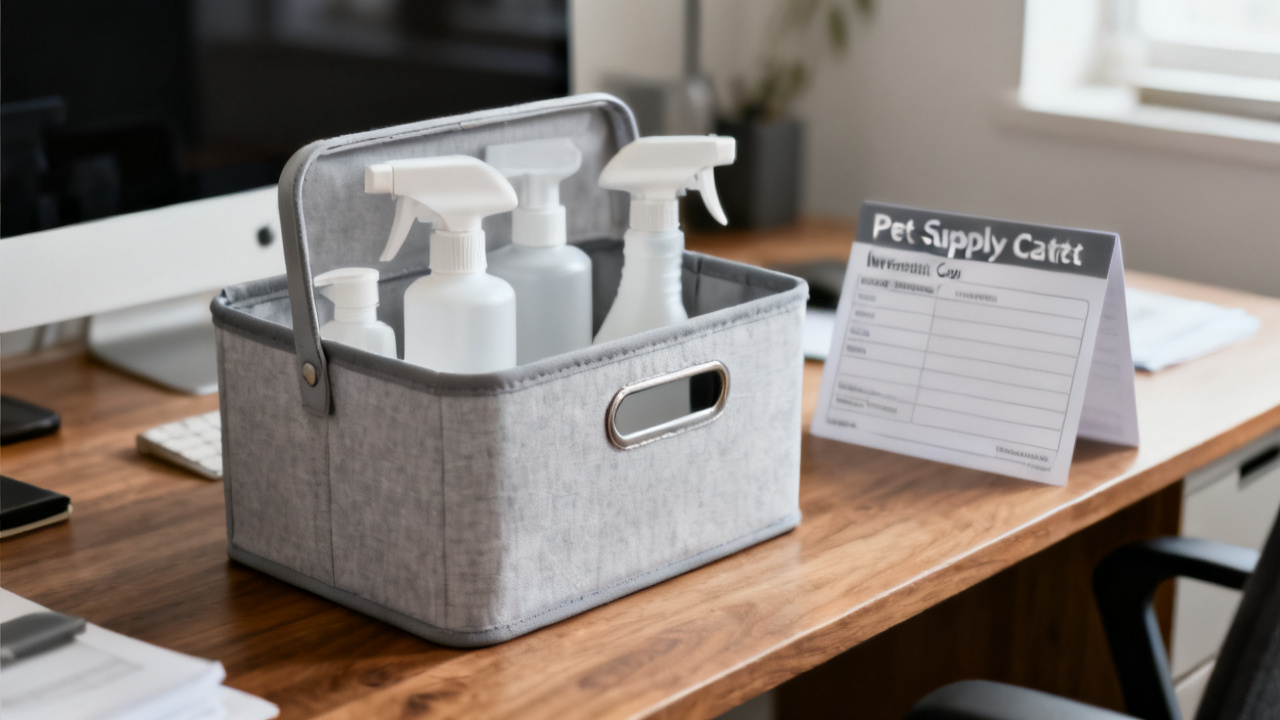
One caddy: food scoop, wipes, and leash extras
The key to making this caddy work is only including items you use at least once every other day, so you don’t fill it with clutter you’ll never reach. We’ve put together a printable pet-supply caddy inventory card below that you can use to pack your caddy correctly the first time, no guesswork required:
| Item Category | Exact Item to Include | Rationale for Inclusion | Storage Spot in Caddy |
|---|---|---|---|
| Treats | Sealed, hard-sided 4-ounce training treat pouch | For immediate rewards for good behavior, on-the-go walk treats, and post-meal positive reinforcement | Top mesh pocket for one-handed access |
| Cleaning Supplies | 1 travel pack of pet-safe disinfectant wipes, 10 mini paper towel sheets | For wiping muddy paws before entering the house, cleaning up small treat spills, and wiping slobber off door handles | Main compartment left side, in a sealed zipper pouch |
| Walking Extras | Spare 6-foot nylon leash, pre-filled waste bag dispenser, 1 spare engraved collar tag | For last-minute walks, broken leash emergencies, and lost tag replacements when you’re heading out the door | Main compartment right side, secured with a small carabiner to the caddy handle |
| Feeding Supplies | Dedicated plastic food scoop, sealed 8-ounce bag of dental chews | For daily meal serving and post-meal dental rewards, no need to dig through bulk kibble bags at feeding time | Bottom slip pocket to avoid cross-contamination with cleaning supplies |
| Daily Medical Basics | Dosing syringe for liquid supplements, 3-day supply of prescription daily chews | For consistent, on-time dosing without searching through bathroom cabinets or closet storage | Small sealed side pocket to keep items secure and separate from food |
This list works for both dog and cat owners, just swap out species-specific items as needed (like cat treats for dog treats, or a spare harness for a spare collar). The caddy should be stored no higher than your lower kitchen counter edge, either on a low shelf by the entry door, mounted to the side of a lower cabinet with a utility hook, or tucked on the floor next to your pet’s food bowls, never on the food-prep counter itself. A standard 12x8x10 inch plastic utility caddy, available at most dollar or home goods stores, fits all these items with room to spare for a single small pet toy if you want to add one for walk time.
Open bags that spill when the caddy tips
The most common complaint people have with portable pet caddies is spilled treats and loose items falling out when the caddy is knocked over or jostled as you grab it for a walk. The inventory card eliminates most of this risk by requiring sealed, hard-sided containers for all loose food items, instead of open, folded treat bags that spill at the slightest angle. Illustrative example: A sealed 4-ounce silicone treat container will not spill even if the caddy is dropped from a 3-foot shelf, while an open folded treat bag will spill all of its contents if tipped more than 45 degrees. You can add extra spill protection by securing small loose items like waste bag rolls or collar tags to the inside of the caddy with a small carabiner, so they don’t roll out when you lift the caddy quickly. Lining the bottom of the caddy with a washable cotton placemat catches any small, accidental spills from leaky wipe packs or crumbs that escape treat containers, so you don’t have to scrub the inside of the caddy every time you have a small mess. If you have multiple pets, assign a sealed color-coded container for each pet’s treats to avoid cross-contamination for pets with food allergies.
A weekly wipe and restock of the same caddy
A caddy full of expired treats, empty wipe packs, and random clutter will end up back on the counter eventually, so a quick weekly maintenance routine keeps the system running smoothly. Add this 5-minute task to your existing weekly kitchen cleaning routine, so you don’t have to remember to do it separately. First, take all items out of the caddy and wipe down the inside and outside with a general disinfectant wipe to remove paw dirt, crumbs, and slobber buildup. Next, cross-reference all items against the inventory card to remove any random items that don’t belong (like a random dog toy you tossed in on a whim, or a bottle of human hand sanitizer that doesn’t need to be stored with pet supplies). Finally, restock any low items: refill the waste bag dispenser if you have fewer than 10 bags left, top off the treat container if it’s less than half full, and replace the wipe pack if you have fewer than 5 wipes remaining. Example timing: This full clean and restock takes 5 minutes or less, if you stick to the approved inventory list and don’t add extra clutter to the caddy. Every 4 weeks, take an extra minute to check expiration dates on treats and supplements, and throw out any items that are past their use-by date to avoid making your pet sick.
Vet pharmacies this caddy cannot replace
While this caddy is perfect for daily pet items, it is not a replacement for proper medical storage as directed by your vet or vet pharmacy. Never store temperature-sensitive prescription medications like insulin, topical flea treatments that require cool storage, or emergency seizure medications in this caddy, as fluctuating room temperatures or accidental spills can render these medications ineffective. Emergency first-aid items like wound care gauze, pet-safe antihistamines, and hydrogen peroxide for inducing vomiting should be stored in a clearly marked, separate emergency pet kit somewhere easy to access, not mixed in with daily walk items where you might fumble for them during a crisis. This caddy is also not designed for bulk pet supplies like 20-pound bags of kibble, large boxes of waste bags, or extra pet beds, which should be stored in a sealed pantry bin or closet storage to avoid pest infestations. If you have questions about the correct storage for any of your pet’s prescription medications, always reach out to your vet or vet pharmacy directly for personalized guidance, rather than relying on general organizing advice.
Before you invest in a new organizing caddy, take 30 seconds to gather all the pet supplies currently cluttering your kitchen counter and cross-reference them with the inventory card above, so you only purchase a caddy sized to fit exactly what you need, no extra wasted space or unused storage.
Written by the QuickSpace Living editors.