The home-work drawer will not close because a fifth charger joined four pens that do not write. Most people working from a small home corner have at least one drawer that’s become a catchall for half-used sticky notes, mismatched paper clips, and random tech accessories they haven’t touched in six months. You don’t need a full drawer overhaul to fix the mess—just a simple one-in-one-out system that takes less than 10 seconds to use every time you add something new. QuickSpace Living designed the printable rule card below to fit right inside your drawer so you never forget the steps.
Home-work drawers that eat chargers and dried pens
Small home work corners usually only have one to two drawers total, so every inch of space matters. You might share the desk with a partner or kid doing homework, so the drawer can’t hold items for multiple people either. Clutter builds slowly: one free pen here, one extra charging cable there, until you can’t close the drawer all the way, or items fall out every time you open it. It’s not a failure of tidiness—it’s a failure of having clear rules for what stays and what goes. Example timing: Most people spend 2 minutes per day digging through a cluttered work drawer for a working pen or working charger, which adds up to nearly an hour of wasted time a month for people who use their desk 5 days a week. The one-in-one-out system eliminates that waste without requiring a multi-hour deep clean.
One-in, one-out before a new item sits down
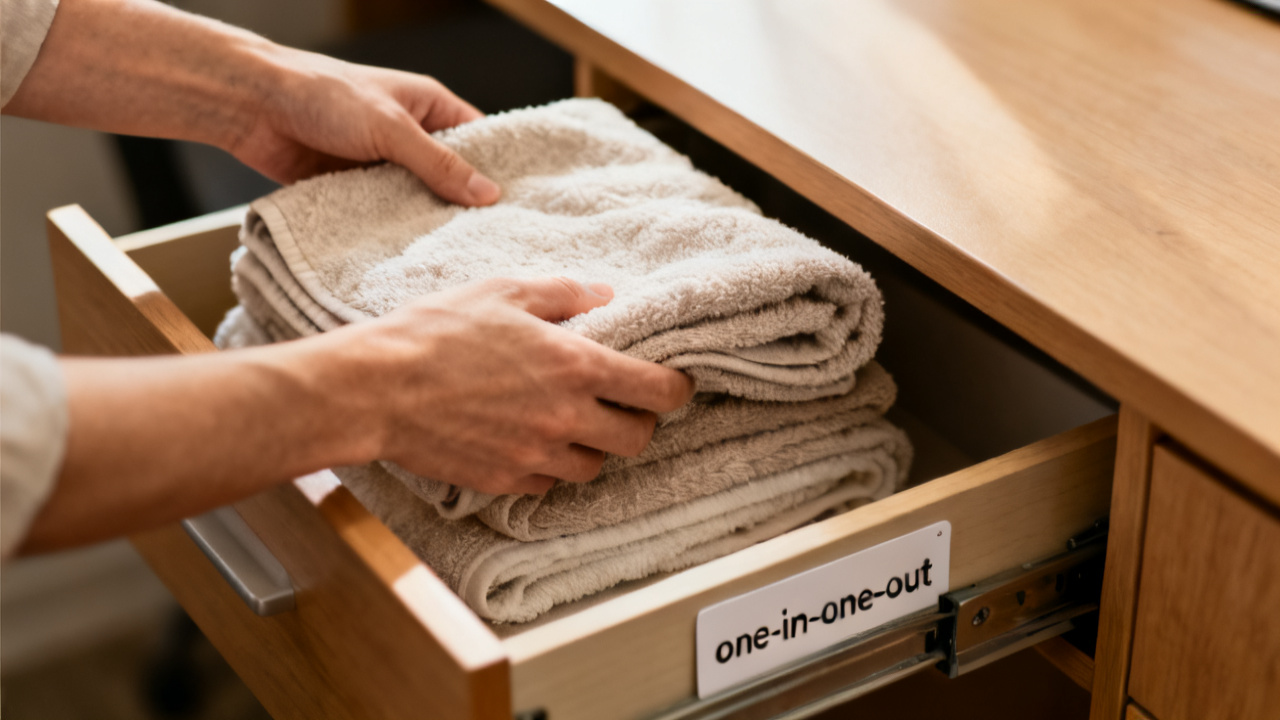
The core of the system is a simple rule: every time you bring a new item into the work drawer, you must remove one existing item of the same category immediately, before you close the drawer. No exceptions, no “I’ll get to it later” piles on top of your desk. The rule fits on a 3×5 card you can print, cut out, and tape to the inside lip of your drawer for easy reference:
| Desk-Drawer One-In-One-Out Rule Card (3×5, tape inside drawer lip) | |
|---|---|
| 1. Set the new item in the drawer first, so you don’t forget to follow the rule | ✅ |
| 2. Match it to its pre-defined category: writing, tech, fasteners, paper goods, misc | ✅ |
| 3. Pull one old, unused, or broken item from that same category | ✅ |
| 4. Dispose of the old item immediately (trash, donate, or move to long-term storage) | ✅ |
| 5. Close the drawer, no extra sorting steps needed | ✅ |
The categories on the card are flexible to your needs. If you work a creative job, you can swap “fasteners” for “art supplies” if that’s what you use more often. The key is that you only remove items from the same category as the new one, so you don’t end up ditching a working pen to make space for a new stapler, which throws off the balance of supplies you actually use.
Free pens from events that refill the junk
Free swag pens are the single biggest culprit of desk drawer clutter. Most people grab free pens from conferences, coffee shops, job fairs, and community events without thinking, even if they already have more pens than they could use in a year. Most of these free pens run out of ink after 2 uses, or skip so badly they’re not worth keeping, so they just pile up in the drawer for months. The one-in-one-out rule solves this problem seamlessly: every time you bring a free pen home, you have to pull one old pen from the drawer to test. If it doesn’t write, toss it immediately. If it does write, you can keep the new one only if you toss the working old one, or pass the new one along to a family member who needs it. Illustrative example: If you grab 3 free pens at a local farmers market, you have to remove 3 pens from your drawer before any of the new ones go in. Most people find they have at least 3 dried pens they can toss immediately, so the total number of pens in the drawer never grows.
A monthly empty-onto-the-desk sort
The one-in-one-out rule keeps the drawer functional day to day, but a quick monthly check catches any items that slipped through the cracks. Once a month, dump the entire contents of the drawer onto your desk, sort into keep, toss, and donate piles, then put only the keep pile back. Example timing: This sort takes 7 minutes or less for most small desk drawers, since the one-in-one-out rule keeps clutter from building up too much. This is also a good time to wipe down the inside of the drawer if it’s gotten dusty or has crumbs from mid-work snacks, and adjust your categories if needed. If you no longer use staples, for example, you can remove the fasteners category from your card and reallocate that space to extra paper goods. If you find items that you forgot you had, ask yourself if you’ve used it in the last 30 days. If the answer is no, it doesn’t go back in the drawer.
Office supply rooms this drawer is not stocking
A small home work drawer is not a corporate office supply closet that holds 100 pens, 50 packs of post-its, and 20 different types of tape. Setting clear boundaries for what belongs in the drawer in the first place prevents clutter from building up before the one-in-one-out rule even needs to apply. Bulk packs of office supplies, for example, do not belong in your daily work drawer. Stash extra packs of pens, sticky notes, and printer paper in a separate storage bin in a closet or under your bed, and only bring out a small pack when you run out of what’s in your drawer. Extra tech accessories you only use for travel go in your travel bag, not your work drawer. Random household items like rubber bands for cooking, batteries for the TV remote, and snack wrappers never belong in the work drawer at all. If an item doesn’t fit into one of the categories on your rule card, it doesn’t go in the drawer.
Tape the printable one-in-one-out card inside your desk drawer before you finish work today, and you’ll never have to fight with a stuck drawer or dig through a pile of dried pens and random chargers to find what you need again. The system takes almost no extra time to follow, and it keeps your small work corner functional without requiring full weekend organizing sessions.