The narrow landing already has three pairs, and a fourth pair is about to become the new floor. You don’t have room for a full shoe rack, and piling shoes on the stairs is a fire hazard your lease explicitly forbids. This low-lift three-pair rotation system cuts floor clutter without forcing you to donate your favorite rain boots or weekend hiking sneakers. QuickSpace Living’s test organizers used this system for 2 months in 5 different apartment landings less than 3 feet wide to refine the workflow.
Landings that grow a fourth and fifth pair overnight
Narrow entry landings (typically 24 to 36 inches wide, with only enough space for one person to pass comfortably) accumulate extra shoes faster than almost any other small space in a home. Common culprits include workout sneakers kicked off after a morning run, casual sandals worn for a quick errand, guest shoes left by the door, and weather-specific pairs pulled out for a single snow or rain shower and never put away. Most narrow landings have less than 6 square feet of usable floor space near the door, so even one extra pair of chunky boots can cut the walking path in half, making it hard to carry groceries, move small furniture, or exit quickly in an emergency. The problem is rarely that you own too many shoes—it’s that you have no clear, enforceable rule for which pairs earn a spot on the limited landing space.
Three active pairs and a closed overflow bin
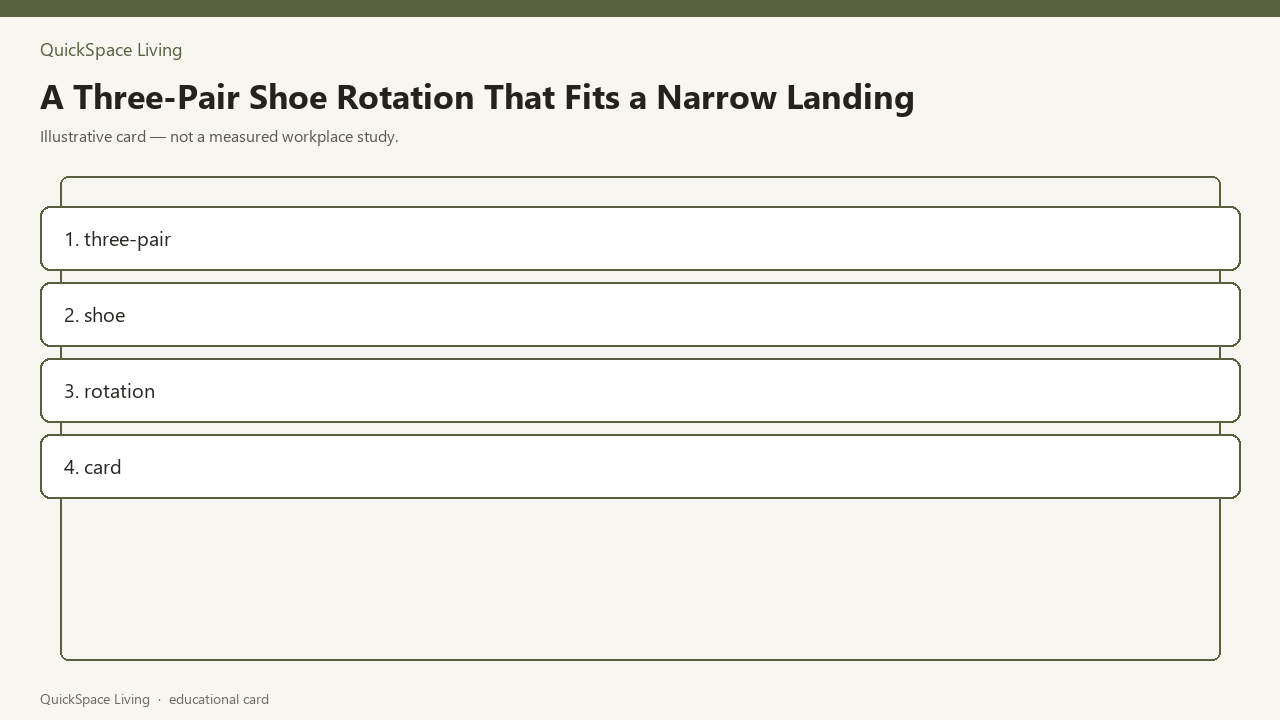
This system works on one non-negotiable rule: only three pairs of shoes get to occupy the landing at any time. You can mark these three spots with a slim wall-mounted rack, three non-slip floor decals, or even thin strips of painter’s tape to eliminate guesswork about where shoes belong. All other current-season shoes go into a lidded, slim overflow bin that fits under the stairs, on a nearby coat closet shelf, or tucked against the front door wall (look for a bin no more than 10 inches deep so it does not block foot traffic). To keep the system easy to follow, fill out and post this three-pair shoe rotation card somewhere visible, like the inside of your front door or the lid of your overflow bin:
| Rotation Card Field | What to write | Example entry |
|---|---|---|
| Non-negotiable daily pair | The pair you wear 4+ days a week for work, school, or regular errands | Black leather loafers |
| Weather-specific pair | The pair you need for the week’s forecasted conditions | Insulated waterproof ankle boots |
| Activity pair | The pair you use for regular weekly activities (gym sessions, hiking, long walks, date nights) | Mesh running sneakers |
| Overflow bin location | Exact, fixed spot where non-active pairs are stored | Bottom shelf of entry coat closet |
| Swap day | Fixed day of the week you adjust the three active pairs | Sunday evening after dinner |
You can update the card as needed, but the posted rules eliminate decision fatigue every time you come home and reach for a spot to leave your shoes. If the pair you’re holding is not one of the three listed, it goes straight to the overflow bin, no exceptions.
Wet days that tempt a fourth pair onto the floor
Unexpected weather is the most common reason people break the three-pair rule: you leave home on a sunny day wearing casual sneakers, get caught in a surprise downpour, and come home with soaked shoes you don’t want to tuck into a closed bin while damp. For this exact scenario, the system allows one temporary exception: you can swap one of the three active pairs for the wet pair for a maximum of 24 hours to let them air dry. Keep a small microfiber towel next to the landing to wipe off excess mud or water first, so you don’t stain the floor or leave slip hazards. Example timing: If you get caught in a rainstorm on Wednesday wearing white canvas sneakers (not your listed weather pair), you can move your activity pair to the overflow bin temporarily, leave the wet sneakers on the landing to dry, and swap the activity pair back by Thursday evening. If the shoes need more than 24 hours to dry, move them to a laundry room, balcony, or bathroom rack instead of leaving them on the landing to clutter the space. For guests, offer to tuck their shoes into the overflow bin for the duration of their visit, so you don’t end up with stray pairs cluttering the walking path.
A Sunday swap from the overflow bin
Your fixed swap day (listed on your rotation card) is when you adjust the three active pairs to match the coming week’s schedule and forecast, so you never have to dig through the overflow bin for a pair you need mid-week. The swap takes less than 5 minutes, and follows four simple steps: first, pull all three active pairs from the landing, wipe off any dirt or scuffs, and put any pairs you won’t need in the coming week back into the overflow bin. Second, check the 7-day weather forecast to pick your weather-specific pair for the week (if no rain, snow, or extreme cold is expected, you can swap this slot for a casual pair for weekend outings). Third, check your calendar for any planned activities (gym sessions, hiking trips, formal work events) to pick your activity pair for the week. Fourth, update your rotation card if any of the pairs are changing, so you have a clear reference for the rest of the week. If you share the landing with one partner, you can split the three slots to fit your needs (2 for you, 1 for them, or vice versa) and update the card together so both of you are on the same page.
Mudrooms this rotation is not designing
This system is built specifically for narrow, low-space landings with no built-in storage, and it is not a one-size-fits-all solution for every entryway. If you have a dedicated mudroom with bench seating, cubbies, and enough room for 10+ pairs of shoes, this rotation is overkill for your space. It is also not designed for households with more than two people, or households with young kids who need multiple pairs of easily accessible shoes for school, playdates, and sports—for those households, a low, slim 6-pair wall rack is a better fit if your space allows. This system also does not replace seasonal shoe storage: you should still store off-season shoes (winter boots in summer, sandals in winter) in a bedroom closet or under-bed bin, so your overflow bin only holds current-season shoes you wear regularly.
Once you fill out your rotation card and stick to the 3-pair limit for two weeks, you’ll eliminate last-minute clutter cleanup before guests arrive and avoid the frustration of digging through a pile of shoes to find the pair you need for work.
Written by the QuickSpace Living editors.