The studio has one reach-in closet, and winter coats are already sharing a rod with summer linen. It’s a common squeeze for anyone living in 600 square feet or less, where every inch of storage counts for more than premium countertop real estate. Trying to cram all four seasons of clothing, outerwear, and accessories into one 6-foot-wide closet leads to wrinkled pieces, lost items, and wasted time rummaging every morning. This structured swap calendar removes the guesswork, so you never have to dig through puffer coats to find a swimsuit for a last-minute beach trip.
One reach-in closet asked to hold four seasons
Most standard small-apartment reach-in closets only come with one or two hanging rods, a single upper fixed shelf, and 1 to 2 square feet of uncovered floor space. Even after ruthless decluttering, it is functionally impossible to fit heavy winter parkas, rain boots, swim trunks, linen button-downs, wool sweaters, and flip flops all in that space at once without creating constant disarray. Most people only wear a small fraction of their full wardrobe on a weekly basis, so off-season pieces are just taking up valuable space you could use for items you reach for regularly. Overstuffing your closet also stretches delicate fabrics, breaks plastic hangers, and makes it far easier to forget what you own, leading to unnecessary duplicate purchases that eat up even more space. This system works with the limited space you have, rather than forcing you to make unrealistic cuts to your wardrobe or invest in costly built-in storage upgrades.
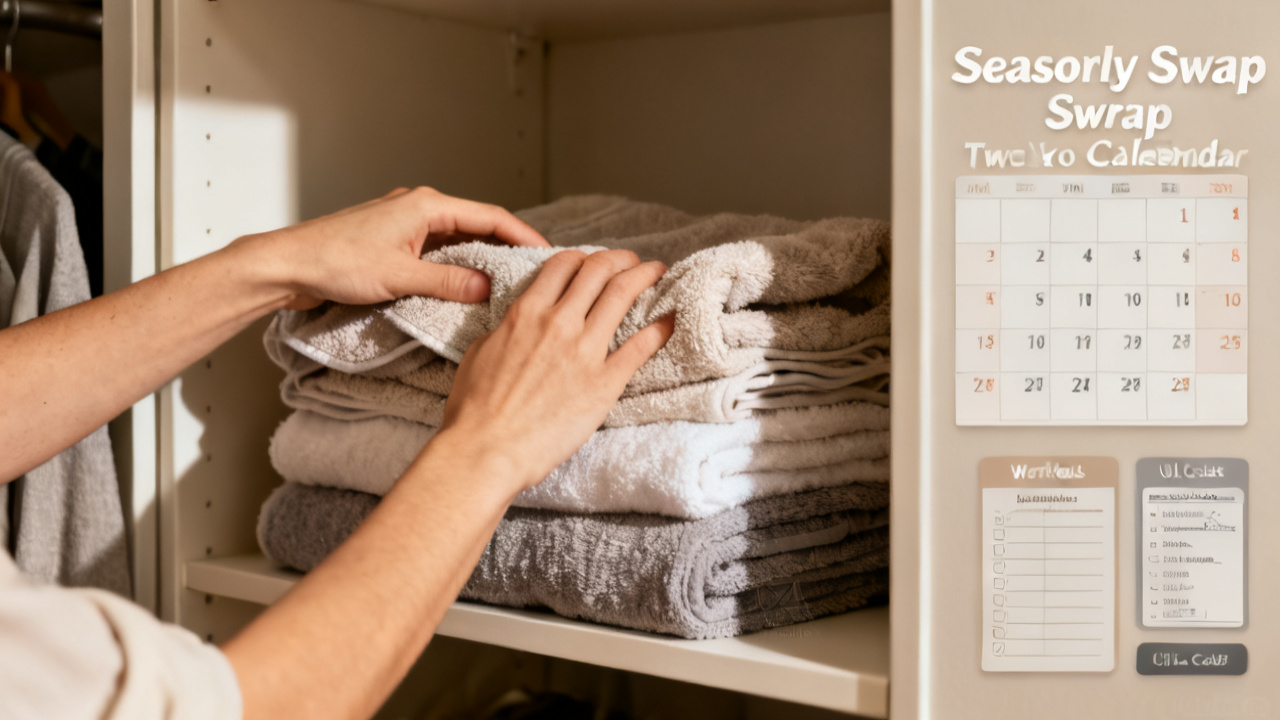
A twice-yearly swap calendar with bin names
This low-lift system relies on two scheduled swaps per year, aligned with typical seasonal shifts in most temperate climates, plus clearly labeled bins to eliminate sorting confusion. All bins should be clear, lidded plastic 12-quart or 18-quart models, so you can see contents without unzipping or opening the lid, and labeled with permanent marker or printable sticker labels for fast identification. The full calendar and bin labeling guide is below:
| Swap Event | Bin Label | Exact Contents | Recommended Storage Spot |
|---|---|---|---|
| End of March (Spring Swap) | Winter Outerwear Heavy | Down parkas, wool peacoats, snow boots, thermal base layer sets | Top of bedroom armoire, back of upper closet shelf |
| End of March (Spring Swap) | Winter Accessories Small | Knit scarves, wool hats, heavy gloves, heated sock sets, earmuffs | Under bed storage slot, top of kitchen cabinet unused for food |
| End of October (Fall Swap) | Warm Weather Apparel Full | Linen shirts, swimwear, shorts, tank tops, sundresses, lightweight linen pants | Top of bedroom armoire, back of upper closet shelf |
| End of October (Fall Swap) | Warm Weather Accessories Small | Flip flops, beach towels, sun hats, UV protection sleeves, portable fan lanyards | Under bed storage slot, top of kitchen cabinet unused for food |
You can adjust swap windows by 1 to 2 weeks if your local climate runs hotter or colder than average, no need to stick strictly to the March and October timelines if you regularly get snow in mid-April or 80-degree days in early November. Example timing: each swap takes 90 minutes to sort, fold, pack, and restock your closet, with 30 extra minutes set aside to donate any pieces you didn’t wear in the prior season.
Mid-season chaos from skipped monthly checks
The twice-yearly swap works well for most weather patterns, but skipping quick monthly check-ins can lead to total system breakdown when unexpected temperature shifts hit. A random cold snap in May might send you digging through your heavy winter outerwear bin for a light wool jacket, and if you don’t take the time to repack the bin properly, you’ll be left with a pile of winter coats on your closet floor that you’ll likely ignore for weeks. Adding a 10-minute monthly check-in, scheduled for the first Sunday of every month, lets you pull 1 to 2 transitional pieces you might need for upcoming unusual weather, so you don’t have to dump out an entire bin mid-season. QuickSpace Living tests these small check-ins to make sure they don’t add unnecessary work to your weekly routine, and most people find they save far more time avoiding mid-season rummaging sessions than they spend on the quick check. Skipped checks also lead to open bins that collect dust, moisture, or pest damage, which can ruin delicate wool or linen pieces over time.
Shared closets and pets that steal floor bins
If you share your single reach-in closet with a partner, roommate, or older child, the swap calendar works seamlessly with one small adjustment: add a first initial or color code to each bin label to avoid mixing up items. You can split the swap workload with your closet mate, or complete your own set of bins on your own timeline, no need to coordinate the full swap on the exact same day. For households with cats or dogs that chew on plastic bin lids, knock over floor storage, or hide their toys in open containers, avoid storing your seasonal bins on the closet floor or low under-bed slots where pets can easily access them. Illustrative example: a 10-pound cat that likes to nap on soft fabric-filled bins can crush lightweight linen shirts and sundresses, so storing those bins on an upper closet shelf or the top of a tall armoire avoids that unnecessary damage. If you have no higher storage space available, opt for heavy-duty lidded bins with child-safe locking clips that pets can’t pry open.
Off-site storage this calendar cannot rent for you
This system is designed exclusively for everyday clothing and small accessories, and it does not include provisions for large specialty seasonal items that won’t fit in standard 18-quart bins. If you own ski gear, camping equipment, large holiday decor, or bulk cold-weather sports gear, this calendar can’t help you rent off-site storage space, and you’ll need to make separate arrangements for those items if you don’t have extra space in your apartment. For people living in areas with extreme cold that requires 3 or more heavy winter coats per person, you may need one extra bin per person that you can store with a nearby friend or family member if you have no extra shelf space in your unit. QuickSpace Living has separate guides for small-space holiday and recreational gear storage if you need help organizing those larger, less frequently used items.
Start your first swap this weekend by pulling all out-of-season items from your closet first, sorting them into donate, keep, and trash piles before packing them into the labeled bins, so you don’t waste storage space on pieces you’ll never wear again.