The only clear wall stretch becomes the bag dump after a ten-hour day. You don’t need an entire 8-foot wall of floating shelves and custom cork boards to corral the incoming mail, keys, dog leashes, and school permission slips that pile up before you even take your shoes off. A compact wall command center that fits in just 1 to 2 square feet can eliminate most of the entryway clutter you trip over every evening, without requiring renovations or a big budget.
Bags dropped on the only clear stretch of wall
Most people living in apartments, townhomes, or small single-family homes don’t have the luxury of a dedicated mudroom or a full empty wall near the entryway. The only available space is often that narrow 12 to 24 inch wide strip between your front door and the nearest closet, light switch, or wall art. It’s the first spot you see when you walk in, so it becomes the default landing pad for every item you’re carrying when you get home: work bags, gym bags, kid’s backpacks, loose mail, grocery receipts, library books that need returning, even half-empty water bottles. By Wednesday of most weeks, that pile is so tall it spills onto the floor, and you end up tripping over shoes and bags when you’re rushing out the door in the morning. Most popular command center tutorials online assume you have 4 to 8 feet of empty wall space for floating shelves, custom cork boards, and labeled bins for every family member, which is out of reach for most small space dwellers. That’s where the compact 1 to 2 square foot version comes in: it fits in that tiny empty wall strip, no extra space required.
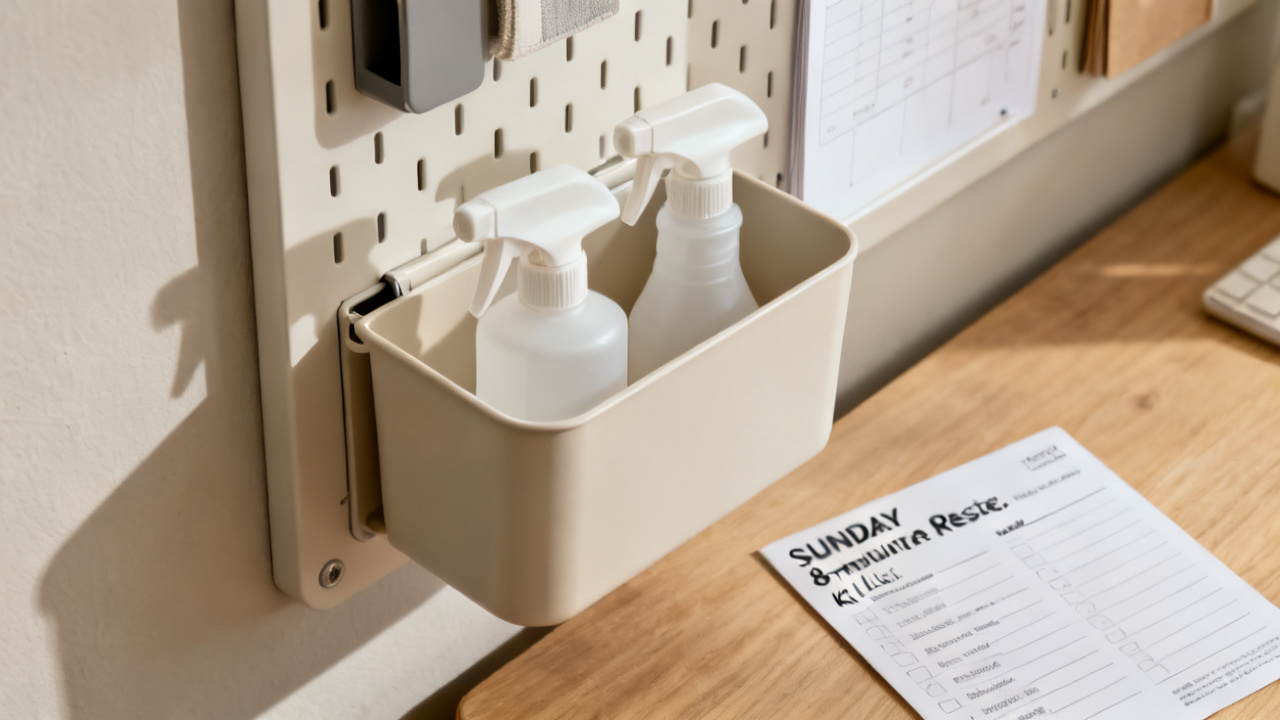
A one-to-two-foot kit: hooks, tray, and calendar
The entire kit is designed to fit exactly in that small footprint, with no extra components that take up unnecessary space. All items can be mounted with renter-friendly adhesive products if you don’t want to drill holes in your walls, and the total cost for basic versions of each item is typically under $25. The table below outlines the exact components of the kit and their space allocation:
| Item | Purpose | Footprint Allocation (1–2 sq ft total) |
|---|---|---|
| 2 heavy-duty adhesive or screw-in utility hooks | Holds 2 standard bags (work, backpack, gym) plus 2 small high-use items (dog leash, reusable grocery tote, umbrella) | 30% |
| 1 shallow 8×10 inch wall-mounted plastic or wood tray | Catches loose keys, incoming mail, small paper slips (permission slips, appointment reminders, receipts) | 40% |
| 1 6×8 inch dry-erase or paper monthly calendar | Tracks time-sensitive tasks, upcoming appointments, drop-off/pickup schedules, and bill due dates | 30% |
You can arrange the components vertically or horizontally to fit your wall space. For narrow vertical spots (common in apartment entryways), stack the calendar at the top, the tray in the middle, and the hooks at the bottom for a 12 inch wide, 24 inch tall (2 sq ft) setup. For shorter, wider spots, place the hooks next to the tray, with the calendar centered above both, for a 24 inch wide, 12 inch tall (2 sq ft) or 12 inch wide, 12 inch tall (1 sq ft) setup if you skip one hook for a 1 or 2 person household. Adhesive hooks and command-strip mounted trays work for renters, no drilling required as long as you use strips rated for the full weight of the items you’ll hang.
Sunday eight minutes so the tray does not overflow
The tray is the highest-traffic part of the kit, and it’s the most likely to get cluttered with random paper and small items if you don’t do a regular reset. A short weekly reset takes just a few minutes and keeps the tray from overflowing onto the floor, so you never have to dig through a pile of junk to find your keys before work. Example timing: 8 minute Sunday reset checklist, designed to be completed while you wait for your coffee to brew or your favorite show to load:
☐ Sort all paper items in the tray: toss junk mail, expired coupons, and useless receipts immediately (2 minutes)
☐ Move action items (bills, permission slips, return labels) to your regular home filing spot or digital to-do list (2 minutes)
☐ Put all loose non-paper items (keys, lip balm, headphones, gift cards) back in their permanent storage spots (1 minute)
☐ Wipe down the tray, hooks, and calendar surface with a dry or slightly damp microfiber cloth to remove dust and smudges (1 minute)
☐ Update the calendar with the upcoming week’s appointments, school events, bill due dates, and planned drop-off/pickup tasks (2 minutes)
You can print this checklist out and tape it to the back of the calendar so you don’t have to remember the steps. Doing this reset on Sunday means you start the week with a clear entryway and no missed time-sensitive tasks, instead of digging through a pile of mail on Monday morning looking for a permission slip you forgot to sign.
A no-buy week using tape and a clipboard
You don’t have to spend any money to test if this system works for your space. If you want to try it out before purchasing hooks, a tray, or a calendar, you can build a temporary version for free with items you already have around your home. First, use painter’s tape to mark out your chosen 1 or 2 square foot footprint on the wall, so you can confirm the spot doesn’t block light switches, door swings, or existing wall art. Next, hang a clipboard you already own in the footprint, and clip a free printable monthly calendar to it to stand in for the permanent calendar. Use 2 small loops of heavy-duty painter’s tape as temporary hooks for your bags, or use existing small nails if you already have them in the wall. Tape a clean shoe box lid to the wall as your temporary tray to hold mail and keys. Test this setup for 7 full days, noting if the footprint is big enough for your daily items, if you use all three components, and if you need to adjust the layout to be more accessible. QuickSpace Living recommends testing any small organizing system for a full week before purchasing supplies to avoid wasting money on items that don’t fit your routine.
Office reception desks this kit is not building
It’s important to set clear expectations for what this small command center can and can’t do. This kit is not designed to replace a full home office, hold your entire family’s paperwork archive, or act as a decorative display piece. It won’t fit your laptop, printer, file cabinet, or craft supplies. It’s not meant to look like the perfectly staged, 8-foot-wide command centers you see on social media, with custom vinyl labels, decorative bins for every small item, and family photo displays. The only goal of this kit is to eliminate the daily bag dump pile on your entryway wall, and keep track of the most urgent, time-sensitive tasks that you need to see when you enter and leave your home. If you need a full home office or a larger family organization system, that’s a separate project that requires more space, but this small kit solves one specific, common clutter problem without taking over your entryway.
Pick one day this week to mark out your 1 to 2 square foot wall spot, set up the temporary tape and clipboard test version, and you’ll stop tripping over entryway piles by the end of your first week using the system.
QuickSpace Living editors