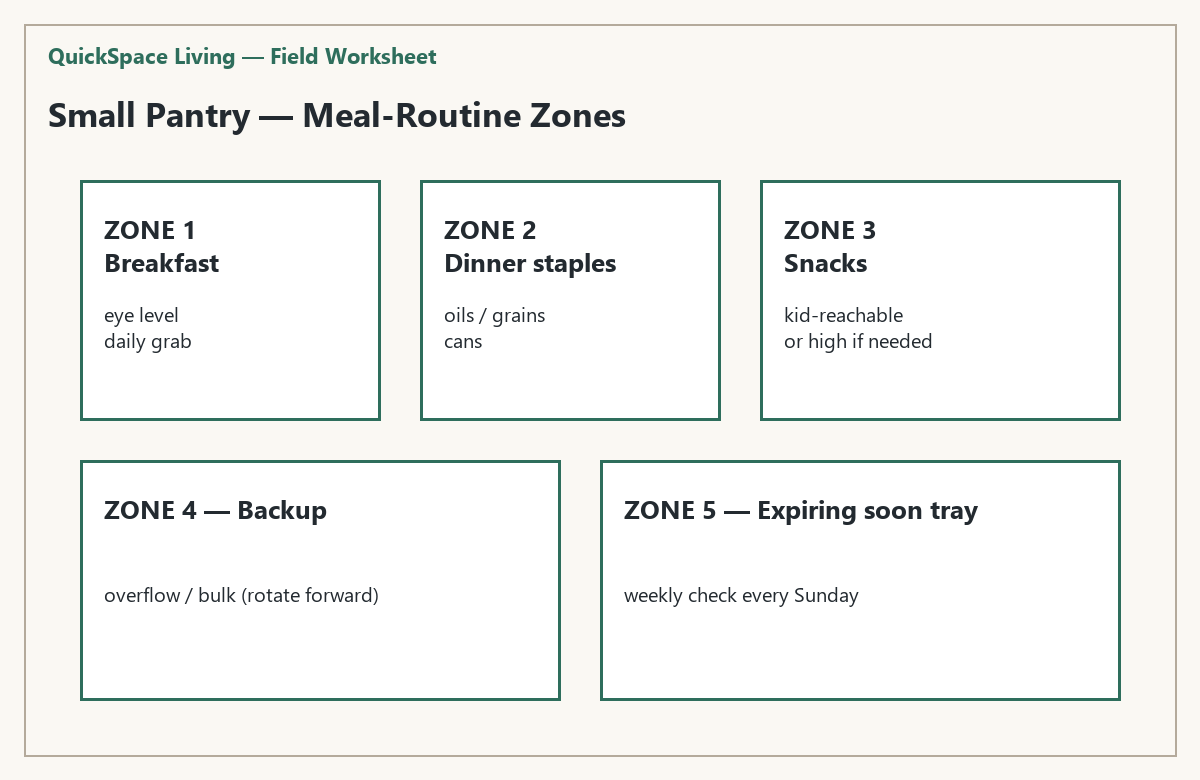
Color-matched jars look calm in photos and still hide expired food. Zones tied to how you cook work better in small pantries.
Five zones that match real meals
- Zone 1 Breakfast — eye level for daily grab
- Zone 2 Dinner staples — oils, grains, cans
- Zone 3 Snacks — height chosen for your household
- Zone 4 Backup — bulk behind or below
- Zone 5 Expiring-soon tray — checked every Sunday
You do not need matching containers to start. Clear-ish bins or even low tray edges are enough if labels face forward.
Sunday six-minute reset
Move anything within two weeks of expiry into Zone 5. Bring backup items forward. Write only what Zone 5 and empty staples need on the shopping list. This single habit cuts duplicate buys more than any barcode app.
Small-pantry adaptations
If you only have three shelves, combine Zone 4 under Zone 2 and keep Zone 5 as a single sheet pan in front. Door racks can hold spices if bottles are short enough for the door to close. Tall cereal boxes often waste less space standing on a shelf than poured into jars that do not fit your shelf height.
What not to do
Do not create a sixth decorative zone for “pretty jars.” If a container does not speed grabbing food, it is clutter. Do not store open flour beside leak-prone cleaners. Do not keep medicine in the pantry if heat from the stove reaches those shelves.
Failure signs and fixes
If you keep finding duplicates, Zone 4 is too deep—reduce backup to one extra of each staple. If snacks explode across shelves, Zone 3 needs a literal bin with a lid. If Zone 5 never empties, your shopping list is ignoring it; put Zone 5 on the fridge note for one month.
How to know the system is working
Give any new setup two full weeks before you buy another product. Track three signals only: can you put things away in under a minute, does the walkway stay clear, and does the surface return to empty at least once a week. If two of those fail, change the rule or the footprint—do not add another bin yet.
When something breaks the system, write one sentence about why. “Shoes overflow because guests leave pairs” is a different fix than “we own too many daily shoes.” Specific notes beat vague frustration and keep this site’s advice useful for your actual apartment.
How to know the system is working
Give any new setup two full weeks before you buy another product. Track three signals only: can you put things away in under a minute, does the walkway stay clear, and does the surface return to empty at least once a week. If two of those fail, change the rule or the footprint—do not add another bin yet.
When something breaks the system, write one sentence about why. “Shoes overflow because guests leave pairs” is a different fix than “we own too many daily shoes.” Specific notes beat vague frustration and keep this site’s advice useful for your actual apartment.
How to know the system is working
Give any new setup two full weeks before you buy another product. Track three signals only: can you put things away in under a minute, does the walkway stay clear, and does the surface return to empty at least once a week. If two of those fail, change the rule or the footprint—do not add another bin yet.
When something breaks the system, write one sentence about why. “Shoes overflow because guests leave pairs” is a different fix than “we own too many daily shoes.” Specific notes beat vague frustration and keep this site’s advice useful for your actual apartment.
Shopping list link
After the Sunday reset, your list should come only from empty Zone 1–2 staples and Zone 5 items you will cook this week. If an item is not on those shelves, it is a want, not a restock. This rule alone reduces impulse pantry clutter.
When you unpack groceries, put new items behind older ones in the same zone. Facing labels forward takes thirty seconds and saves another expired can later.
Quick recap
Measure first, keep walkways clear, maintain on a short weekly timer, and refuse extra products until the current footprint works for two weeks. That sequence is the difference between a real system and a shopping spree that looks organized for one afternoon.
Final check
Walk the room once after setup. If anything crosses a walking line, shorten it or move it. If you feel the urge to buy one more organizer immediately, wait two weeks and reassess with a photo.
Important note:
This is practical home-organization guidance for everyday apartments and houses. It is educational content, not a product warranty, contractor advice, or a guarantee that every floor plan will fit the same setup.