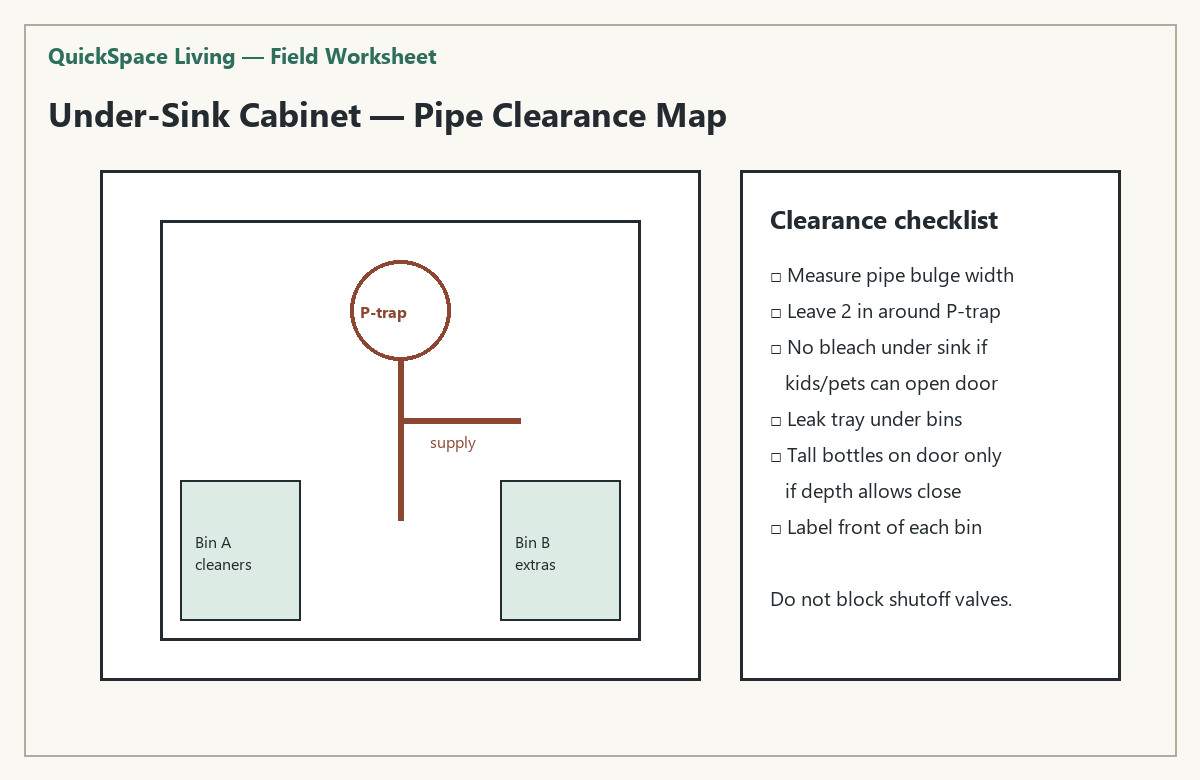
Under-sink chaos usually starts with a bin that looked perfect online and cannot close once the P-trap is in the way. Use this worksheet before you order another stackable set.
Map the obstacles first
Empty the cabinet completely. Photograph it from the front. Measure the width of the P-trap bulge and the distance from the cabinet floor to the lowest pipe. Write both numbers on the diagram. Also note where the shutoff valves sit; you must reach them without unloading every bottle in an emergency.
If the cabinet floor is warped or shows old water marks, add a shallow leak tray before any organizing product. A pretty bin on a wet floor is still a wet bin.
Bin rules that survive real apartments
- Leave about 2 inches around the P-trap
- Put a shallow leak tray under the bins
- Keep shutoff valves reachable without unloading everything
- Store bleach and high-risk chemicals elsewhere if kids or pets can open the door
- Skip cardboard; humidity under sinks softens it fast
A simple two-bin layout
Bin A holds daily cleaners you use at least weekly. Bin B holds backups and less-used tools like gloves or a small brush. Door racks are fine only for lightweight bottles that still let the door close softly. If the door springs back open, the rack is too deep or too heavy.
Label the front of each bin with a strip of tape. Labels stop household members from creating a third mystery pile beside the bins.
What not to store under the sink
Avoid paper towels that must stay dry, extra paint, and anything that would be ruined by a slow drip overnight. Extra toilet paper belongs on a hall shelf if the cabinet stays damp. Medicines do not belong here either; temperature and humidity swing too much.
Monthly check
Pull the tray once a month. If it is damp, fix the leak before you reorganize again. Wipe sticky cleaner residue from bottle sides so bins slide out easily. Re-measure if a plumber replaces trap parts; new pipes often change clearance.
When the door closes freely, valves stay visible, and you can pull Bin A with one hand, the system is finished. More dividers are optional, not required.
How to know the system is working
Give any new setup two full weeks before you buy another product. Track three signals only: can you put things away in under a minute, does the walkway stay clear, and does the surface return to empty at least once a week. If two of those fail, change the rule or the footprint—do not add another bin yet.
When something breaks the system, write one sentence about why. “Shoes overflow because guests leave pairs” is a different fix than “we own too many daily shoes.” Specific notes beat vague frustration and keep this site’s advice useful for your actual apartment.
How to know the system is working
Give any new setup two full weeks before you buy another product. Track three signals only: can you put things away in under a minute, does the walkway stay clear, and does the surface return to empty at least once a week. If two of those fail, change the rule or the footprint—do not add another bin yet.
When something breaks the system, write one sentence about why. “Shoes overflow because guests leave pairs” is a different fix than “we own too many daily shoes.” Specific notes beat vague frustration and keep this site’s advice useful for your actual apartment.
How to know the system is working
Give any new setup two full weeks before you buy another product. Track three signals only: can you put things away in under a minute, does the walkway stay clear, and does the surface return to empty at least once a week. If two of those fail, change the rule or the footprint—do not add another bin yet.
When something breaks the system, write one sentence about why. “Shoes overflow because guests leave pairs” is a different fix than “we own too many daily shoes.” Specific notes beat vague frustration and keep this site’s advice useful for your actual apartment.
Sharing the cabinet
If roommates share a bath, assign Bin A/B by person or by task (daily vs backup). Ambiguous shared bins become junk drawers. A strip of tape with initials is enough.
Quick recap
Measure first, keep walkways clear, maintain on a short weekly timer, and refuse extra products until the current footprint works for two weeks. That sequence is the difference between a real system and a shopping spree that looks organized for one afternoon.
Important note:
This is practical home-organization guidance for everyday apartments and houses. It is educational content, not a product warranty, contractor advice, or a guarantee that every floor plan will fit the same setup.