Three hours of emptying cabinets still ends with a maybe pile that will be bought again later. Most people sort through clutter only to realize six months down the line they repurchased a spatula, travel toothbrush, or storage bin they donated out of haste. This system cuts that waste by tying every sorting decision to actual use patterns, not just viral minimalism trends. QuickSpace Living’s tested framework keeps you from throwing out things you actually need while clearing a significant amount of unused cabinet, closet, and counter space in a single session.
Cabinet dumps that refill the cart next month
The “cabinet dump” is one of the most common declutter mistakes people make: you pull every item out of your kitchen, closet, or garage storage, sort as fast as possible, and donate or throw out anything you think you don’t need, only to find yourself reordering the exact same item a few weeks later. This rebound happens because most unstructured declutter methods ask you to sort based on how you wish you lived, not how you actually live. You might donate your waffle maker because you want to eat healthier, for example, then buy a new one three months later when you host a brunch for friends. Example timing: Many people who do unstructured full cabinet dumps report repurchasing at least one donated item within 6 months, usually something they only use for seasonal tasks like canning, holiday baking, or annual camping trips. The core issue is that these rapid declutters don’t account for low-frequency but high-value items, so you end up spending money replacing things you already owned, and cluttering your home again with the same item you just got rid of.
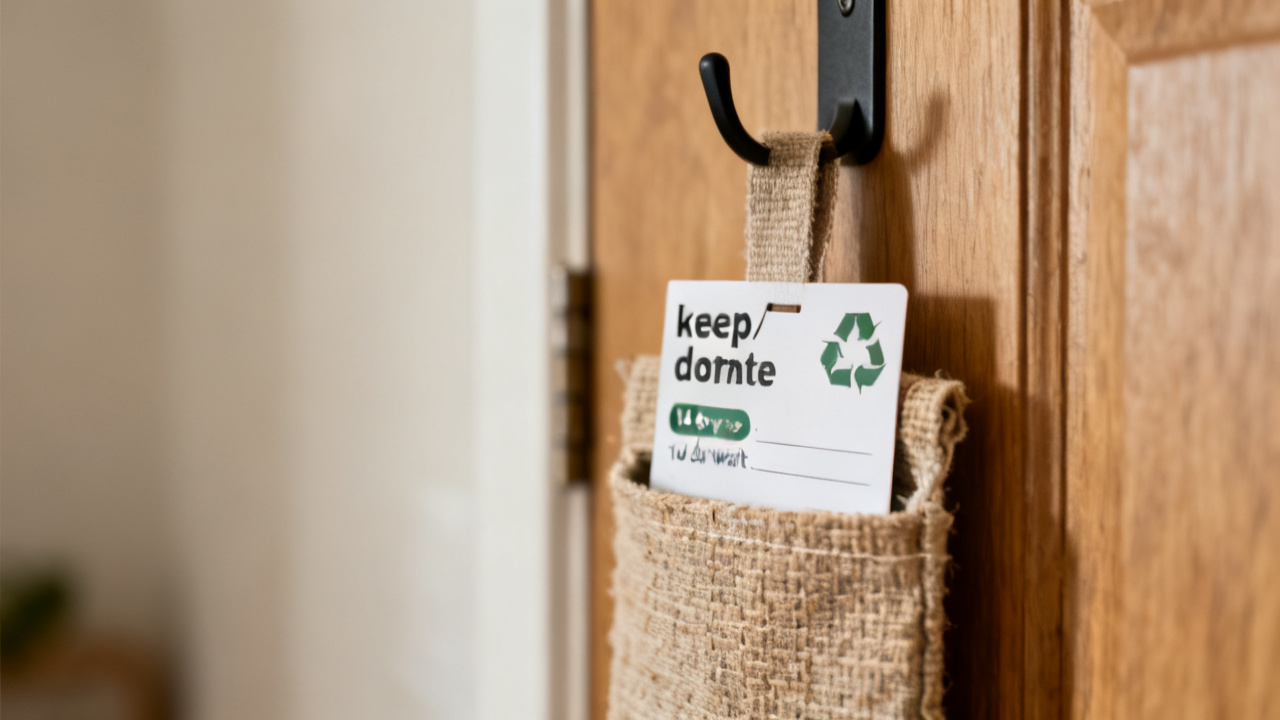
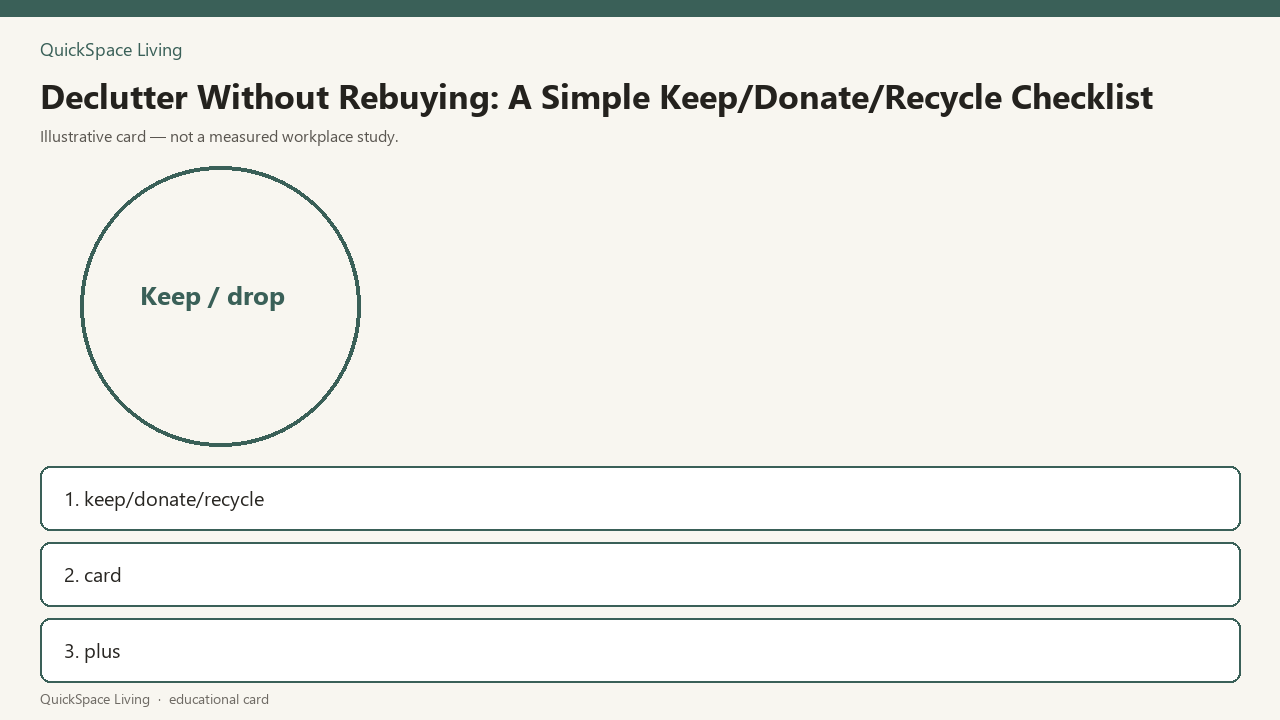
Keep, donate, recycle on one decision card
This pocket-sized decision card fits in your back pocket while you sort, so you don’t have to second-guess every item. It only has 3 clear criteria per common item category, no complicated scoring or arbitrary 30-day use rules that ignore seasonal needs. Print it and cut it to 3×5 index card size to keep on hand for all declutter sessions.
| Item Type | Keep If | Donate If | Recycle If |
|---|---|---|---|
| Kitchen small appliances | You have used it at least once in the last 12 months, and it works fully | It works, you haven’t used it in 12+ months, and it has no broken parts | It is broken beyond repair, has no reusable parts, and is accepted by your local curbside or specialty recycling program |
| Clothing & footwear | It fits well, is in good shape, and you have worn it in the last 12 months | It fits or is in good shape, you haven’t worn it in 12+ months, and has no permanent stains or tears | It is stained, torn, or worn out, and is accepted by local textile recycling programs |
| Home decor & linens | You have it displayed or in active use in your home currently, with no damage | It is in good shape, you haven’t used it in 12+ months, and has no rips or permanent stains | It is torn, stained, or faded beyond use, and can be dropped off at a textile or hard goods recycling center |
| Office & craft supplies | You use it for current work or hobby projects, and have fewer than 3 unopened duplicates | It is unopened or in good shape, you have 3+ duplicates or no foreseeable use for it | It is dried out, broken, or made of recyclable material with no resale value |
| Travel & outdoor gear | You have used it on a trip or outing in the last 18 months, and it works fully | It works, you haven’t used it in 18+ months, and has no broken components | It is broken beyond repair, has no reusable parts, and is accepted by outdoor gear or e-waste recycling programs |
Any item that does not clearly fit into one of these three categories goes straight to your maybe pile, no debate required.
A fourteen-day box for maybe items
The 14-day wait rule eliminates the stress of deciding on edge case items, and cuts down on accidental donations of items you will need later. Grab a sturdy cardboard box, label the lid with the date you start your declutter session, and put every maybe item inside before sealing the box shut. Store the box in an out-of-the-way spot like the top of a closet, garage shelf, or basement, out of your line of sight. The rule is simple: if you open the box to retrieve an item to use in those 14 days, you keep that item and put it back in its proper storage spot. If you do not touch the box at all in 14 days, you donate all contents that are in good shape per the decision card rules, and recycle anything that is damaged. Illustrative example: If you’re unsure about a set of holiday candle holders, put them in the 14-day box. If you remember you need them for a dinner party on day 10, take them out and keep them. If you don’t think about them once in 14 days, you know you won’t miss them, and you don’t have to worry about repurchasing them later because you had a full two weeks to recall if you needed them. Do not list the contents of the box on the outside: if you can’t remember what’s inside without a list, you definitely don’t need those items.
Donate versus recycle when the item is broken
Many people get stuck on what to do with items that are slightly damaged or broken, and end up either donating items that create extra work for donation centers, or throwing recyclable items in the trash. The decision card has basic guidance, but there are a few edge cases to keep in mind. If an item is broken but can be fixed for less than half the cost of a new one, you can choose to keep it and fix it within 14 days, or donate it to a repair shop, community tool library, or organization that fixes items for low-income families. For example, a toaster oven with a broken cord that costs $3 to fix can be donated to a local repair co-op instead of recycled, as long as you clearly disclose the damage when you drop it off. If the item is broken beyond repair, check your local waste management website to see if it’s accepted in curbside recycling, or if there’s a specialty recycling center that takes it. Never put broken electronics, batteries, or textiles in the regular trash, as most of these items can be recycled for parts or repurposed. Always label any donated items that have minor damage, to save donation center staff time sorting through unsellable goods.
Estate sales this card is not running
This decision card and 14-day box system is designed for your regular, day-to-day clutter, not for items you are sorting through during an estate sale, inheritance cleanout, or move after a major life event like a divorce or death of a family member. Those situations come with emotional weight that the standard decision card does not account for, and it’s okay to take longer to sort those items, or keep things that have sentimental value even if you don’t use them regularly. For example, if you inherit your grandmother’s mixing bowl that you only use once a year for her famous cake recipe, you don’t have to run it through the 12-month use check on the decision card. Sentimental items get a free pass, as long as you have a designated storage spot for them that doesn’t take over your regular living space. If you’re sorting through estate items, you can modify the system to give yourself a 90-day box instead of a 14-day box, so you have more time to decide what has sentimental value and what you can pass on to other family members or donate.
Next time you set aside an afternoon to declutter, print the decision card first, grab a cardboard box for your 14-day maybe pile, and sort one cabinet or closet at a time instead of dumping every storage space in your home at once. You’ll clear unused space without wasting money repurchasing items you donated by mistake, and you won’t have to second-guess any of your sorting decisions as you go.