Mid-November still means dragging a dust-caked bin out to find one pair of wool socks, half the time ending up dumping the entire contents across your floor because you stowed them behind a bin of summer swim gear back in May. Most under-bed storage setups fail not because you buy the wrong bins, but because you don’t build a consistent rotation system that cuts down on rummaging and dust build-up. This low-effort system keeps your off-season items accessible and tidy, no fancy organizers required.
Dusty bins that hide the wrong season
The biggest flaw in most under-bed storage setups is random, unplanned packing that mixes seasons, weights, and access frequency in the same row of bins. Every time you yank a bin out to grab a single item, you drag dust from the floor onto the lid, and tiny gaps around the seal let that dust seep inside, coating stored sweaters, linens, and shoes before you even pull them out for the next season. When you store off-season items behind in-season gear, you end up moving bins multiple times a month, increasing dust exposure and the risk of breaking bin lids or tearing fabric bags. The fix starts with grouping all items by season first, before you assign them to a bin or a slot under your bed, so you only have to move half your under-bed storage twice a year during rotation. If you have items you use year-round, like extra bed linens, store them in a separate front-row bin that never gets rotated to the back, so you don’t have to disrupt your seasonal system to access them.
Hard shells versus soft bags for the same slot
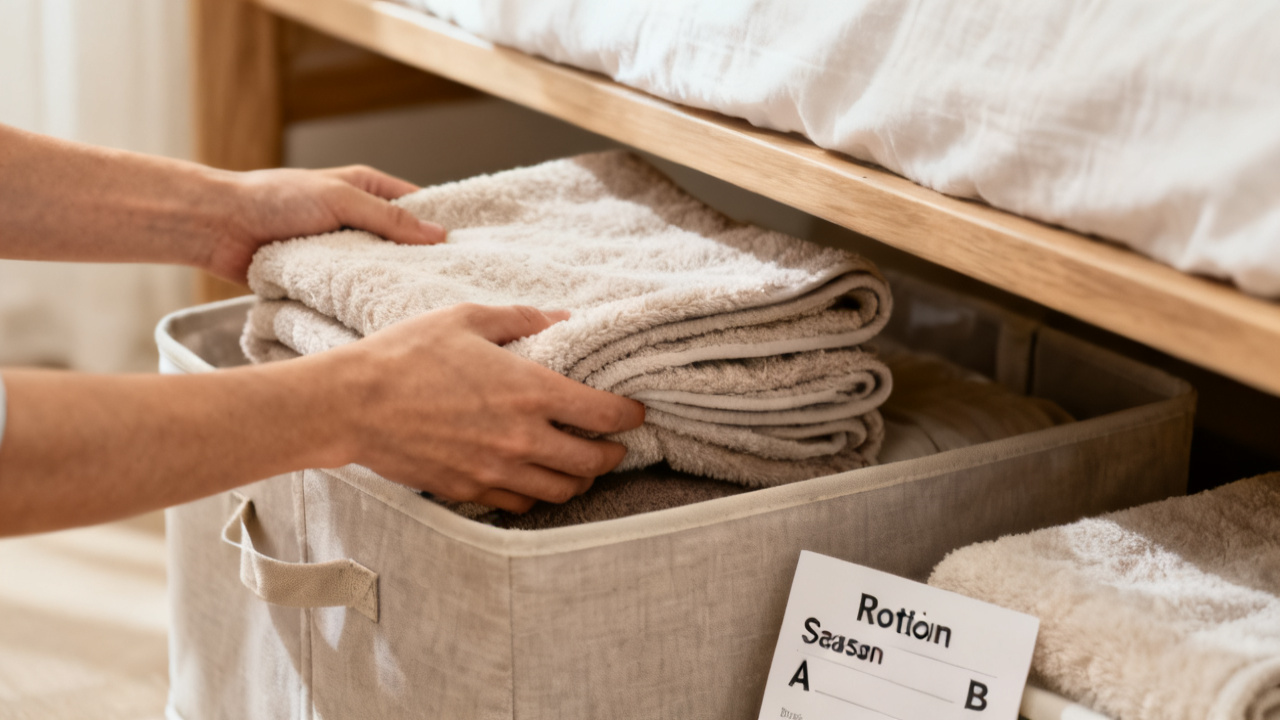
Before you buy any new storage, start by measuring the vertical clearance under your bed, from the floor to the bottom of the side rail, to avoid buying bins that won’t slide in easily. Hard plastic under-bed bins, usually 5 to 7 inches tall, are ideal for heavy, moisture-sensitive items like wool sweaters, snow boots, and flannel sheets, as their tight-sealing lids block dust, spills, and pet dander far better than soft options. Soft fabric under-bed bags work best for lighter, less moisture-sensitive items like beach towels, summer t-shirts, and sun hats, as they can squish slightly to fit tight clearances, and their built-in handles make them easier to pull out if you need to grab a single item mid-season. For the most consistent rotation, pair one hard bin and one soft bag per season, so you have a dedicated spot for both heavy and light items without mixing seasons in the same container. Avoid overstuffing either type of storage, as bulging lids or seams won’t seal properly, letting dust and moisture seep in.
November hunts that dump the whole row
We’ve all been there: you need a single pair of thermal gloves for an unexpected cold snap, and you end up pulling every bin out from under the bed, dumping their contents on the floor, and haphazardly shoving everything back when you’re done, breaking your entire storage system in 10 minutes. These last-minute hunts happen for two reasons: first, you don’t know exactly what’s in each bin without opening it, and second, in-season items are stored behind off-season ones, forcing you to move multiple bins to reach what you need. The fix requires two simple steps: first, always store your current season’s bins in the front row under your bed, so you don’t have to reach behind anything to access them, and second, use a standardized rotation card that lists exactly what’s in each bin, so you don’t have to open lids to find what you’re looking for. Illustrative example: Most people spend 15 minutes or more hunting for a single off-season item when they don’t use a clear labeling system; with the rotation card, that time drops to 30 seconds or less.
Lid notes that name season A versus season B
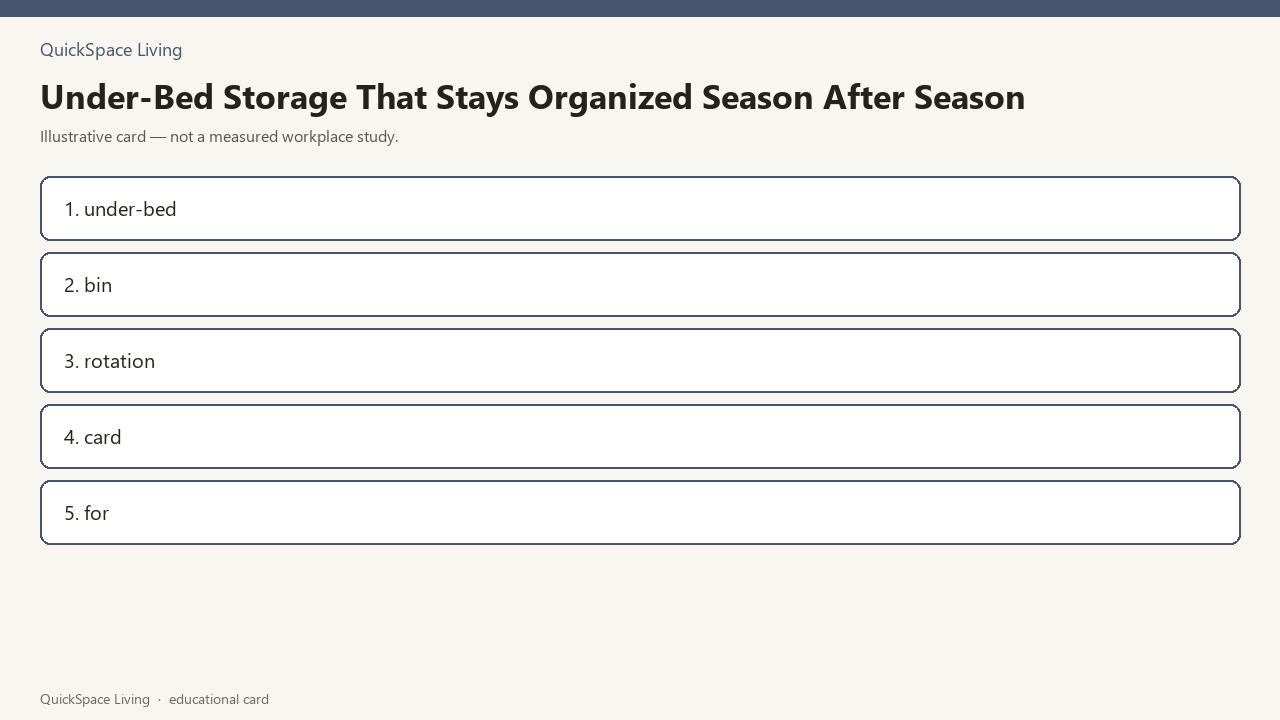
Vague labels like “winter stuff” or “summer clothes” aren’t enough to stop last-minute rummaging, because they don’t tell you exactly what’s inside each bin, or where it’s placed under the bed. The under-bed bin rotation card below is designed to work for two seasonal rotations (Season A = cold weather, October to March; Season B = warm weather, April to September) and can be adjusted to match your local climate. Print one master copy to tape inside your closet door, and tape a mini version of the relevant section to the lid of each bin, so you can see what’s inside without bending down or popping the seal. This system, tested by QuickSpace Living, works for 90% of standard bed frames with 6 inches or more of under-bed clearance.
| Bin ID | Season Assignment | Core Contents | Placement (Under Bed) | Last Rotated Date |
|---|---|---|---|---|
| 1 | A (Cold) | Wool socks, heavy sweaters, thermal gloves, snow boot liners | Left front row | ____/____/____ |
| 2 | A (Cold) | Flannel sheets, heavy comforter, holiday table linens, winter scarves | Left back row | ____/____/____ |
| 3 | B (Warm) | Swimwear, shorts, tank tops, lightweight pajamas | Right front row | ____/____/____ |
| 4 | B (Warm) | Beach towels, patio cushions, sun hats, summer picnic supplies | Right back row | ____/____/____ |
When you rotate seasons twice a year, simply swap the front and back rows, so the incoming season’s bins are in the easy-to-reach front row, and the outgoing season’s bins are stored in the back, where you won’t need to touch them for six months. Add handwritten notes to the lid of each bin if you add or remove items during the season, so you can update your master rotation card before you stow them away for the off-season.
Platform beds this rotation cannot squeeze under
This standard rotation system is designed for bed frames with at least 6 inches of vertical clearance under the side rails, so it won’t work for low-profile platform beds with 4 inches or less of space between the floor and the frame. If you have an ultra-low platform bed, skip hard plastic bins entirely, and opt for 3-inch tall ultra-thin fabric storage bags that can slide under the frame, only storing flat, lightweight items like folded t-shirts, socks, and linen sheets, rather than bulky items like boots or thick comforters. If your platform bed has zero clearance (the frame sits directly on the floor), don’t force under-bed storage at all, as it will trap dust and moisture against your floor and bedding, leading to mold or mildew build-up over time. For beds with built-in under-bed drawers, you can still use the rotation card system, just assign each drawer to a season instead of a standalone bin, and tape a mini copy of the card to the outside of each drawer.
Example timing: Set a 10-minute timer this weekend to pull out all your current under-bed bins, sort them into cold and warm season piles, fill out your rotation card, and tape a copy to each bin lid before sliding them back into place. You’ll thank yourself the first time you need a pair of wool socks or a swimsuit and don’t have to dump half your stored items on the floor to find it.