Three backpacks and a soccer cleat meet the work bag on the same chair, so nobody can sit down. It’s a familiar evening rush pain point for mixed households, where kid gear and professional items pile up in the same high-traffic entryway nook. Separating these two storage zones cuts down on morning scrambles and stops grubby snack crumbs from getting into laptop bags or work notebooks.
Backpacks that land on the same chair as work bags
For most households, the entryway “drop zone” evolves organically, with no intentional assignment of space. The closest chair to the front door becomes the default landing pad for every item carried through the door, from work laptops and client folders to half-empty kid snack bags and crumpled art projects. This shared space creates avoidable friction: a parent rushing to make a morning work call might accidentally toss a kid’s field trip permission slip in the trash while clearing work junk off the chair, or a muddy cleat left on the chair cushion can stain a work blazer draped over the arm of the same seat. Even households that invest in a single multi-hook rack often run into the same issue, as taller adult users claim the upper hooks, and shorter kids simply toss their bags on the nearest flat surface rather than reaching for a lower hook on the same rack. This cross-contamination of gear creates unnecessary stress for both kids and adults, and can be fixed with a small, low-cost adjustment to your entryway layout.
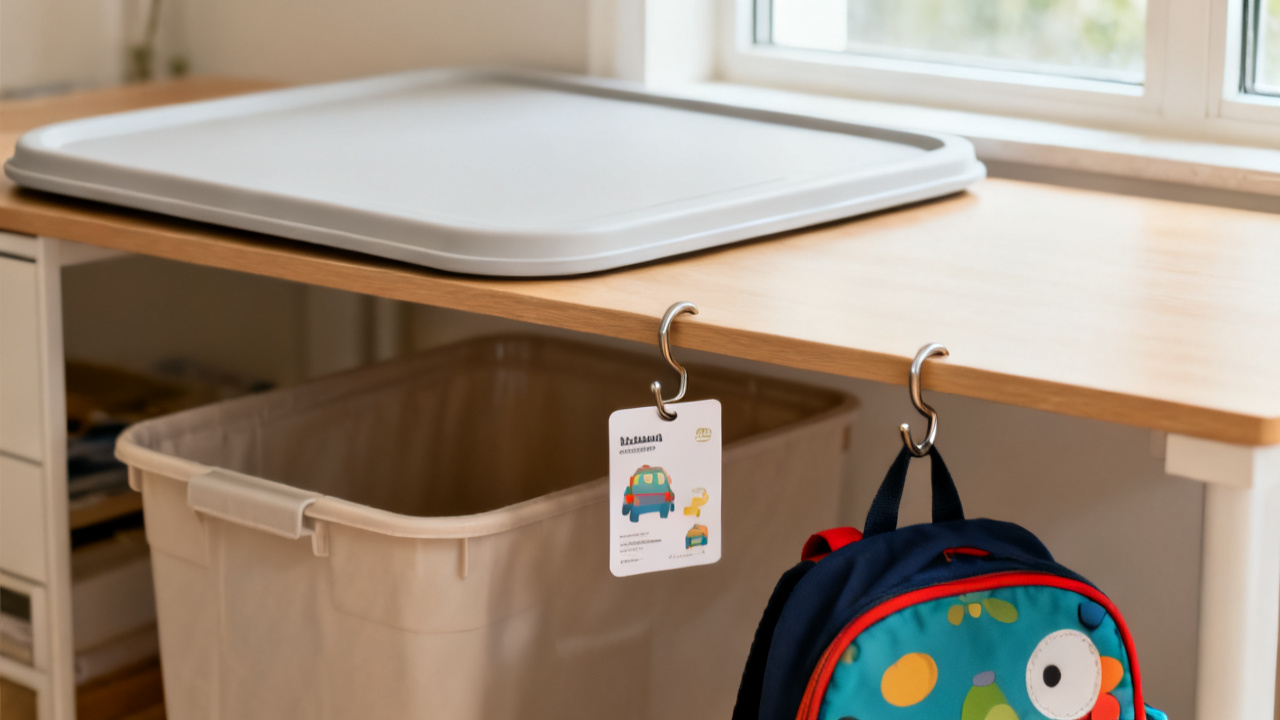
A kid hook line that is not the adult drop
The fix for this shared space friction is a dedicated kid-specific hook line, installed in a separate part of the entryway that is at least 3 feet away from the adult drop zone, with no overlapping flat surfaces or seating between the two areas. The hook line should be installed no higher than 48 inches from the floor, so kids as young as 5 can reach their assigned hooks without adult help. To reinforce the separation and keep kids accountable, each kid gets a dedicated backpack hook card taped directly to their assigned hook, with clear, simple rules for what belongs on the hook and what they need to check before leaving the house. We tested this card system at QuickSpace Living for small entryways under 50 square feet, and found it eliminates confusion about which hook belongs to whom, even in households with three or more school-aged kids.
| Card Section | Required Content |
|---|---|
| Top Line | Kid’s first name + 1 small custom sticker (favorite character, sport, etc.) |
| Middle Section | 3 non-negotiable items to hang every weekday: Backpack, lunch box, sports gear bag |
| Bottom Line | 1 quick pre-departure check: “Do I have my homework and water bottle inside my bag?” |
For renters, adhesive heavy-duty command hooks work perfectly for this setup, with no drilling or wall damage required. For households with permanent entryway space, wooden or metal wall hooks are fine, as long as each hook is rated to hold at least 10 pounds to accommodate full backpacks filled with textbooks and binders. Each kid’s hook should only hold their three assigned items, no extra gear or adult items allowed on the kid hook line.
Sports bags that overflow onto the adult tray
The adult drop zone almost always includes a small tray or table for high-priority small items: work keys, employee IDs, incoming mail, parking passes, and portable chargers for work devices. When kids’ bulky sports bags don’t fit easily on their hooks, they often get dumped on this tray, burying important adult items or spilling mud, grass stains, or leftover sports drink on professional gear. To fix this overflow, add a small 12-inch tall rolling bin under each kid’s hook, for bulky items that don’t hang easily: soccer cleats, shin guards, basketballs, swim goggle cases, and dance bags. These bins stay tucked under the hook line, so they don’t take up extra entryway floor space, and kids can easily roll them out to grab gear for practice or stow it after school. Example timing: A 6-year-old can stow their entire T-ball bag and cleats in their under-hook bin in 30 seconds after coming home, with no adult prompting needed. This setup also keeps muddy sports gear away from adult work shoes stored under the adult drop zone, eliminating the need to scrub mud off leather work shoes before a morning meeting.
A school-night hang that takes one minute
The entire kid hook line routine takes less than 60 seconds to complete on school nights, making it easy for even easily distracted kids to stick to. As soon as kids walk in the door after school, they head straight to their hook, hang their backpack and lunch box, stow any sports gear in their under-hook bin, and do the quick pre-departure check listed on their hook card to make sure they didn’t leave homework or a water bottle at school. On nights when kids have homework, they can pull their workbook and homework folder directly out of their hanging backpack, rather than dragging the entire bag to the kitchen table and spilling its contents across the surface. This cuts down on after-school mess in common areas, and eliminates the need to hunt for missing homework folders the next morning. Illustrative example: Households that follow this one-minute routine report spending 7 fewer minutes every morning searching for lost backpacks, lunch boxes, or required school gear. The routine is also easy to adjust for half-days, school breaks, or holiday weeks: simply add a temporary sticky note to each kid’s hook card with any special instructions, like “Grab snow boots for recess” or “Bring snack for class party.”
Locker rooms this hook line cannot replace
It’s important to set clear limits for what this home hook line system can and cannot do. This setup is designed exclusively for home entryway use, and cannot replace official school locker storage or team sports locker room storage. Kids still need to follow their school’s rules for what items to keep in their lockers during the school day, and should not use the home hook line as an excuse to bring all their locker contents home every day. This system also cannot replace dedicated bulk storage for extra-large sports gear: hockey sticks, skateboards, golf clubs, and ski equipment should still be stored in a garage, basement, or dedicated sports closet, not in the entryway hook line. If a kid has a special event like a field trip, sports tournament, or science fair that requires extra gear, they can add a temporary note to their hook card the night before to remind them to grab the extra items, but the bulk of that large gear should be stored outside of the entryway to avoid clutter. This system also does not replace regular backpack cleanouts: set a 10-minute weekly check-in every Sunday evening to have each kid clear out old papers, food trash, and broken supplies from their backpack to keep the hook line from getting cluttered with unnecessary items.
Test this separate hook line setup for one full school week first, adjusting hook height or placement if kids struggle to reach them or cross-traffic with the adult drop zone remains. Even a 2-foot separation between the two zones will cut down on most common entryway pileup frustrations for busy mixed households, with no fancy storage purchases or major entryway renovations required.
QuickSpace Living editors