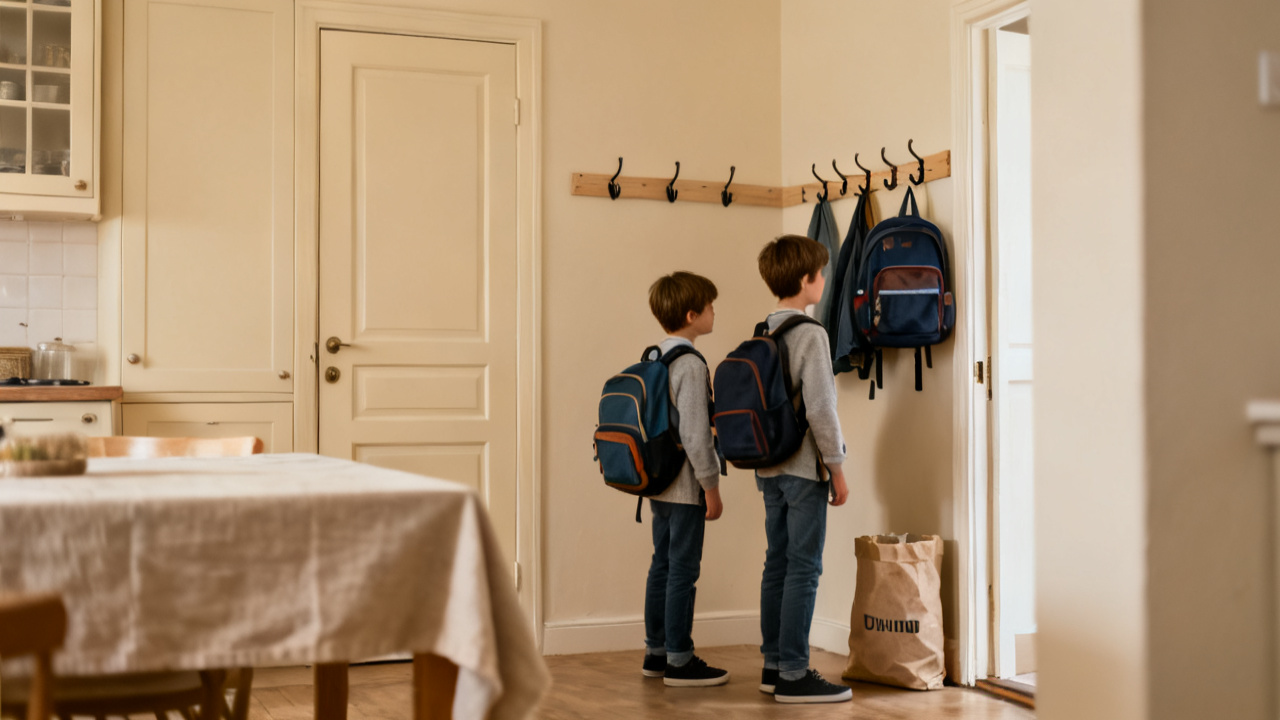
Three backpacks and a soccer cleat meet the work bag on the same chair, so nobody can sit down. You nudge the pile with your foot and a crumpled field trip permission slip flutters to the floor, half-stuck under a scuffed dinosaur-themed lunch box. Your work laptop peeks out from under the largest neon backpack, its edge smudged with what you hope is grape juice, not the tempera paint they were using for art class this week.
What is in the way
You don’t need to rip out every existing hook or rearrange your entire entryway to clear that chair. The only items blocking progress are the overlapping systems: your adult drop zone (the hook near the front door for your work bag, umbrella, and grocery totes) is currently the only low, accessible spot for kids to hang their bags, so they default to the chair when that hook is full. There’s no dedicated spot marked clearly for their gear, so they pile everything on the nearest flat surface rather than stretching up to the higher out-of-reach hooks mounted last year. The chair in question is the only dining chair that fits your toddler’s booster seat, so the pile is making dinner time 10 minutes longer every night as you shuffle items off to the floor before you can strap him in.
What you leave alone
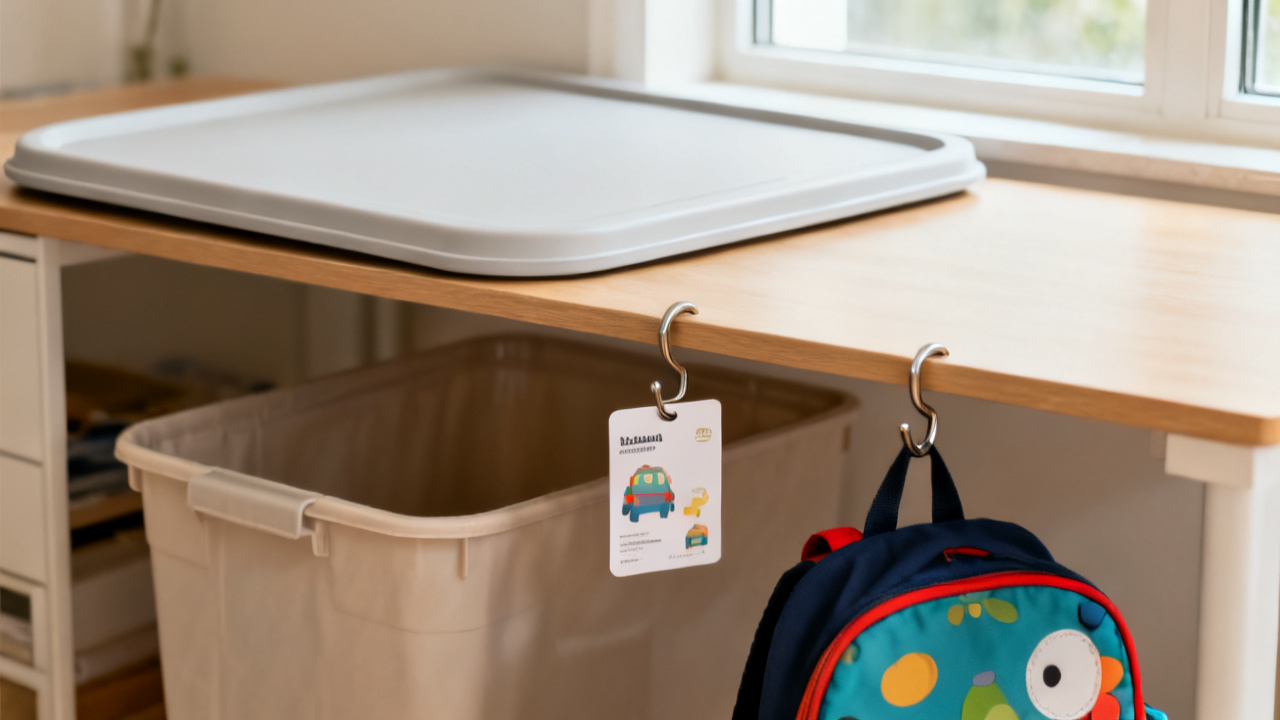
You leave your existing adult drop zone exactly as it is. There’s no need to move your work hook, rehome the key bowl you keep on the shelf below it, or rearrange the shoe rack that sits under that section of the wall. You also leave the higher, kid-unreachable hooks that hold your winter coats and guest bags right where they are; there’s no need to drill new holes for those or adjust their height to suit small bodies. You leave the stack of unopened mail on the entry table next to the adult drop zone, because that’s a separate task you can tackle later when you have time to sort bills and junk mail, no need to combine that with this quick project. You also don’t throw away any of the kids’ loose papers or small gear right now; you can sort through the contents of their backpacks another day if you want.
The ten-minute action
This entire project takes less than 10 minutes, no power tools or extra trips to the hardware store required, and follows these simple steps:
- Grab the pack of 3 adhesive heavy-duty wall hooks you stashed in the junk drawer last month, plus a roll of painter’s tape and a damp cleaning wipe.
- Walk to the wall 4 feet to the left of your adult drop zone, out of the direct path you take to the kitchen when you get home from work, so the kids’ gear doesn’t block your route when you’re carrying hot food or armfuls of groceries.
- Wipe down a 12-inch wide section of the wall to remove dust and grime, then let it air dry for 30 seconds so the adhesive sticks properly.
- Stick one hook 36 inches off the floor, a second 4 inches to the right of the first, and the third 4 inches to the right of the second, pressing each firmly for 10 seconds to secure the adhesive to the wall.
- Write each kid’s first name on a small piece of painter’s tape and stick it directly below their assigned hook so there’s no confusion about which spot belongs to who.
You don’t need to wait for the adhesive to cure fully before hanging the backpacks; the manufacturer says it reaches full strength in 24 hours, but it’s strong enough to hold the 2 to 3 pound empty backpacks right away, so you can clear the chair immediately after you stick the hooks up. Illustrative example: These hooks hold up to 15 pounds each, which is more than enough for a full backpack, 3 pound soccer cleat bag, and 1 pound insulated lunch box for a 7-year-old, so you don’t have to worry about them peeling off the wall on heavy textbook days.
Where it goes
Each kid’s full backpack hangs on their assigned hook, with the straps looped over the hook so it doesn’t slip off to the floor. Any sports gear they bring home that day hangs from the small loop at the bottom of their backpack or sits on the floor directly under their hook, so it doesn’t get mixed up with your work shoes under the adult drop zone. Their lunch boxes hang from the same hook as their backpack, so you don’t find half-eaten apples tucked in the couch cushions three days later. Any take-home art projects or school flyers go in the pocket of their backpack, not on the key bowl in the adult drop zone, so you don’t accidentally throw away an important school event notice when you’re sorting your work receipts at the end of the week. Your work bag stays on its original hook in the adult drop zone, no more getting crushed under math workbooks and field trip forms. This layout follows the small-space zoning principle QuickSpace Living recommends for shared entryways, where high-traffic adult items and kid items get separate, dedicated spots that fit each user’s reach, so no one’s gear gets lost or crushed under someone else’s items.
What to ignore
You ignore the voice in your head that says you need to buy custom engraved name plates for the hooks or paint the section of wall a fun accent color to make the kid zone look “perfect” right now. You ignore any half-finished entryway projects you started six months ago that are still sitting in a box in the coat closet; those can wait for a weekend when you have extra time to tackle them. You also ignore any complaints from the kids that their hook is “too boring” for the first week; you can let them decorate their name labels with stickers next weekend if they keep their backpacks off the chair for 7 days straight. You also ignore any thoughts that you need to buy matching backpacks or organize every folder inside each kid’s backpack as part of this project; this task is only about giving their bags a dedicated spot, not overhauling their entire school supply system. You don’t need to spend any extra money on this setup right now, either; the hooks you already have in the junk drawer work perfectly fine, no need to run to the store for fancy supplies. You don’t need to make this space look like a social media post for it to work for your family.
The next check
You check the new backpack hook zone 7 days from today, right before you start making dinner on Sunday evening. You’ll first note how many days the kids hung their bags on their assigned hooks instead of piling them on the dining chair, and adjust the setup if needed. If one kid is struggling to reach their hook, you can lower it 2 inches without patching any holes, since the adhesive pulls off cleanly without damaging paint. If the hooks are holding up well and the chair stays clear most days, you can add a small wire shelf under the hooks for their lunch boxes if you want, but that’s an optional upgrade, not a requirement. If you notice one kid keeps leaving their backpack on the floor right next to their hook, you can tie a small stuffed animal or their favorite keychain to the hook to make it more visible, so they remember to hang their bag there when they walk in the door. You don’t need to turn this into a big chore chart or reward system unless you want to; even if they forget a couple days a week, the chair will still be far clearer than it was before, which is the only goal right now. You don’t need to run a full audit of all their school gear during this check; you only need to confirm the current setup is working for everyone, and make tiny tweaks if something isn’t fitting right.