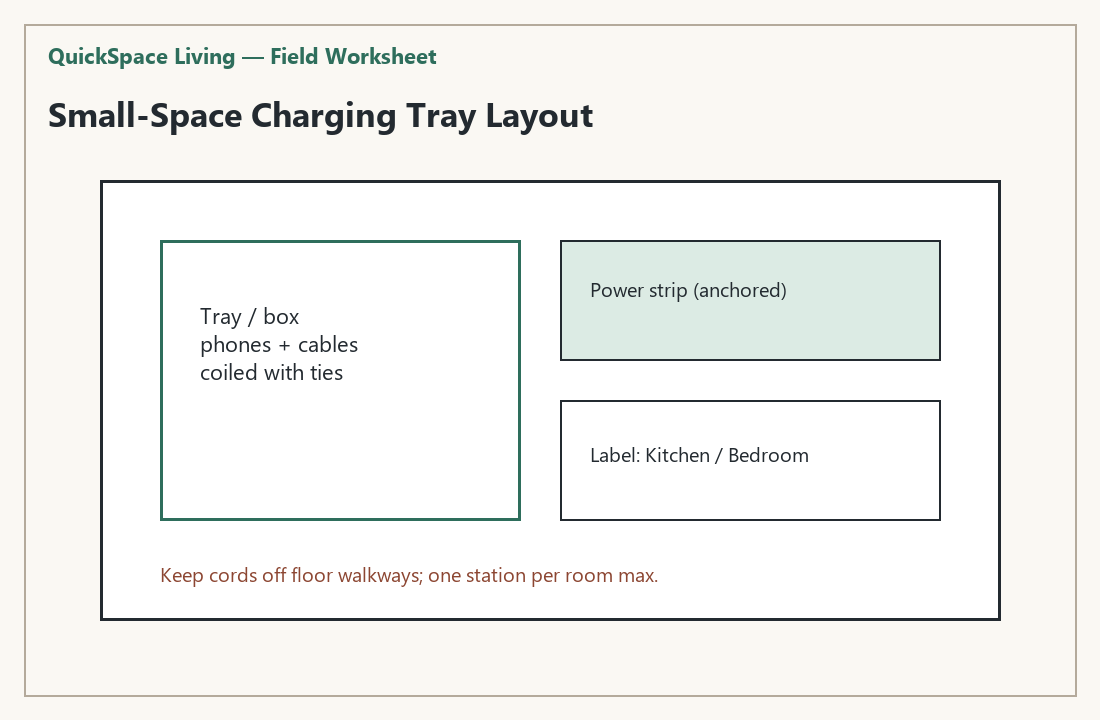
Cable clutter is a trip hazard in studio apartments. One tray per room beats a power-strip jungle behind the couch.
Tray layout
Use a lipped tray or shallow box, an anchored power strip, short labeled cables, and a small pouch for unused cords with ties. Phones and watches charge in the tray; long laptop bricks can sit behind the tray if they do not push into the walkway.
Safety basics
- Do not daisy-chain power strips
- Keep liquids off the tray
- Leave heat vents on chargers uncovered
- Replace frayed cords instead of taping them forever
One station per room
Kitchen gets a small tray for phones during cooking. Bedroom gets the overnight tray. Living room does not need a third “everyone dump cables here” zone if the first two work. Extra stations recreate the mess you are solving.
Weekly reset
Return borrowed cables. Toss or recycle dead cords. Wipe dust out of the tray so USB ends stay clean. If a cable has no owner and no device, it leaves the apartment.
Labeling with a tiny tag (Kitchen / Bedroom) prevents the weekly scavenger hunt. Soft ties beat tight knots that damage wires.
How to know the system is working
Give any new setup two full weeks before you buy another product. Track three signals only: can you put things away in under a minute, does the walkway stay clear, and does the surface return to empty at least once a week. If two of those fail, change the rule or the footprint—do not add another bin yet.
When something breaks the system, write one sentence about why. “Shoes overflow because guests leave pairs” is a different fix than “we own too many daily shoes.” Specific notes beat vague frustration and keep this site’s advice useful for your actual apartment.
How to know the system is working
Give any new setup two full weeks before you buy another product. Track three signals only: can you put things away in under a minute, does the walkway stay clear, and does the surface return to empty at least once a week. If two of those fail, change the rule or the footprint—do not add another bin yet.
When something breaks the system, write one sentence about why. “Shoes overflow because guests leave pairs” is a different fix than “we own too many daily shoes.” Specific notes beat vague frustration and keep this site’s advice useful for your actual apartment.
How to know the system is working
Give any new setup two full weeks before you buy another product. Track three signals only: can you put things away in under a minute, does the walkway stay clear, and does the surface return to empty at least once a week. If two of those fail, change the rule or the footprint—do not add another bin yet.
When something breaks the system, write one sentence about why. “Shoes overflow because guests leave pairs” is a different fix than “we own too many daily shoes.” Specific notes beat vague frustration and keep this site’s advice useful for your actual apartment.
Travel and guest cables
Keep a separate zip pouch for travel chargers so the daily tray does not absorb vacation adapters. Guests get a single labeled spare cable, not access to the whole pouch. After guests leave, reclaim the spare the same night.
Wireless chargers reduce cable count only if you still designate one tray home. Otherwise devices charge on every random side table and the walkway fills with bricks again.
Quick recap
Measure first, keep walkways clear, maintain on a short weekly timer, and refuse extra products until the current footprint works for two weeks. That sequence is the difference between a real system and a shopping spree that looks organized for one afternoon.
Final check
Walk the room once after setup. If anything crosses a walking line, shorten it or move it. If you feel the urge to buy one more organizer immediately, wait two weeks and reassess with a photo.
Keep it boring on purpose
The systems on this site are intentionally plain: a tape measure, a weekly timer, and a walkway rule. Plain systems survive busy weeks better than decorative setups that need constant restyling. If a step feels optional, keep it anyway for fourteen days before you delete it—most clutter returns when the maintenance step is the first thing cut.
Important note:
This is practical home-organization guidance for everyday apartments and houses. It is educational content, not a product warranty, contractor advice, or a guarantee that every floor plan will fit the same setup.